Marrakech Medina Map: How to Navigate the Maze (2026 Guide)
Updated
Navigate the Marrakech Medina with confidence using this practical guide to its ancient alleys and bustling souks. You will learn to locate key landmarks, orient yourself without a GPS, and recover your bearings whenever needed. Whether you seek a specific artisan or simply want to absorb the atmosphere of saffron and hammered brass, these techniques keep you on track.
Why the Medina Feels Like a Maze (and Why That’s a Good Thing)
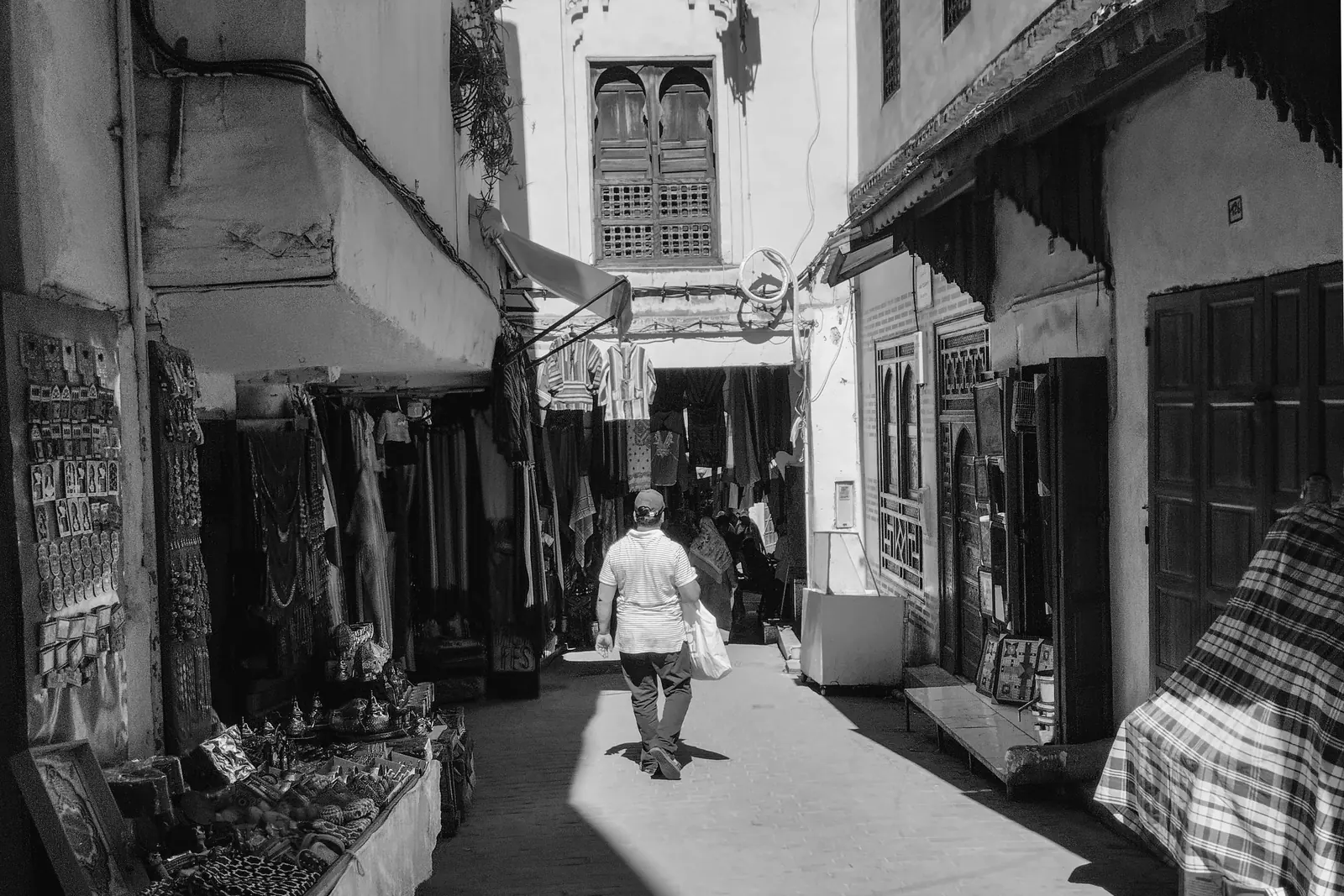
The Marrakech Medina evolved organically over nearly a millennium, prioritizing privacy, security, and community over straight lines. Its narrow, irregular streets have no street names on most walls, and many alleys (derbs) are dead ends. This layout confuses outsiders while protecting residents, making the medina one of the most immersive travel experiences in the world.
Best Marrakech Medina Map Options
You don’t need to memorize every turn. Use these reliable map resources to navigate the Marrakech Medina:
- Google Maps (offline): Download the Marrakech area offline before you arrive. While GPS accuracy can be spotty in narrow alleys, Google Maps shows the main thoroughfares and major landmarks like Jemaa el-Fnaa, the Koutoubia Mosque, and the Bahia Palace.
- Maps.me: This free app uses community-sourced OpenStreetMap data and works well offline. Organic Maps, an open-source, ad-free spin-off, uses the same data. Many travelers prefer it for its detailed walking paths within the medina.
- Paper maps (from your riad or hotel): Most accommodations provide a simple, hand-drawn map with key landmarks. These are often more accurate for your immediate neighborhood than a generic tourist map.
For official maps and updates, check the maps page of Visit Marrakech, the official tourism portal.
Key Landmarks as Navigation Anchors
Instead of relying on street names, use these major landmarks to orient yourself:
- Jemaa el-Fnaa: The central square and the medina’s heart. Almost every major path leads to or from here.
- Koutoubia Mosque: Visible from many points, its 77-meter minaret is a reliable compass. The medina is largely east of the mosque.
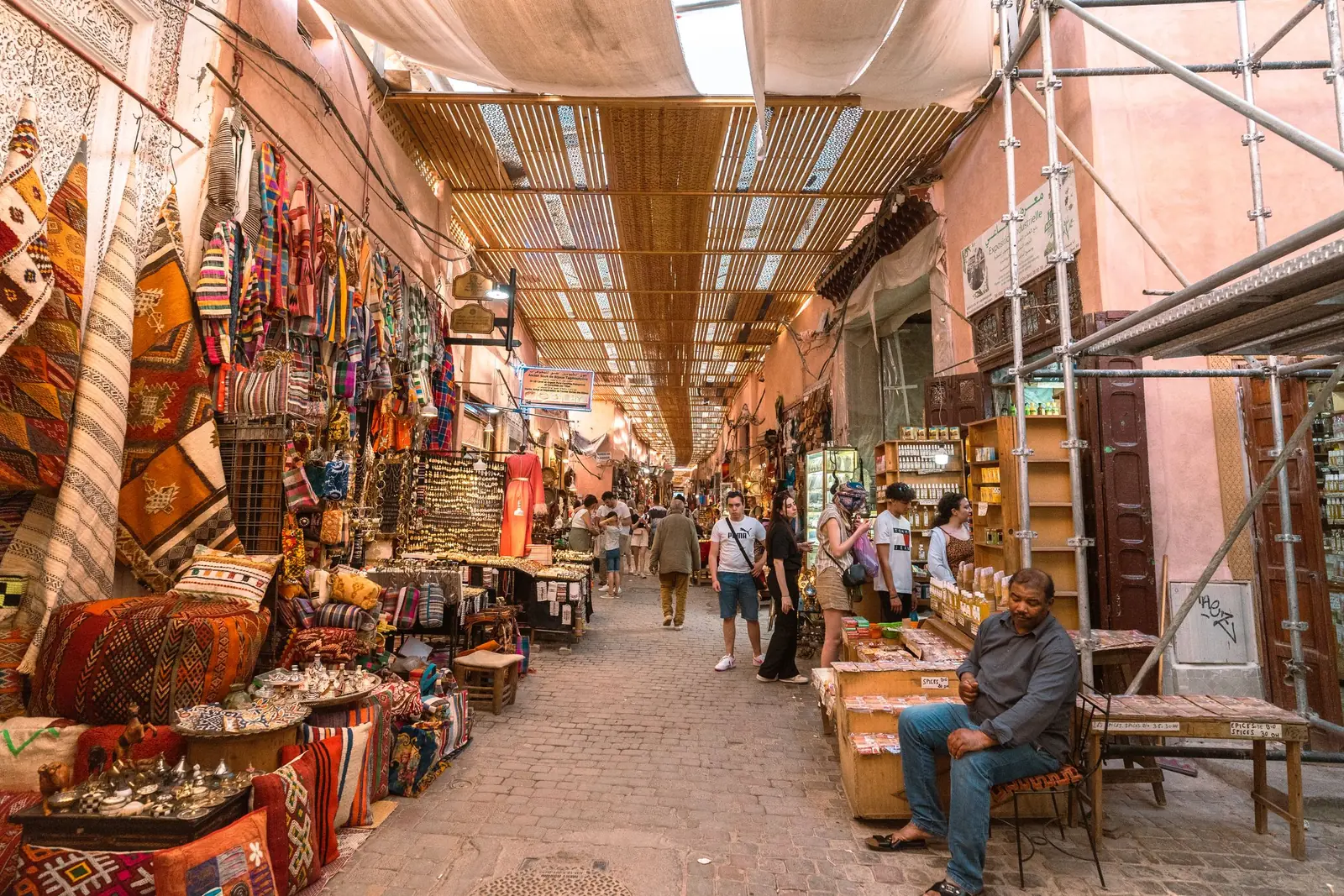
- Souk Semmarine: The main souk artery running north from Jemaa el-Fnaa. It’s wide, covered, and leads to other specialized souks.
- Medersa Ben Youssef: A historic Islamic college north of the central area; a major landmark for the northern medina.
- Bab (gates): The medina walls are pierced by many gates. Bab Doukkala in the north-west and Bab Agnaou, the monumental Kasbah gate in the south, are useful reference points that help you maintain directional awareness.
How to Navigate the Souks Without Getting Lost
The souks are the medina’s most disorienting zone. Follow these tips to stay oriented:
- Use the sun: The sun rises in the east and sets in the west, toward the Atlantic coast; on clear days, the snow-capped High Atlas stands to the south. In the souks, which are often covered, glance up at rooflines for light direction.
- Follow the crowd: Main souk lanes are busy with foot traffic and motorbikes. If an alley is empty, it’s likely a residential derb.
- Look for directional signs: Small brown, red or green signs on walls and posts point to major landmarks like Jemaa el-Fnaa and the Bahia Palace. They are helpful, but they don’t always follow the shortest route.
- Pick a unique shop or tile pattern: Mentally note a distinctive shop, mosaic, or doorway as a return marker.
Digital Navigation Tips
Smartphone navigation in the medina has improved but still has quirks:
- Download offline maps before you arrive. Cellular data can be unreliable inside thick stone walls.
- Use GPS sparingly: The signal bounces off narrow alleys, often showing you 10 meters off your actual position. Use it to confirm general direction, not exact location.
- Wi-Fi is everywhere: Many cafes, restaurants, and riads offer free Wi-Fi. Stop for a mint tea and check your map.
For reliable mobile data, consider an eSIM from eSIM Maroc.
What to Do If You’re Lost (You Will Be, Briefly)
Getting lost in the Marrakech Medina is a rite of passage. Here’s how to handle it:
- Stay calm. The medina is not dangerous; you will eventually find your way.
- Ask a shopkeeper. Most speak some English or French and will point you toward Jemaa el-Fnaa. A small purchase (a bottle of water) is polite.
- Look for a taxi stand or a large street. Major roads like Avenue Mohammed V border the medina and are easy to find; inside the walls, the pedestrian Rue Bab Agnaou leads straight back to Jemaa el-Fnaa.
- Hail a horse-drawn carriage (calèche): Once you reach the roads around the medina, carriage drivers can take you to a known landmark (agree the price first); they wait at Square de Foucauld, beside Jemaa el-Fnaa.
Understanding the Medina’s Zones
The Marrakech Medina is divided into distinct quarters that help with navigation:
- The Souks (north of Jemaa el-Fnaa): Dense commercial area with textiles, lamps, spices, and leather goods.
- Kasbah (south): Home to the Saadian Tombs and the Royal Palace. Quieter and more residential.
- Mellah (Jewish Quarter, southeast): Grid-like streets (by medina standards) near the Bahia Palace. Easier to navigate.
- Bab Doukkala (west): A large gate leading to a less touristy shopping area.
If you enjoy discovering secret spaces, explore Marrakech’s hidden gardens scattered across these quarters.
Recommended Walking Route for First-Time Visitors
Start at Jemaa el-Fnaa, head north through Souk Semmarine, turn east toward the Criée Berbère (a carpet market), then continue to the Medersa Ben Youssef. From there, loop south past the Almoravid Koubba and return via Rue Sidi Ben Slimane. This route takes about 2 hours at a relaxed pace and covers the medina’s highlights without backtracking.
For a broader exploration of the city, consider a 5-day Marrakech itinerary that integrates medina walks with visits to the Atlas Mountains.
If you are planning your visit around cultural sites, the Koutoubia Mosque is an essential stop that also serves as a perfect orientation point.
To understand the unique accommodation style found within these walls, learn what a riad in Marrakech is and how it shapes your stay.
Frequently Asked Questions About Navigating the Marrakech Medina
Is it safe to walk alone in the Marrakech Medina?
Yes, the medina is generally safe for solo travelers, including women, during the day and early evening. Petty theft and pickpocketing occur in crowded areas, so keep valuables secure. At night, stick to well-lit main streets.
Do I need a guide to explore the medina?
Not necessarily. With a good offline map and the tips above, you can explore independently. However, a local guide can provide historical context and take you to artisan workshops you might miss. Official guides cost around 250-400 MAD per half-day.
How do I find my riad in the medina?
Most riads are hidden down narrow derbs. Ask your riad to send a staff member to meet you at a nearby landmark (like a specific mosque or gate) on your first arrival. After that, use the riad’s business card and note nearby landmarks.
Are there public toilets in the medina?
Yes, but they are rare and often charge a small fee (2-5 MAD). Cafes and restaurants usually allow customers to use their facilities. Many mosques have public toilets, but non-Muslims cannot enter.
What is the best time of day to explore the medina?
Early morning (8-10 AM) is ideal for avoiding crowds and heat. Late afternoon (4-6 PM) is also good, with golden light and a lively atmosphere. Avoid midday in summer when temperatures exceed 40°C (104°F). For seasonal planning, see our when to visit Marrakech guide.
Conclusion: Embrace the Journey
The Marrakech Medina is not a place to conquer—it’s a place to experience. Even with the best map, you will take wrong turns. That’s part of the magic.
Use the tools and tips in this guide, but allow yourself to get lost for a few minutes. You’ll discover hidden courtyards, the smell of fresh bread, and the genuine hospitality of the medina’s residents. Download your offline map, note the nearest landmark, and step into the labyrinth with confidence.
For a broader perspective on exploring the city, read our Marrakech safety guide for additional peace of mind.