


The Marrakech food guide
Marrakech food specialties: what to eat, and where
Marrakech food specialties start with a dish the city calls its own: tanjia, beef or lamb sealed in a clay jar and slow-cooked in the embers of a hammam furnace. Around it sits the best of Moroccan food in Marrakech: Friday couscous, tagines, pastilla, briouats, msemen at breakfast, harira at dusk and mint tea at every hour.
Below: ten dishes worth crossing the medina for, with when each one is eaten and where to try it; a table of addresses we checked in October 2026; a full day of eating, hour by hour; and what a villa cook prepares when you would rather eat at home, by the pool.
Tanjiathe dish Marrakech claims as its own
Fridaycouscous day, at home and in many restaurants
2020couscous inscribed by UNESCO as intangible heritage
1965Chez Lamine Hadj Mustapha has served mechoui since then
€650a night: our least expensive villa with a cook
What to eat in Marrakech
Seven dishes to taste in Marrakech
In the order we would introduce them to a first-time guest, with when they are eaten, where to find them and whether they lean sweet or savoury.
01
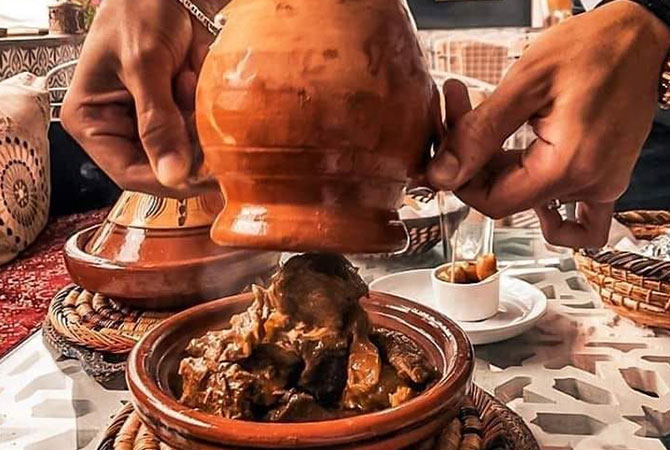
Tanjia, the dish of Marrakech
- Whenlunch
- Wheremechoui alley, off Jemaa el-Fna
- Tastesavoury
Tanjia is named after the tall clay jar it is cooked in. It began as a bachelors' and workers' dish: the jar is filled with beef or lamb, garlic, cumin, saffron, ras el-hanout, preserved lemon, olive oil, smen (aged salted butter) and a little water, sealed with paper and handed to the farnatchi, the man who tends the wood-fired furnace of a hammam. He buries it in the hot ashes for half a day or overnight.
The meat comes out soft enough to pull apart with bread. Eat it with cumin, salt and olives at the stalls of the mechoui alley on the north-east side of Jemaa el-Fna.
02
Couscous, the Friday lunch
- WhenFriday lunch
- WhereLa Grande Table Marocaine, Al Fassia, your villa
- Tastesavoury
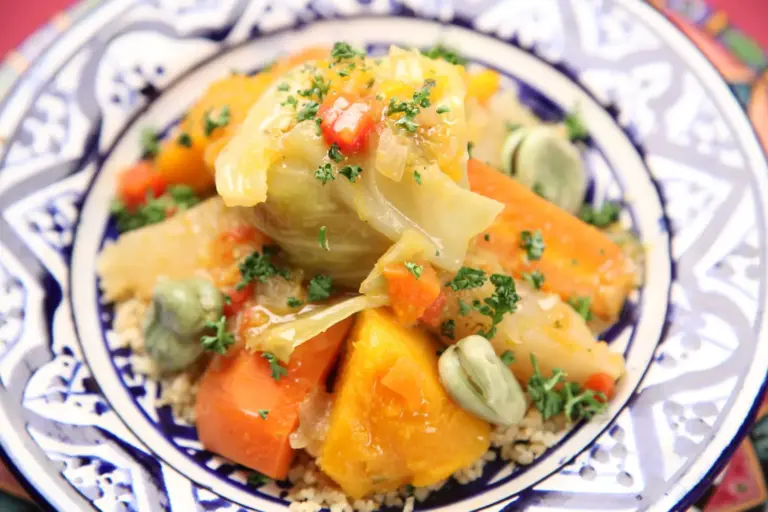
Steamed semolina served in a wide terracotta dish under a stew of vegetables and beef, lamb or chicken; the classic is couscous with seven vegetables. In 2020, UNESCO inscribed the knowledge and practices of couscous, a joint file from Morocco, Algeria, Tunisia and Mauritania.
In Moroccan homes it is the Friday lunch, after midday prayers, and some restaurants keep it for that day only. The semolina is steamed several times, which takes hours: a good dish to ask your villa's cook for, or to learn in a cooking class.
03
Tagine, slow-cooked and shared
- Whenlunch or dinner
- Whereeverywhere, from stalls to riads
- Tastesavoury, sometimes sweet-savoury
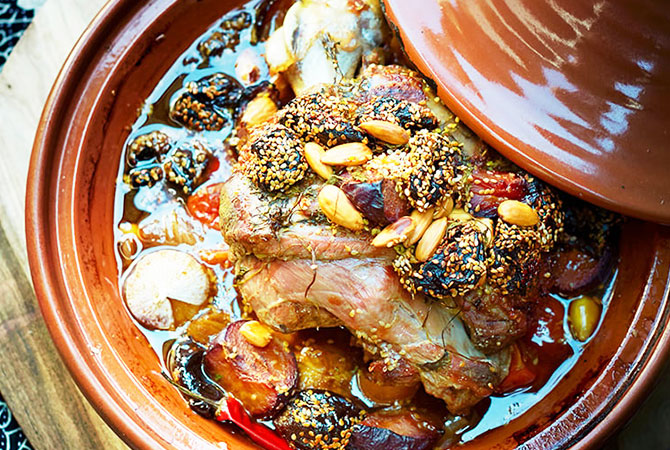
Named after the conical clay pot it simmers in. The classics: chicken with preserved lemon and olives, lamb with prunes and almonds, kefta (meatballs) with eggs, fish with chermoula, or vegetables only. It is set in the middle of the table and eaten with round loaves of khobz, used to scoop up the sauce.
Tagines on Jemaa el-Fna are simple; in a good restaurant or from a villa cook they are cooked slowly over charcoal or a low flame, and the difference shows.
04
Pastilla, the festive pie
- Whencelebrations, as a starter
- WhereAl Fassia, Dar Yacout
- Tastesweet and savoury
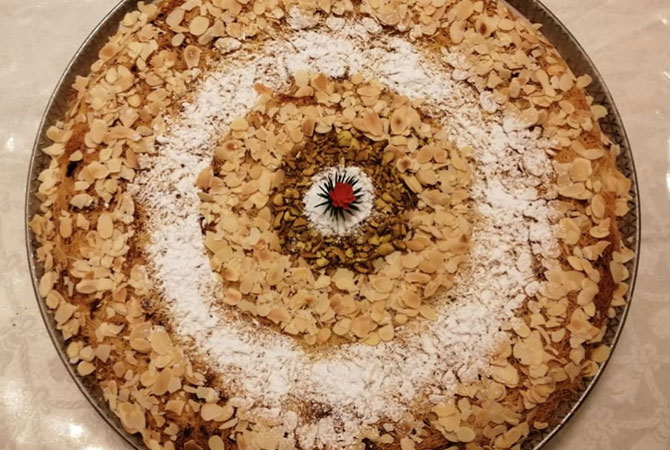
Pastilla (or bastilla) is a pie of paper-thin warqa pastry. The festive version is filled with shredded pigeon or, more often today, chicken cooked with onions and spices, plus almonds, and dusted with icing sugar and cinnamon. It is served before the main course at weddings and family parties.
Two variations: a seafood pastilla with fish and vermicelli, spicy rather than sweet, and the milk pastilla for dessert, layers of warqa with a milk and almond cream.
05
Briouats, the Moroccan aperitif
- Whenaperitif, starter, tea time
- Whererestaurants and patisseries
- Tastesavoury or sweet
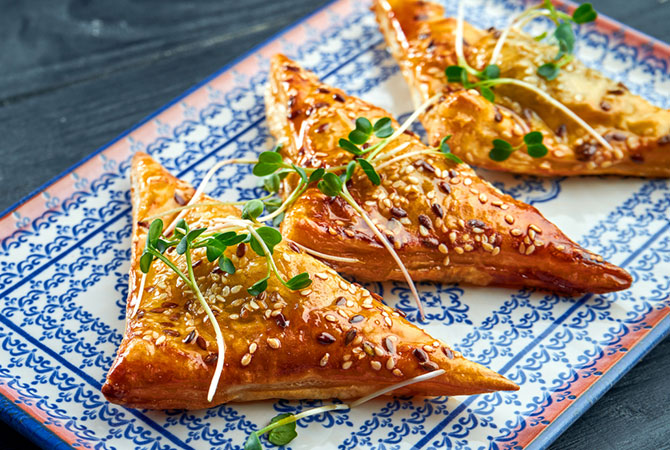
Small parcels of warqa folded into triangles or rolled into cylinders, then fried or baked; the name comes from a word for "envelope". Savoury briouats hold chicken, minced meat, fish, prawns or cheese, and open most Moroccan meals with a spread of cooked salads.
Sweet briouats are filled with almond paste and dipped in warm honey scented with orange-blossom water: one with a glass of tea is enough.
06
Msemen, the breakfast pancake
- Whenbreakfast, afternoon
- Wheremedina griddles, villa breakfast
- Tastesweet or savoury
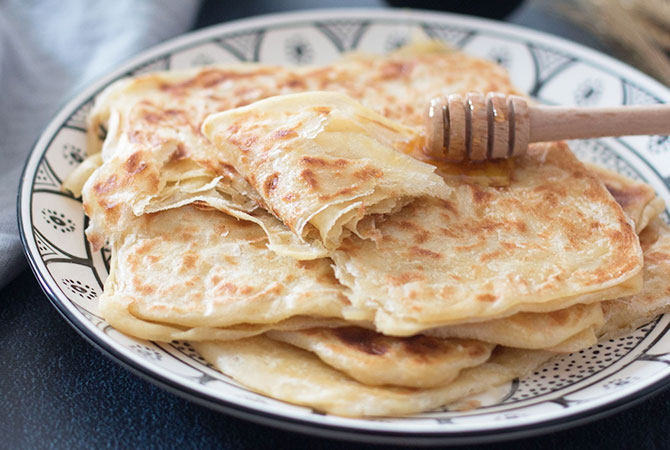
A flaky square pancake: the dough is brushed with oil or butter, folded and cooked on a hot griddle. Eat it with honey, or stuffed with onions, spices or minced meat. It is sold warm on street griddles in the morning.
Its breakfast companions: baghrir, the "thousand-hole" semolina pancake, and harcha, a buttery semolina bread. Ask your villa cook for all three on the first morning.
07
Mint tea, at every hour
- Whenall day
- Whereeverywhere, including the souks
- Tastesweet
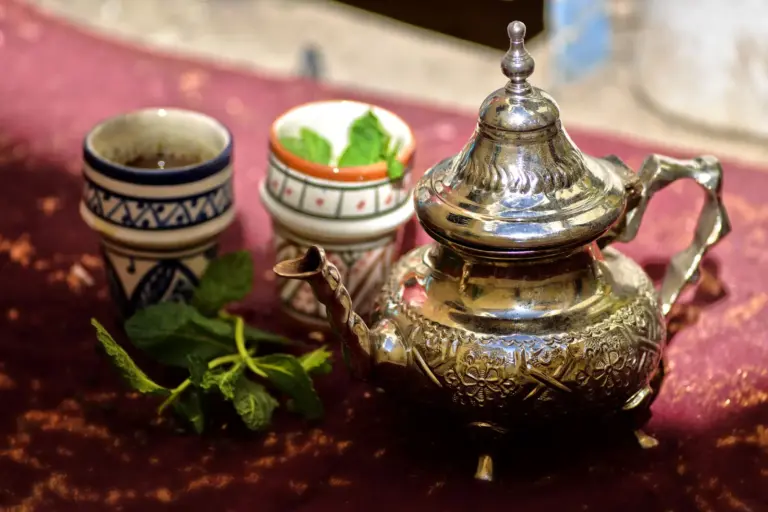
Chinese gunpowder green tea brewed with fresh spearmint and sugar, then poured from high above the glass to raise a light foam. It is offered when you arrive, after meals and halfway through a negotiation in the souks; refusing the first glass is a little abrupt.
It usually comes very sweet. Ask for little sugar, or none ("bla sukkar"). Almond pastries such as cornes de gazelle often arrive with it.
Three more for the list
Harira, mechoui and the sweets
Street food and seasonal dishes that complete the picture. More ideas in 10 traditional Moroccan dishes and Marrakech street food.
Harira
- Whenevenings, Ramadan
- Tastesavoury
A tomato, lentil and chickpea soup with herbs and a little meat, thickened with flour. It is the soup that breaks the fast during Ramadan, with dates and chebakia, and a cheap, warming bowl on Jemaa el-Fna all year.
Mechoui
- Whenlunch
- Tastesavoury
Whole lamb roasted in a pit oven until the skin crackles, sold by weight in the mechoui alley off Jemaa el-Fna, where Chez Lamine Hadj Mustapha has served it since 1965. A quarter-kilo per person, with bread, cumin and salt, is the usual order.
Chebakia and pastries
- Whenwith tea, Ramadan
- Tastesweet
Chebakia are rose-shaped sesame pastries, fried and soaked in honey, made in quantity for Ramadan. All year, the patisseries of Gueliz sell almond pastries by weight: cornes de gazelle, ghriba and sweet briouats.
During Ramadan
Many cafés and restaurants in the medina close during the day, and the city eats together at sunset. Hotels and restaurants for visitors stay open. What changes for guests: Ramadan in Marrakech.
Addresses we send guests to
Where to eat Marrakech's specialties
The medina has the street food and the historic dining rooms; Gueliz and the Agdal side of the Route de l'Ourika have the addresses locals book for family dinners. For a tanjia, go to the mechoui alley at lunch; for a pastilla, book an evening table; for couscous, plan around a Friday.
These are places we know well. Hours change, especially during Ramadan, so check before you go or ask us to book. For a wider list: where to eat in the medina and the best rooftop restaurants.
| Where | Area | Go for | Good to know |
|---|---|---|---|
| Jemaa el-Fna food stalls | Medina, the main square | Harira, grills, snails, fresh orange juice | From late afternoon. Choose a busy stall with a fast turnover. See Jemaa el-Fna at night |
| Chez Lamine Hadj Mustapha | Mechoui alley, off Jemaa el-Fna | Tanjia and mechoui, sold by weight | Since 1965. Go at lunch: the best cuts go early. Bring cash |
| Al Fassia | Gueliz (the original) and Agdal, Route de l'Ourika | Pigeon pastilla, tagines, lamb shoulder | Run by women since it opened. Book a day or two ahead |
| La Grande Table Marocaine | Royal Mansour, medina | Friday couscous lunch: vegetarian, chicken or lamb | Fine dining. Confirm the Friday lunch slot when booking |
| Dar Yacout | Medina, Bab Doukkala side | A set Moroccan dinner in a historic riad: salads, pastilla, tagine, couscous | Dinner only. Drinks on the roof first. Book about a week ahead in season |
| Nomad | Rahba Kedima, the spice square | Modern Moroccan cooking on a rooftop | Lunch and dinner. Book for sunset in high season |
Good to know
Wine is served in hotel restaurants and in many restaurants in Gueliz and Hivernage, but rarely at street stalls or in the traditional cafés of the medina. Where to buy and drink: alcohol in Marrakech. For an evening with music and dancers: dinner shows in Marrakech.
Hour by hour
A day of eating in Marrakech
Marrakech eats on its own clock: a generous breakfast, lunch as the main meal, tea in the late afternoon and a late dinner. This is the day we would plan for a guest who wants to taste everything, starting from a villa and ending back there.
It works best on a Friday, for the couscous. On other days, swap lunch for a tanjia in the mechoui alley. Prefer a guide? See the best food tours in Marrakech.
- 8:30
Breakfast at the villa
Msemen, baghrir and harcha with honey, amlou (almond, argan oil and honey), olive oil, fresh orange juice and mint tea, laid out by the pool.
- 10:30
Spices in the souks
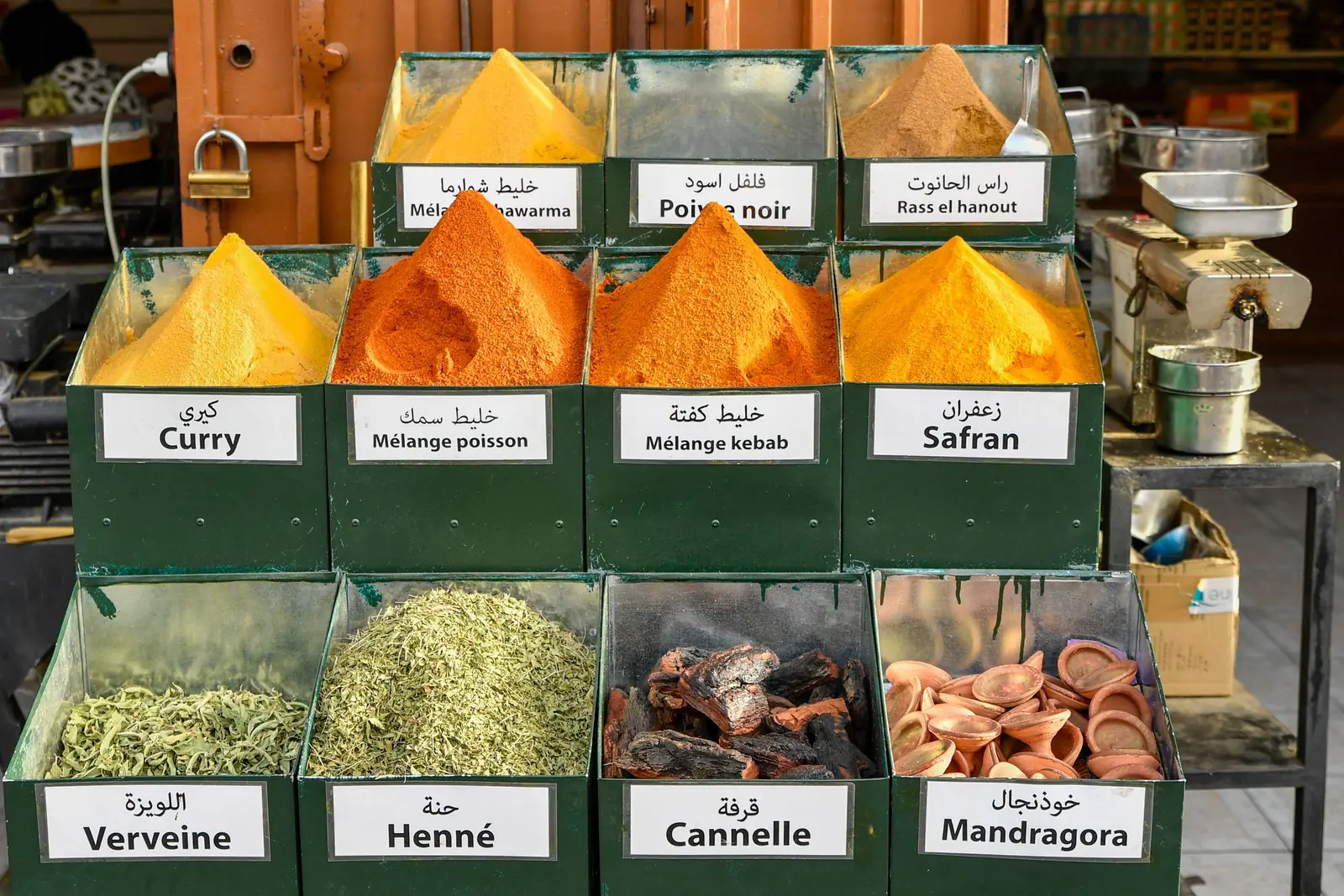
Walk the Rahba Kedima and the spice stalls: ras el-hanout, saffron, preserved lemons, olives by the scoop. Stop for a glass of tea on a terrace.
- 13:00
The main meal
Friday couscous at La Grande Table Marocaine, or tanjia and mechoui by weight at Chez Lamine Hadj Mustapha. Then back to the villa for a swim and a siesta.
- 17:00
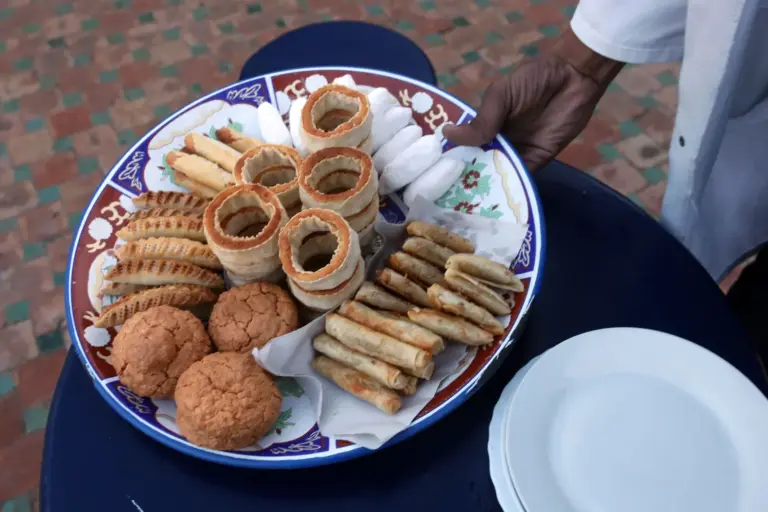
Tea and almond pastries
Cornes de gazelle and sweet briouats from a Gueliz patisserie, with a pot of mint tea in the garden.
- 19:00
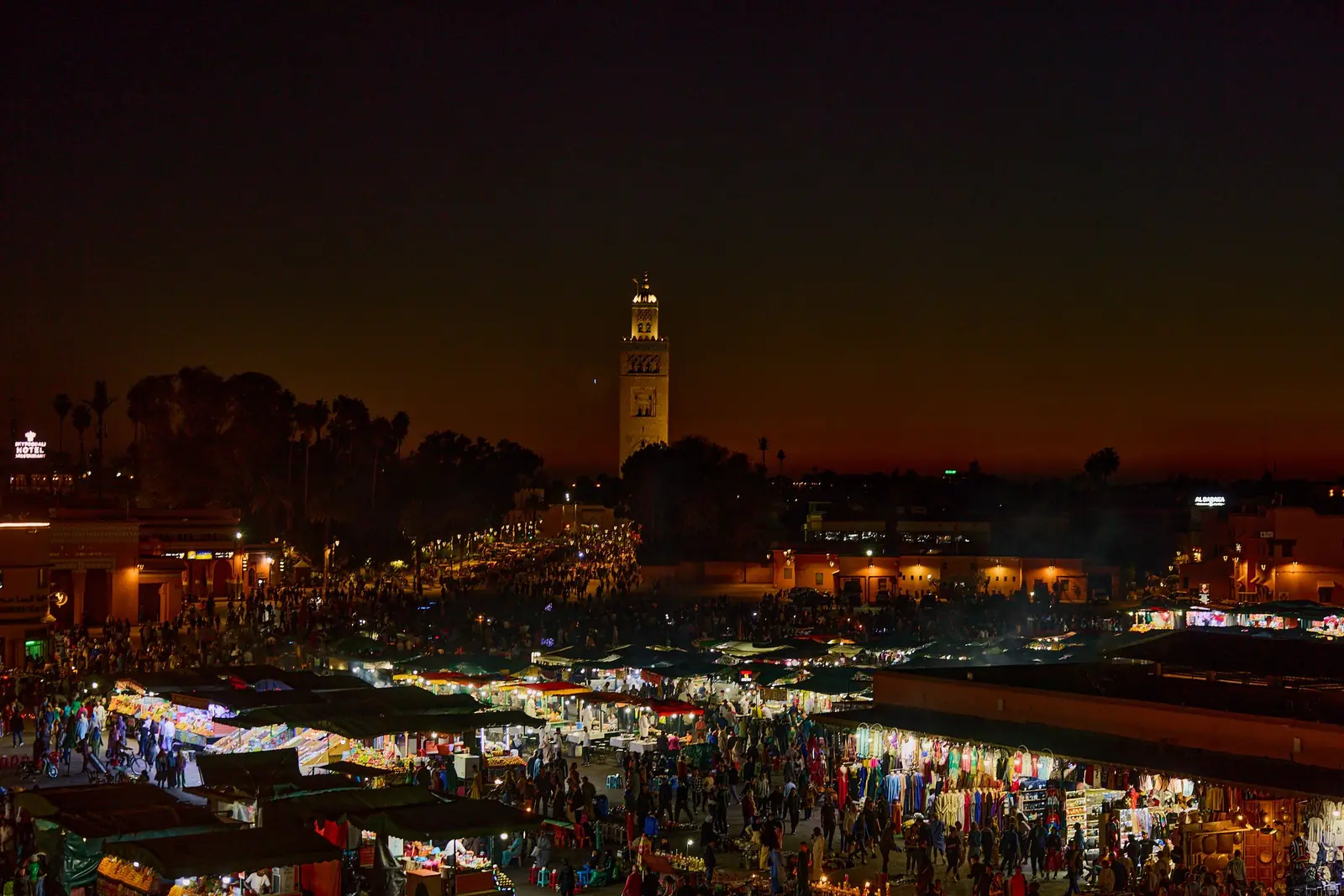
Jemaa el-Fna at dusk
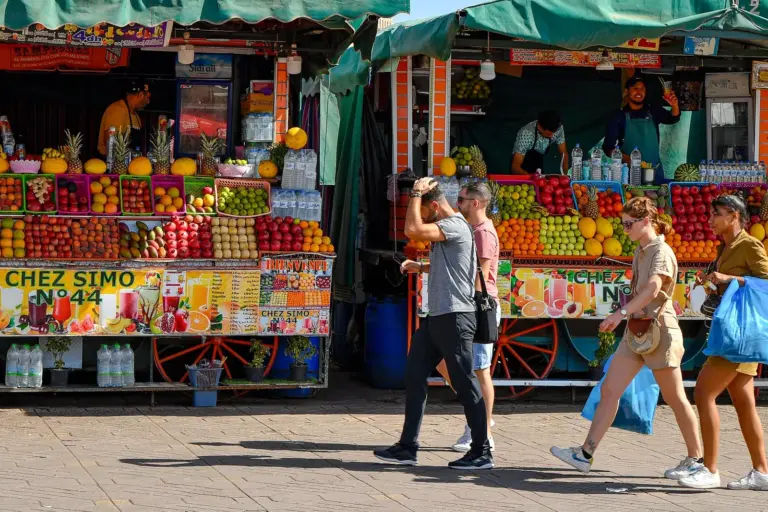
A bowl of harira and an orange juice at the stalls as the square fills with musicians and smoke from the grills.
- 21:00
Dinner
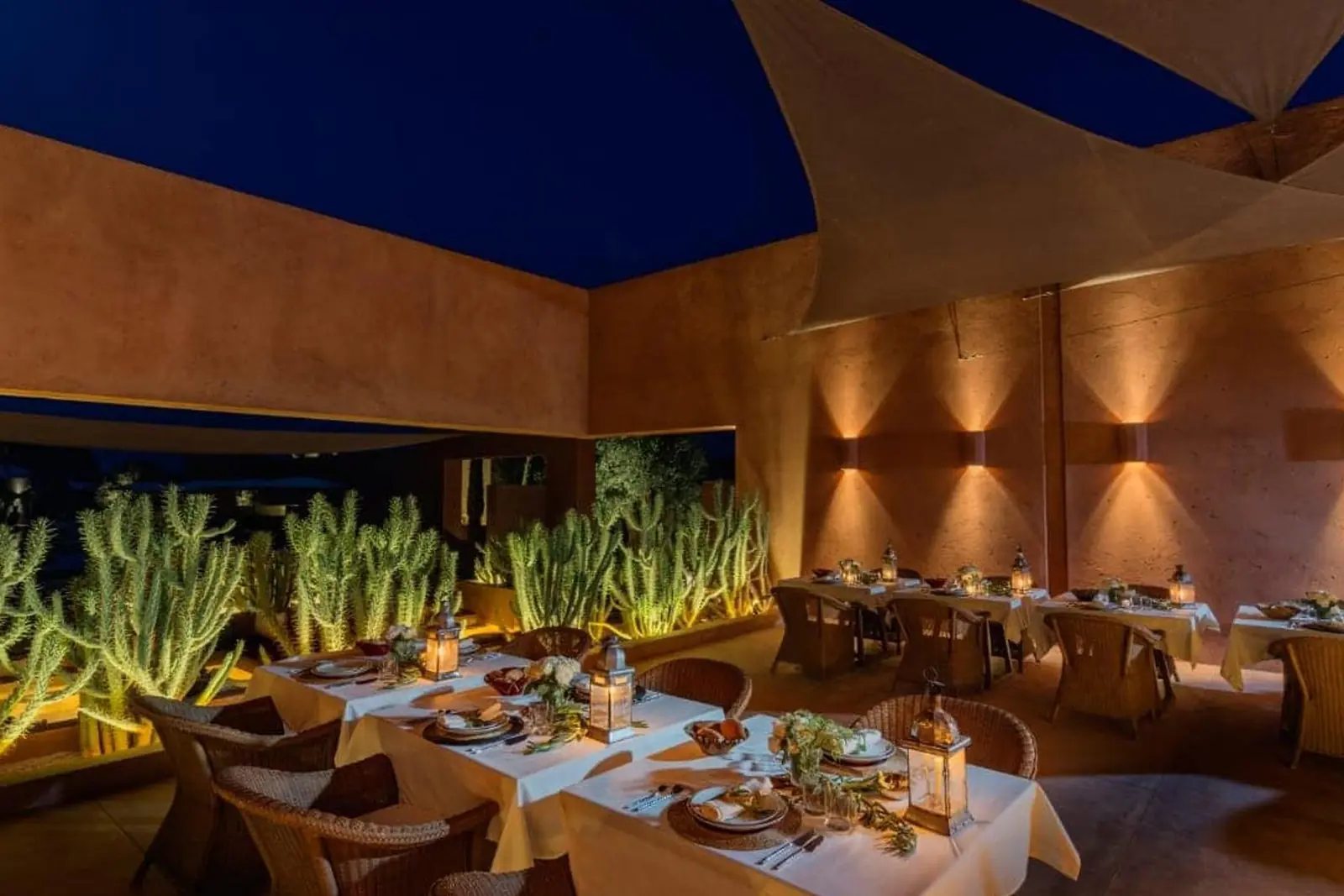
Pastilla and a tagine at Al Fassia or Dar Yacout, or a dinner prepared by your villa cook, served by candlelight on the terrace.
Eating in
What a villa cook prepares
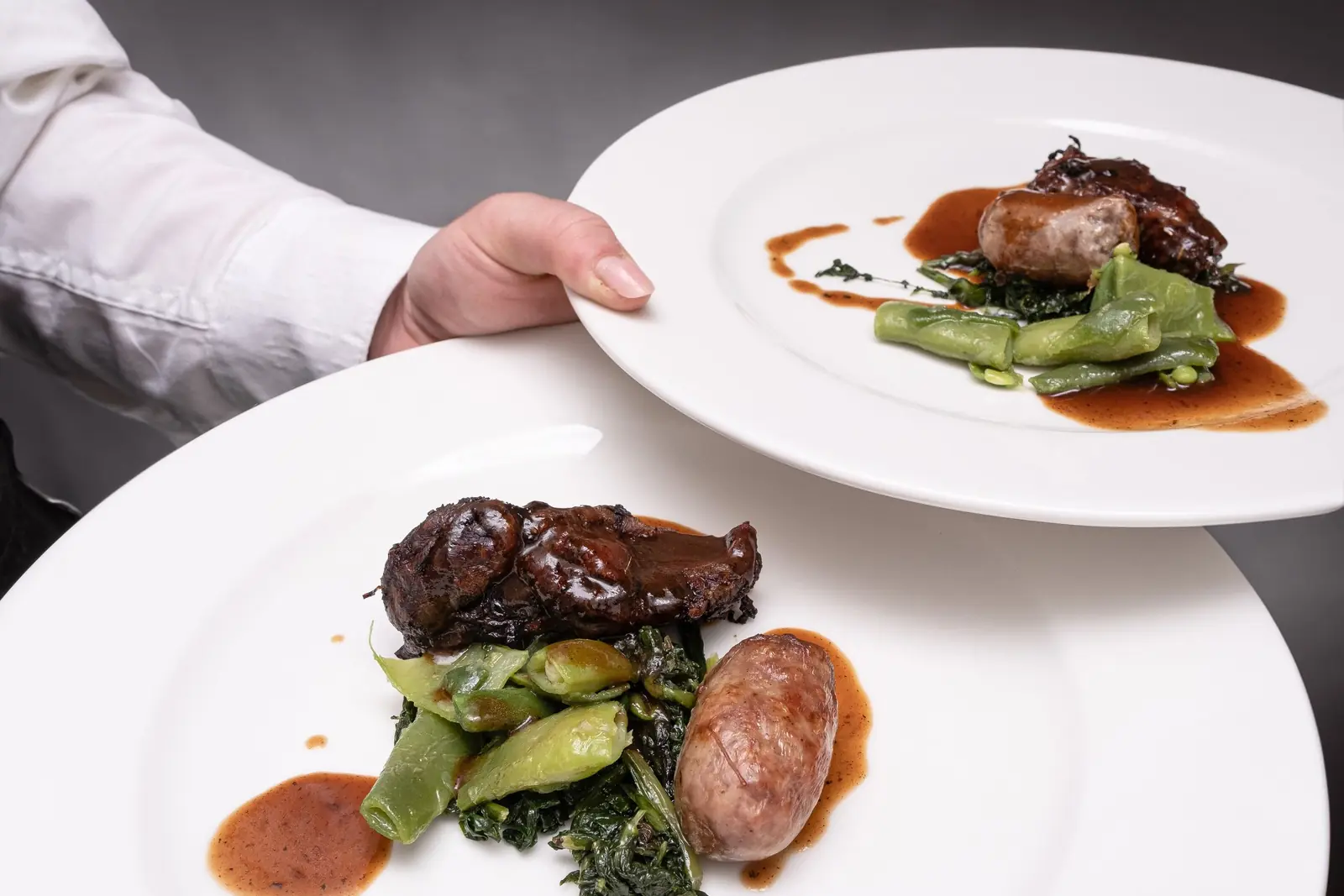
In a staffed villa, the best Moroccan food in Marrakech may be the meal cooked in your own kitchen. Each villa sets things up in its own way, and our listings say so plainly. At Villa Lyla, the cook, maid and caretaker shop and prepare the meals "after offering you a choice of dishes (Moroccan and European cuisine)". At Villa Noor, the cook, housekeeper and caretaker "take care of everything" and you pay only for the groceries, at cost, plus delivery. At Villa Idir, the staff are there from 8 a.m. to 11 p.m., and the cook prepares meals and breakfasts.
In the larger houses, the cook becomes a chef: Villa Azarenka's head chef cooks "tasty and healthy dishes catering to all diets", and Villa Savannah's chef offers traditional Moroccan or international cuisine based on fresh produce.
What to ask for
- A Moroccan breakfast on the first morning: msemen, baghrir, amlou, eggs with cumin
- A spread of cooked salads (zaalouk with aubergine, taktouka with peppers) before lunch by the pool
- A Friday couscous for the whole table
- A tanjia or a pastilla for a celebration dinner: ask a day ahead, both take time
- Grilled fish, salads and fruit when the heat makes tagines feel heavy
How it usually works
The cook suggests the next day's menus, shops at the market or has groceries delivered, and settles the bill with you as agreed. Send allergies, diets and children's ages before you arrive. How the shopping works: groceries for a villa stay. What is included, and what is not: what a fully staffed villa includes.
No cook in your villa?
A private chef for one evening, or a cooking class at the villa, can often be arranged: ask us what is possible for your dates. See also why book a villa with a private chef.
Where to stay
Villas with a cook or chef
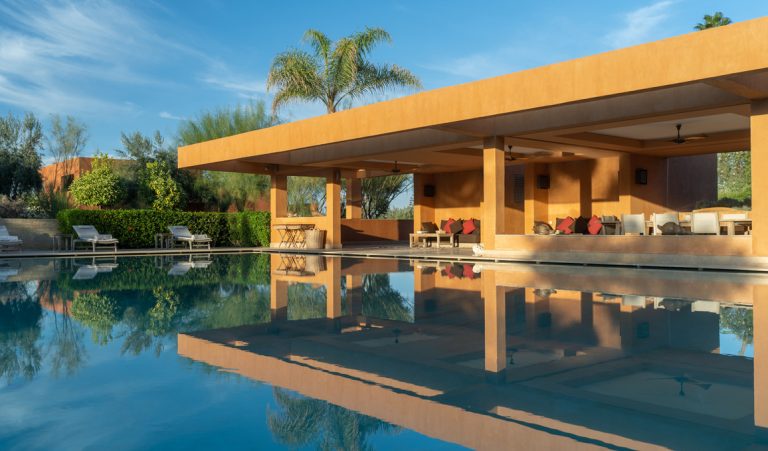
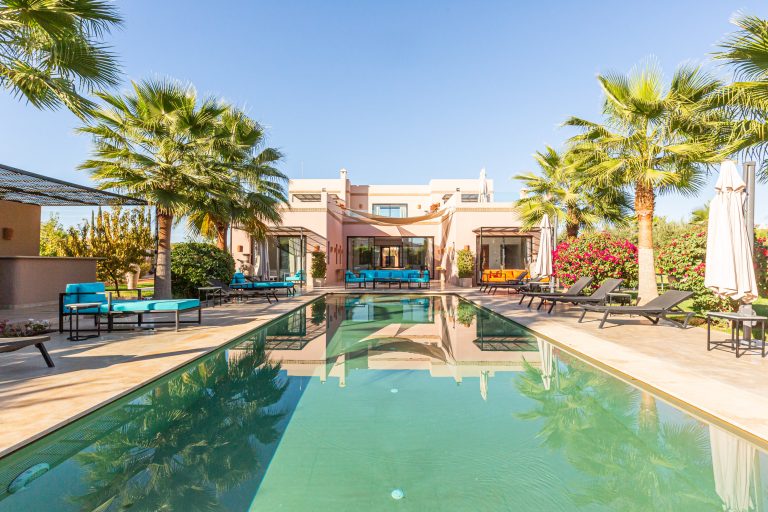
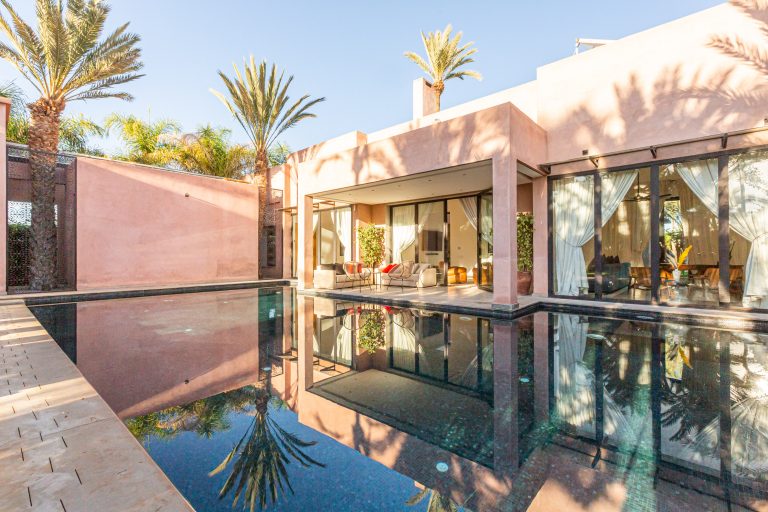
Three villas whose listings name the person in the kitchen, at three price points. Villa Azarenka, on the Route de l'Ourika, has a head chef who cooks for all diets; Villa Lucia, on the Route de Fès, has a chef for family dinners and a private hammam; Villa Noor, in the Palmeraie, has a cook and charges groceries at cost.
| Villa | Bedrooms | In the kitchen, as listed | From, a night |
|---|---|---|---|
| Villa Idir | 4 | Cook, for meals and breakfasts; staff 8 a.m. to 11 p.m. | €650 |
| Villa Noor | 5 | Cook, housekeeper, caretaker; groceries at cost plus delivery | €660 |
| Villa Lyla | 4 | Cook, maid, caretaker; Moroccan and European dishes | €712 |
| Villa Lucia | 5 | The villa's chef, for dinner | €750 |
| Villa Azarenka | 11 | Head chef, all diets; full-time staff | €3,940 |
| Villa Savannah | 22 | Chef, Moroccan or international cuisine | €4,800 |
All of them, with the staff each one lists: staffed villas in Marrakech.
Unlimited Marrakech
Dinner by the pool, cooked in your own kitchen
39 private villas in Marrakech and Oualidia, many with a cook or chef. Tell us your dates, how many you are and what you like to eat; we reply with the villas that are free.
Good to know
Frequently asked questions
What is the most famous food in Marrakech?
Tanjia is the dish Marrakech calls its own: beef or lamb sealed in a clay jar with garlic, cumin, saffron, preserved lemon and smen, then slow-cooked for half a day or overnight in the embers of a hammam furnace. Beyond tanjia, the city is known for couscous, tagines, pastilla, harira, mechoui and mint tea.
Where can you eat tanjia in Marrakech?
The classic place is the mechoui alley on the north-east side of Jemaa el-Fna, where stalls such as Chez Lamine Hadj Mustapha sell tanjia and roast lamb by weight at lunchtime; a quarter-kilo per person is enough. A villa cook can also prepare one if you ask a day in advance.
Which day is couscous eaten in Morocco?
Friday. Couscous is the traditional family lunch after Friday midday prayers, and some restaurants serve it only that day, such as the Friday couscous lunch at La Grande Table Marocaine in the Royal Mansour. UNESCO inscribed the knowledge and practices of couscous in 2020, in a joint file from Morocco, Algeria, Tunisia and Mauritania.
What do people eat for breakfast in Marrakech?
Flatbreads and pancakes: msemen, a flaky square pancake; baghrir, the spongy "thousand-hole" pancake; and harcha, a semolina bread. They come with honey, butter, olive oil or amlou (almond, argan oil and honey), plus fresh orange juice and mint tea. Msemen is sold warm on street griddles in the morning.
Is street food in Marrakech safe to eat?
Most visitors eat at Jemaa el-Fna without trouble. Choose busy stalls where food is cooked in front of you and served hot, avoid salads washed in tap water if your stomach is sensitive, and drink bottled water. For a first evening, a food tour is an easy way to learn which stalls locals trust.
Can a villa cook prepare Moroccan dishes for us?
Yes, in villas with a cook or chef. At Villa Lyla the staff offer a choice of Moroccan and European dishes and do the shopping; at Villa Noor you pay only for groceries at cost plus delivery; Villa Azarenka's head chef cooks for all diets. Ask for a Friday couscous, a tanjia or a pastilla a day ahead.