Jemaa el-Fna at Night: Marrakech’s Iconic Square After Dark
Jemaa el-Fna at night transforms into a sensory overload of sizzling grills, drumbeats, and swirling crowds, making it the undisputed heart of Marrakech after sunset. As the day’s heat fades, the square erupts into a vibrant open-air theater where locals and travelers alike gather for an experience that has been recognized by UNESCO as a masterpiece of the oral and intangible heritage of humanity. This guide covers everything you need to know to navigate the square’s nighttime wonders, from the best food stalls to safety tips, ensuring you make the most of your visit.
Why Jemaa el-Fna Is Unmissable at Night
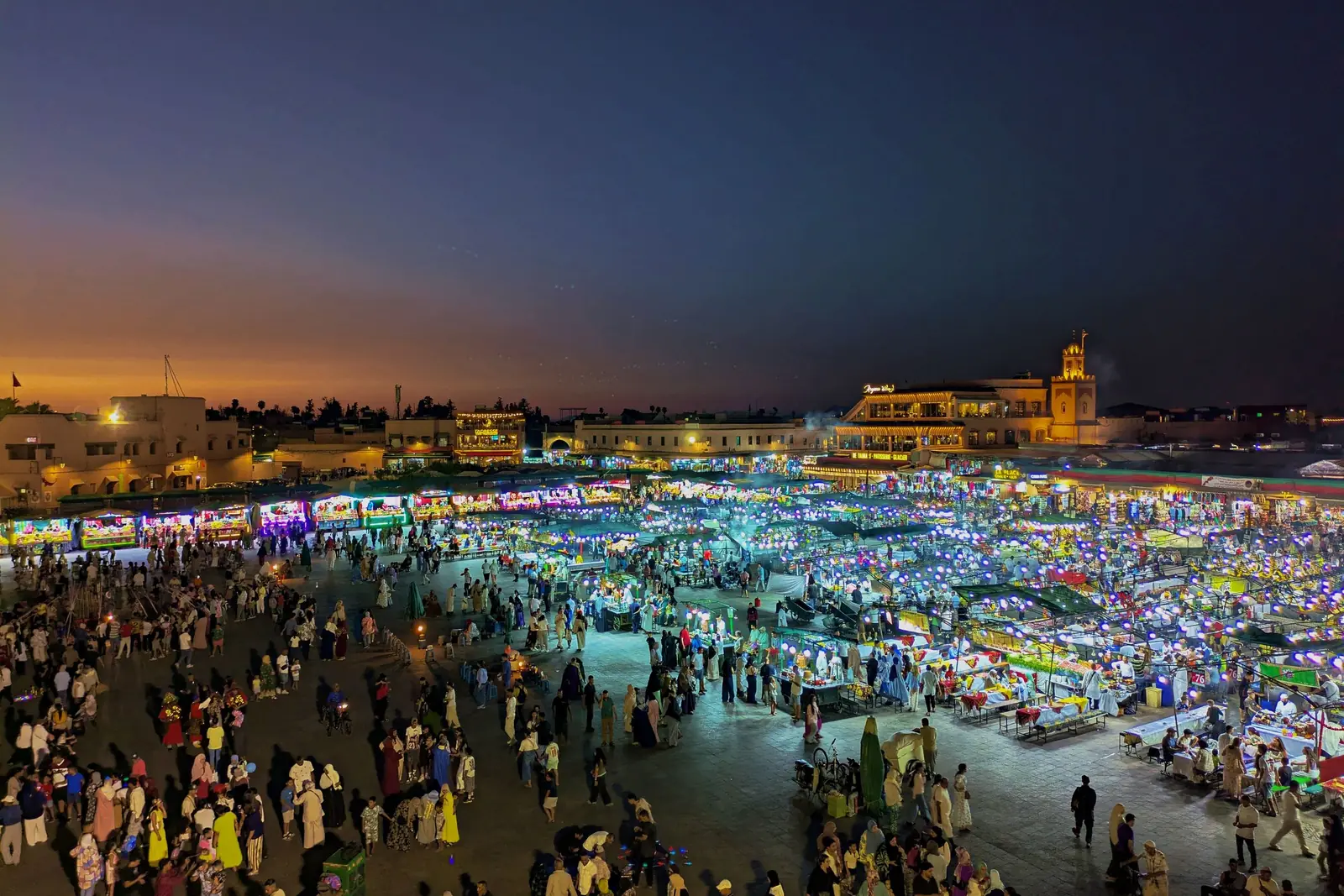
As dusk falls, the square’s character shifts dramatically. The snake charmers pack up, the juice sellers stay on, and the square fills with a sprawling night market of food vendors, each vying for your attention with theatrical displays of skewers, tagines, and seafood. The air fills with the aroma of grilled meat and spices, while the sound of Gnawa music and Berber storytellers creates a unique symphony. This nightly transformation is a ritual that has been repeated for centuries, offering an authentic glimpse into Moroccan culture. To watch the sunset itself from above, see our best sunset spots in Marrakech.
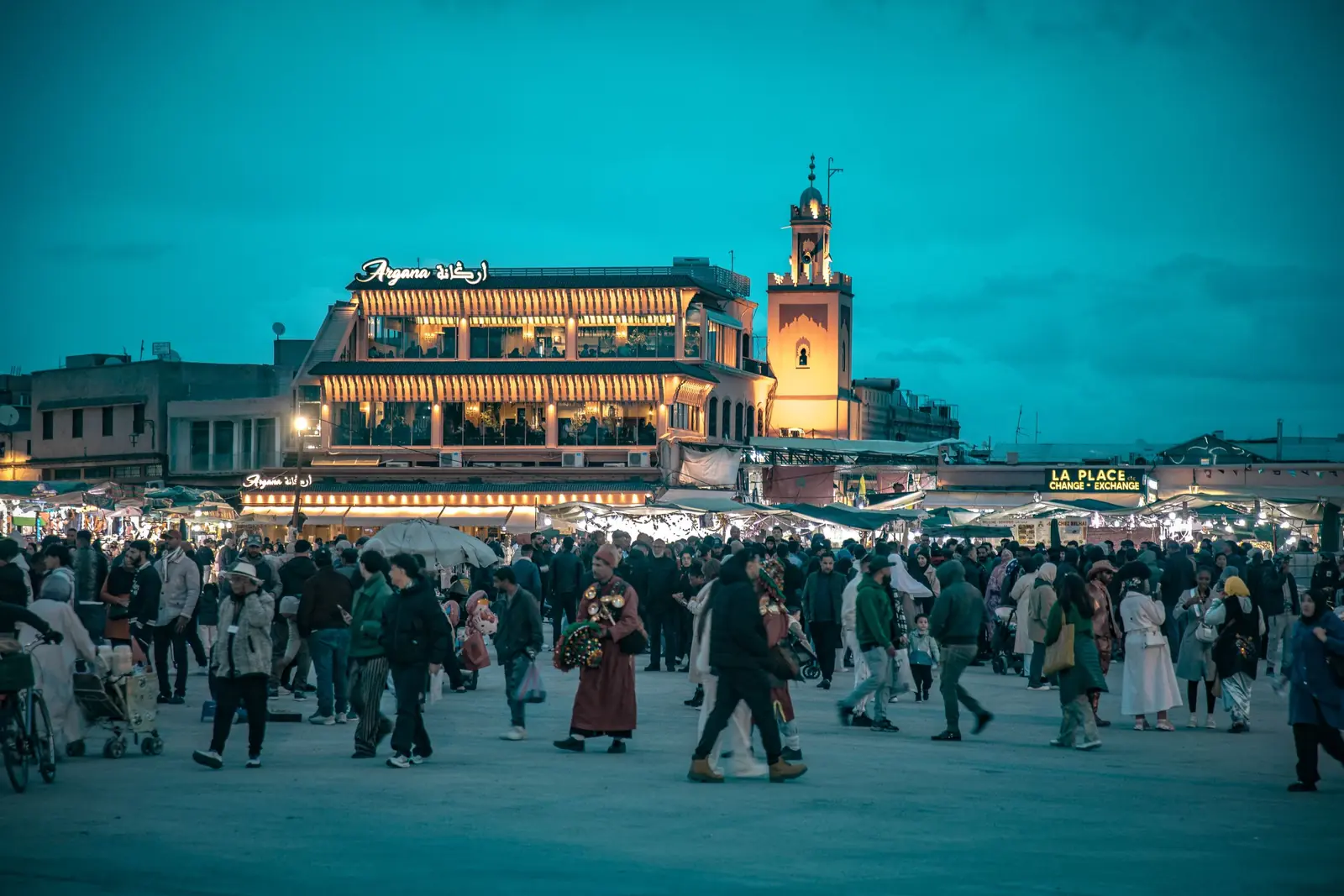
The Transformation: From Day to Night
By around 6 PM, the square begins its metamorphosis. The temporary food stalls, with their bright lights and wooden benches, multiply, creating a maze of culinary delights. The main seating areas form a large circle, with each stall numbered and regulated by the city. This is when the square truly comes alive, and the energy is palpable. The transition is a spectacle in itself, as vendors haul in grills, tables, and ingredients, and the first smoke of the evening rises into the sky.
What to Eat at the Night Food Stalls
The food stalls are the main attraction at night. You can sample a variety of Moroccan dishes, but the most iconic is tanjia, a slow-cooked meat dish traditionally prepared by men and cooked in the ashes of a fire. Also popular are brochettes (grilled skewers), merguez (spicy sausages), and fresh seafood, including sardines and prawns, grilled to order. For a true local experience, try the snail soup (babbouche) from one of the dedicated stalls, or the classic harira soup. Prices are generally reasonable, but always confirm the cost before ordering to avoid surprises.
Entertainment and Culture After Dark
Beyond food, Jemaa el-Fna at night is a stage for performers. Storytellers, each at the centre of a circle of listeners known as a halqa, captivate audiences with their tales, while Gnawa musicians play hypnotic rhythms on castanets and drums. You may also see acrobats, comedians, and even traditional healers. These performances are part of the square’s intangible heritage, but remember that they are not free – if you stop to watch, it’s customary to give a small tip (a few dirhams) when the hat is passed.
Navigating the Crowds and Safety Tips
The square can get extremely crowded, especially between 8 PM and 10 PM. Keep your belongings secure and be aware of your surroundings. While the area is generally safe, petty theft can occur. It’s advisable to avoid engaging with aggressive vendors or henna artists who may try to charge you for unsolicited services. If you’re approached, a firm but polite “no, thank you” (“la, shukran”) is usually enough. Also, be cautious when taking photos – some performers will demand payment for pictures, so it’s best to ask first or be prepared to tip.
Best Viewpoints for the Nighttime Spectacle
For a panoramic view of the square’s chaos and charm, head to one of the rooftop cafes that line the perimeter. Cafés like Le Grand Balcon or Café de France offer prime vantage points where you can sip mint tea and watch the night unfold from above. These spots are perfect for photography and for observing the intricate patterns of the crowd below. Arrive early to secure a good seat, as they fill up quickly during peak hours; at Le Grand Balcon, buying a drink is compulsory to reach the terrace.
Practical Information: Hours, Getting There, and More
Jemaa el-Fna is located in the medina of Marrakech, easily accessible on foot from most hotels in the city. If you’re coming from further away, a taxi can drop you at the nearby Koutoubia Mosque, and it’s a short walk to the square. The night market operates from around 6 PM until late, with some stalls staying open past midnight. The square itself is always open; the crowds thin after midnight, and the food stalls usually pack up around 1 AM. The cafés around the square have restrooms for customers; the food-stall area has none.
How to Experience Jemaa el-Fna Like a Local
To truly experience the square like a local, follow these tips: arrive early to watch the setup, try the street food from a stall that has a long queue (a sign of quality), and engage with the vendors in a friendly manner. Learn a few phrases in Arabic or French – a simple “salam alaikum” goes a long way. Also, be prepared to haggle if you’re buying anything from the nearby souks, but don’t haggle at the food stalls, but ask the price before you sit down and send back any dish you did not order. Finally, take time to sit and people-watch – it’s the best way to absorb the atmosphere.
Frequently Asked Questions
Is Jemaa el-Fna safe at night?
Yes, Jemaa el-Fna is generally safe at night, and the tourist police can be reached on 05 24 38 46 01 (police emergency: 19). However, like any crowded tourist spot, it’s wise to watch your belongings and be cautious of pickpockets. Avoid walking alone in less crowded nearby alleys after dark.
What time does the night market start?
The food stalls typically start setting up around 6 PM and are fully operational by 7 PM. The market continues until late: the busiest time is 8 PM to 11 PM, and most stalls keep serving until around midnight before packing up.
How much does food cost at the night stalls?
Prices vary, but a main dish like a brochette or tanjia can cost between 20 and 50 Moroccan dirhams (about $2-$5). Seafood dishes are usually more expensive. Always ask for the price before ordering to avoid any misunderstanding.
Can I take photos at night?
Yes, you can take photos, but be respectful. Some performers and vendors may ask for payment if you photograph them. It’s best to ask permission first or be prepared to give a small tip.
Are there vegetarian options?
Yes, many stalls offer vegetarian options such as vegetable tagines, grilled peppers, and salads. You can also enjoy fresh fruit juices and smoothies from the juice stalls, which are open throughout the day and into the night.
Conclusion
Jemaa el-Fna at night is an experience that captures the essence of Marrakech – chaotic, colorful, and captivating. From the sizzling grills to the rhythmic music, the square offers a feast for all senses. Whether you’re a first-time visitor or a seasoned traveler, a night at Jemaa el-Fna is an unforgettable journey into Moroccan culture. So, step into the crowd, savor the flavors, and let the magic of the square enchant you.
Plan your visit, bring your curiosity, and immerse yourself in the vibrant nightlife of Marrakech’s most famous square. It’s an experience you won’t soon forget.