
Flavors of Marrakech: 10 Traditional Moroccan Dishes You Must Try
Discover the traditional dishes of Marrakech, from fragrant tagines to sweet-and-savoury pastilla. This guide takes you to the heart of Moroccan gastronomy and points you to the best places to enjoy it.
The heart of Moroccan cuisine: understanding the foundations
Moroccan cuisine is characterised by a sophisticated use of spices, slow cooking and a balance between savoury and sweet. Key ingredients include ras el hanout, cumin, turmeric, saffron, cinnamon, ginger and paprika. Preserved lemons provide a unique tangy, salty flavour that is essential to many tagines.
- Spices: Ras el hanout (a complex blend of up to 30 spices), cumin, turmeric, saffron, cinnamon, ginger and paprika are used for depth and aroma.
- Preserved lemons: Lemons cured in salt and lemon juice, providing a unique tangy, salty flavour essential to many tagines.
- Olives and olive oil: Morocco is a major producer, and high-quality olives and oil are everywhere.
- Fresh herbs: Coriander and parsley are used in abundance.
- Slow cooking: The tagine, the iconic conical clay pot, allows slow, moist cooking over a low heat, tenderising meats and melding flavours.
Essential traditional dishes of Marrakech
Here are the must-try traditional dishes that define the Marrakech dining experience.
Tagine: the iconic slow-cooked stew
No dish is more synonymous with Morocco than the tagine, named after the earthenware pot in which it is cooked. This slow-simmered stew combines meat or fish with vegetables, fruit, nuts and a blend of spices. The conical lid traps the steam, which condenses and drips back onto the ingredients, creating an incredibly tender and flavourful dish.
- Variations not to miss in Marrakech:
- Lamb tagine with prunes and almonds: A sweet-and-savoury classic, often served at celebrations.
- Chicken tagine with preserved lemons and olives: A quintessential Moroccan flavour profile.
- Kefta tagine: Spiced meatballs cooked in a rich tomato sauce with eggs poached on top.
The best tagines are found in local riad restaurants or with dadas (traditional cooks). To organise your stay and fit in these experiences, see our guide to Marrakech itineraries.
Couscous: the Friday feast
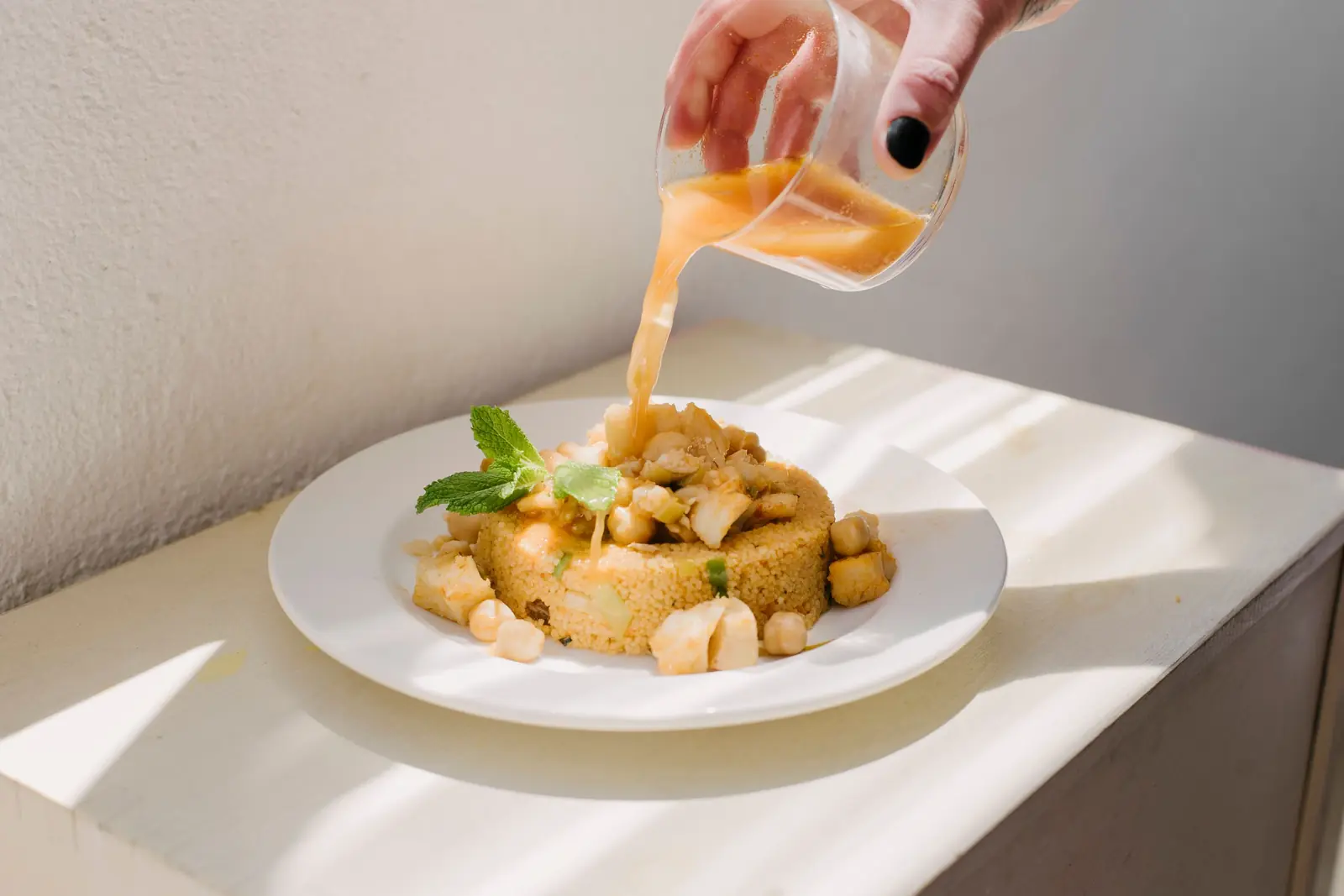
Traditionally served on Fridays after prayers, couscous is Morocco’s national dish. It involves steaming fine semolina granules over a stew of meat and vegetables until they are light and fluffy. The stew, called marqa, typically contains seven vegetables (carrots, turnips, courgettes, pumpkin) and lamb or chicken.
The preparation is an art, with the couscous steamed several times over. It is a communal dish, often eaten from a shared platter with the right hand. For an authentic recipe and cultural context, BBC Travel offers reliable information.
Pastilla (B’stilla): the savoury-sweet pie
A masterpiece of Fez and Marrakech cuisine, pastilla is an elaborate pie that perfectly embodies the Moroccan flair for combining sweet and savoury. Traditionally made with pigeon, modern versions often use chicken or seafood. The shredded, spiced meat is mixed with almonds, eggs and a hint of cinnamon and sugar, all wrapped in sheets of warqa pastry (similar to phyllo) and dusted with icing sugar and cinnamon.
It is a textural delight—crispy, flaky, savoury and sweet—and a centrepiece of special occasions.
Harira: the comforting soup
Harira is a hearty tomato-based soup, rich in lentils, chickpeas, lamb and vermicelli, and flavoured with celery, coriander and a touch of lemon. It holds particular significance during Ramadan, when it is the soup used to break the fast at sunset. It is a comfort food enjoyed year-round, especially on cooler evenings in Marrakech.
Mechoui: whole roasted lamb
Mechoui is a celebration dish, featuring a whole lamb or sheep slow-roasted in an oven or on a spit until the meat falls off the bone and the skin is crisp. The meat is simply seasoned with salt, cumin and sometimes butter, letting the quality of the lamb speak for itself. It is often the centrepiece of large gatherings, festivals and weddings in the Marrakech region.
Tanjia: Marrakech’s unique speciality
While the tagine is known across the country, tanjia is a distinctly Marrakchi speciality. It is a bachelor’s dish, traditionally prepared by men.
Meat (usually lamb shank), preserved lemons, garlic and spices are placed in a distinctive amphora-shaped clay pot. The pot is then taken to the ferran (public oven) or buried in the hot ashes of a hammam to cook slowly for hours. The result is incredibly succulent, aromatic meat.
Zaalouk and other salads (cooked salads)
Meals in Marrakech often begin with an assortment of cooked salads. These are not leafy greens but flavourful, spiced vegetable dishes served at room temperature.
- Zaalouk: A smoky, delicious dip made from roasted aubergines and tomatoes, seasoned with garlic, paprika and cumin.
- Taktouka: A salad of roasted green peppers and tomatoes with garlic and spices.
- Carrot salad: Grated carrots dressed with orange blossom water, lemon and cinnamon.
They are usually enjoyed with fresh, warm bread.
Brochettes: street food grills
Sizzling over charcoal at street stalls and on Jemaa el-Fna square at night, brochettes are Morocco’s answer to kebabs. Skewers of marinated lamb, beef, chicken or liver are grilled and served with bread and often a harissa sauce (hot chilli paste) or cumin salt. They are an authentic, quick and delicious taste of everyday Marrakech.
Mint tea: the symbol of hospitality
Although not a dish, no culinary experience in Marrakech is complete without atay (Moroccan mint tea). It is a ceremony in itself.
Gunpowder green tea is steeped with a large bunch of fresh mint and plenty of sugar. It is poured from a height to create a froth, and offered to guests again and again. It is the drink of welcome, negotiation and relaxation.
Sweet endings: pastries and desserts
Moroccan pastries often feature almonds, honey and floral waters.
- Briouats: Triangular pastries filled with almond paste or savoury meat, then fried.
- Chebakia: Flower-shaped pastries, fried, dipped in honey and coated in sesame seeds, particularly popular during Ramadan.
- Baghrir: “Thousand-hole” pancakes, spongy and light, served warm with honey and butter.
Where to experience authentic flavours in Marrakech
To really taste these dishes, venture beyond the tourist menus. Explore the places where locals gather and discover the hidden places only locals know to savour the traditional dishes of Marrakech.
- Jemaa el-Fna night market: The ultimate street food experience. Try harira, snails, brochettes and sheep’s head at the bustling stalls.
- Traditional riads: Many historic guesthouses offer exquisite home-cooked meals prepared by talented dadas.
- Local eateries (“tagine stalls”): Look for the small restaurants frequented by locals. They often serve a set menu of tagine or couscous.
- Food tours: Consider a guided tour to navigate the culinary landscape with an expert. Reputable tour operators often partner with local culinary historians.
To plan a culinary itinerary and understand food safety, consulting the resources on the CDC Travel Health page is a prudent step. You can also discover free things to do in Marrakech to balance your budget. For a complete gastronomic experience, discover the best fine dining establishments in Morocco.
Frequently Asked Questions
What is tanjia and how is it different from tagine?
The tagine is known across the country, while tanjia is a distinctly Marrakchi speciality: a bachelor’s dish, traditionally prepared by men.
Why is couscous eaten on Fridays in Morocco?
Couscous, Morocco’s national dish, is traditionally served on Fridays after prayers.
Where is the best street food in Marrakech?
The Jemaa el-Fna night market is the ultimate street food experience, where you can try harira, snails, brochettes and sheep’s head at the bustling stalls.
What is harira and when is it eaten?
It is a hearty soup with lamb and vermicelli, flavoured with celery, coriander and a touch of lemon. During Ramadan it is the soup used to break the fast at sunset.
What meat is used in pastilla?
Pastilla is traditionally made with pigeon, but modern versions often use chicken or seafood.
Conclusion: a journey for the senses
The traditional dishes of Marrakech offer far more than sustenance; they are an immersive cultural experience. Every bite of a fragrant tagine, every sip of sweet mint tea, connects you to the city’s rich history and warm hospitality. From the communal joy of a Friday couscous to the unique speciality of a Marrakchi tanjia, the cuisine is diverse, deeply flavourful and endlessly fascinating.
Call to Action: Ready to embark on your own culinary adventure? Start planning your trip to Marrakech. Look into cooking classes to bring the flavours home, book a table at a renowned riad restaurant and, above all, arrive with an open mind and an empty stomach.
The flavours of Marrakech await you. To enrich your experience, explore the best excursions from Marrakech and check the resources on visitmarrakech.com to prepare your stay.