What Is a Riad in Marrakech? History, Layout & How to Stay
Staying in a riad in Marrakech means living in a piece of living history. In these traditional homes built around an Andalusian garden, the scent of jasmine and the trickle of the central fountain replace the bustle of modern hotels. This guide tells you everything you need to know for an authentic experience in the heart of the medina.
Marrakech riads: history and origins
The history of Marrakech’s riads begins with the city itself, founded by the Almoravids around 1070: the oldest known riad garden in Morocco was uncovered in the palace of Ali ben Youssef (early 12th century), and the oldest houses still standing date from the Saadians (16th to early 17th century). The word “riad” comes from the Arabic for “garden”, referring to the central courtyard that forms the heart of the house. Built by wealthy merchants and nobles as private havens, these urban palaces showcase intricate Islamic architecture: geometric zellij tilework, carved stucco and painted cedar ceilings.
Every ornament tells of craftsmanship handed down over centuries. The coolness of the thick walls and the play of light and shade in the galleries create a timeless atmosphere.
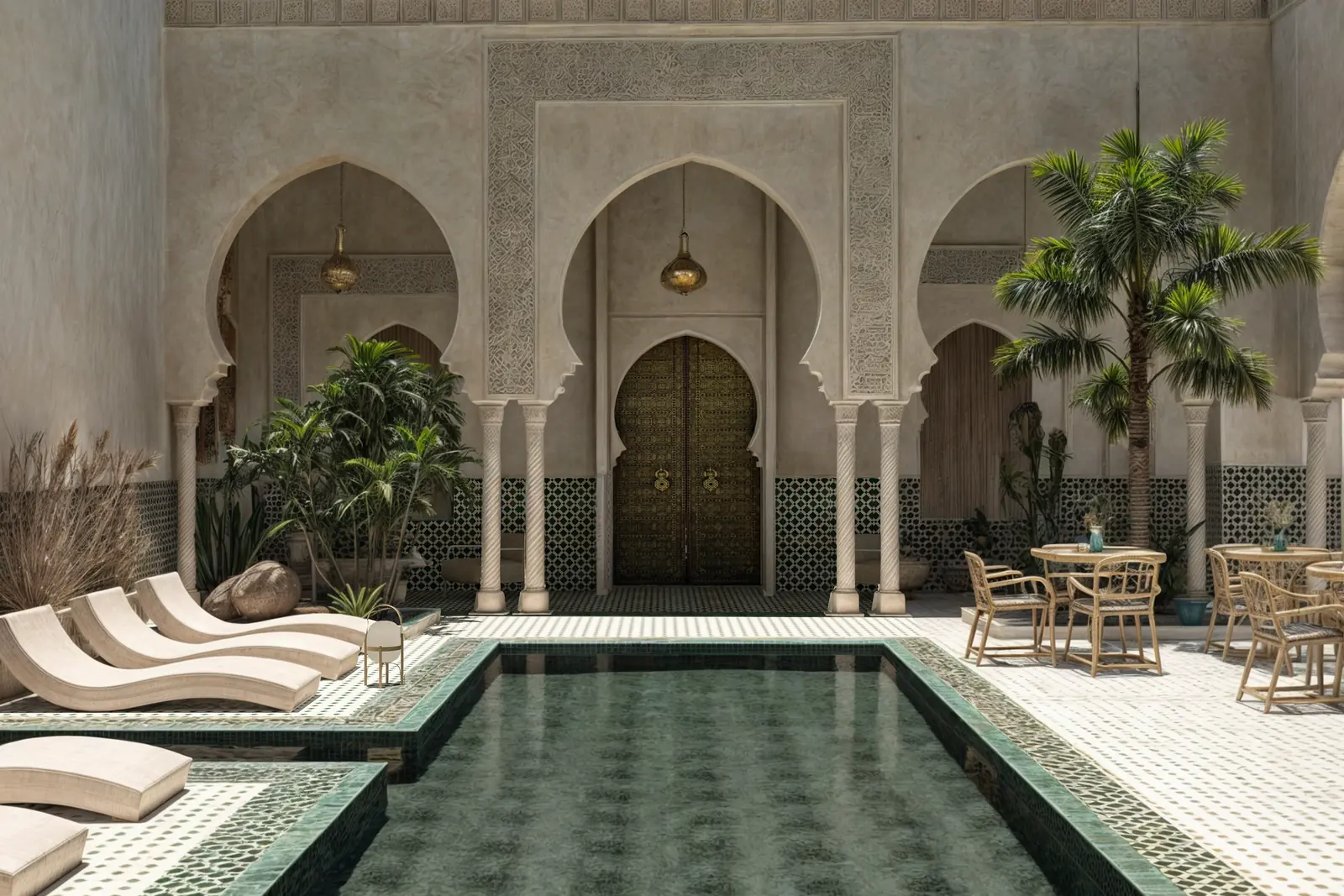
Traditional layout of a Moroccan riad
A classic riad faces inwards, with rooms arranged around a central courtyard. Key elements include:
- Central courtyard (wast ad-dar): Open to the sky, often with a fountain or pool, and planted with orange or lemon trees, jasmine or bougainvillea.
- Galleries: Arcaded galleries on two or four sides of the courtyard, providing shade and seating.
- Rooms: Bedrooms and lounges open onto the courtyard, with thick walls that keep the interior cool in summer and warm in winter.
- Roof terrace: Used for drying laundry, sleeping in summer and enjoying views over the medina and the Atlas Mountains.
Benefits of staying in a riad in Marrakech
Staying in a riad offers a unique cultural immersion, far from the bustle of the souks. These spaces are a peaceful refuge where the staff serve traditional Moroccan breakfasts and dinners. Unlike standard hotels, you experience genuine hospitality: your hosts help you arrange tours, hammam sessions and cooking classes.
Choosing a riad also supports the preservation of local heritage. Many properties are family-owned, and your stay contributes directly to the upkeep of centuries-old architecture and craftsmanship. To see how these homes fit into your itinerary, check our packing list for Marrakech and explore the must-try flavours of Marrakech.
Choosing the ideal riad in Marrakech
Consider location, size and amenities. Riads in the medina are close to landmarks such as Jemaa el-Fna and the Bahia Palace. Some offer pools, hammams or rooftop restaurants with views over the city and the Atlas Mountains. Read recent reviews and look for properties with updated facilities that still retain their traditional charm. Take the opportunity to plan some unforgettable excursions from Marrakech. To pick a quarter, see the best areas to stay inside the Marrakech medina.
Booking a riad: practical tips
Book directly with the riad for better rates and local advice. Travel during the shoulder seasons (March–May, September–November) for pleasant weather and fewer crowds. Check whether the riad is accessible by car: some can only be reached on foot through narrow alleys. Arrange airport transfers in advance, as the medina’s streets are tight. To stay connected, opt for a Morocco eSIM or a pocket WiFi router.
Your stay in a riad: atmosphere and services
Expect a warm welcome with mint tea poured from a silver teapot. Breakfast usually includes msemen (Moroccan pancakes), fresh bread, jam and coffee. Many riads offer dinner on request: tagines, couscous and pastilla served in the courtyard under the stars. The rooms are simple yet elegant, with traditional decor and thick walls that keep the interior cool.
Noise from the medina may filter in during the day, but most riads are quiet at night. Wi-Fi is generally available, and the staff can recommend local activities. For families, our family travel guide to Morocco offers tips on finding riads with connecting rooms.
Riad preservation and contemporary challenges
Riad restoration has boomed since the 1990s, but rising property prices and regulations threaten traditional ownership. Many riads are now owned by foreigners or used as holiday rentals. The medina has been a UNESCO World Heritage site since 1985, and the local authorities are working to preserve its architectural heritage.
Travellers can contribute by choosing riads that employ local staff and use sustainable practices. For more cultural insights, visit the official Marrakech tourism website. For more context on getting around the city, see our medina navigation guide.
Frequently asked questions
What is the difference between a riad and a hotel?
A riad is a traditional house with a central garden offering an intimate experience, whereas a hotel offers standardised rooms and amenities, often located outside the medina.
Are riads safe for solo travellers?
Yes, riads are generally safe: the staff are attentive, the doors are locked at night and solo female travellers find a secure setting with good reviews.
Can I book a riad for a wedding or an event?
Some larger riads host events; contact them directly to discuss capacity, catering and permits.
What is the best riad in Marrakech for couples?
Look for riads with a private terrace, pool and romantic dining options in the Kasbah or Mouassine neighbourhoods for the ideal atmosphere.
Do riads serve alcohol?
Some riads with a bar licence serve alcohol, but many do not; check before booking if this matters to you.
Conclusion: the authentic riad experience
A riad in Marrakech is much more than accommodation: it’s a gateway to Moroccan culture, history and hospitality. By staying in one, you support local heritage and enjoy an unforgettable experience. Immerse yourself in the magic of the Red City by exploring the official tourism resources and start planning your trip.
Learn more about riad architecture and discover how these historic homes preserve centuries of craftsmanship. For inspiration on other unique stays, explore our guide to the best villas and riads with a private pool.