Marrakech Street Food: 12 Must-Try Dishes & Where to Eat
Marrakech street food is a sensory overload of sizzling grills, fragrant spices, and sweet mint tea. In 2026, the city’s culinary scene is more vibrant than ever, blending centuries-old recipes with modern food stalls. This guide cuts through the noise to tell you exactly what to eat and where to find the most authentic bites in the medina.
The core of Marrakech street food is simple, hearty, and deeply flavorful. You should prioritize dishes like tanjia, harira, and grilled meats, and head to Jemaa el-Fnaa square for the classic experience, but also venture into side alleys for hidden gems. Below, we break down the must-try foods and the best spots to sample them.
Essential Marrakech Street Food Dishes
Marrakech’s street food is a reflection of its history as a crossroads of cultures. Here are the dishes you absolutely cannot miss, each with a distinct story and taste.
Tanjia: The City’s Signature Dish
Tanjia is a Marrakech specialty, a slow-cooked meat stew named after the clay pot it’s cooked in. It’s traditionally prepared by men who would take their sealed pot to the local hammam (public bath) and let the residual heat cook it overnight. The result is meltingly tender beef or lamb, flavored with garlic, cumin, saffron, and preserved lemon. Look for small, family-run stalls that sell tanjia by weight; it’s often served with bread for dipping.
Harira: The Classic Soup
Harira is Morocco’s iconic soup, especially during Ramadan. It’s a rich tomato-based soup with lentils, chickpeas, and a medley of spices, often thickened with flour and topped with fresh coriander. In Marrakech, you’ll find it simmering in huge pots, perfect for a light breakfast or a late-night snack. It’s both nourishing and comforting.
Grilled Meats and Kebabs
Grilled skewers (brochettes) are a street food staple. You’ll see vendors fanning flames over charcoal, grilling lamb, beef, or chicken usually served with bread, harissa and a simple tomato-and-onion salad, with cumin and salt on the table. For the best experience, watch the meat cook and ask for it fresh off the grill.
Snail Soup (Babbouche)
For the adventurous eater, snail soup is a must-try. Served in small bowls, the snails are simmered in a peppery, herbal broth made with thyme, anise, and licorice. The broth is the star, and locals love to sip it after the snails. It’s a warming, slightly spicy treat that’s said to have health benefits.
Freshly Squeezed Orange Juice
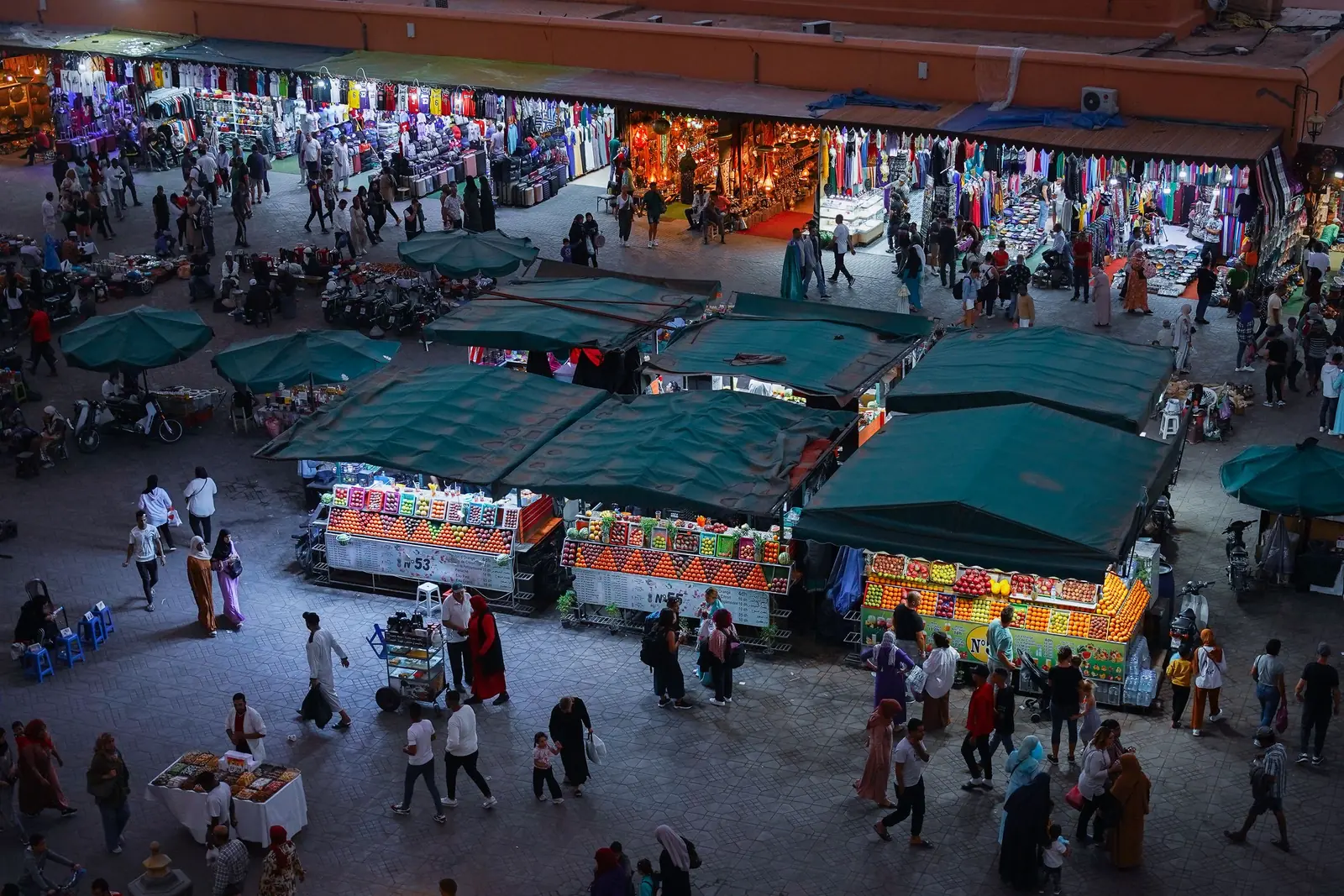
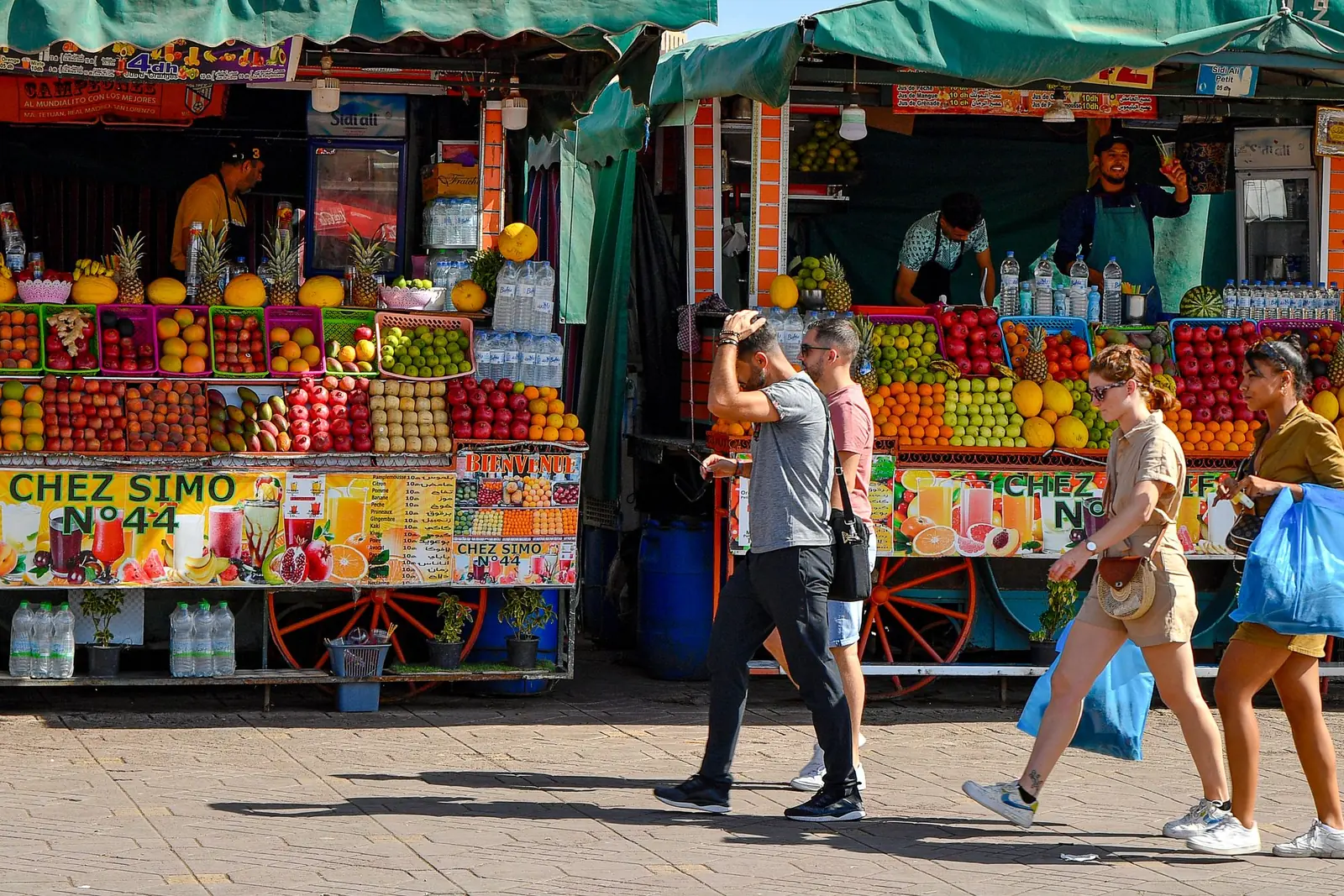
While not a dish, the orange juice stands are a Marrakech institution. In 2026, you’ll find them everywhere, but the ones in Jemaa el-Fnaa are the most famous. The juice is sweet, pulpy, and incredibly fresh. It’s the perfect palate cleanser between savory snacks.
Where to Find the Best Street Food in Marrakech
Knowing what to eat is only half the battle; finding the best versions is the other. Here’s a breakdown of the key areas and specific spots to guide you.
Jemaa el-Fnaa Square: The Epicenter
This UNESCO-listed square transforms into a massive open-air food market at dusk. It’s chaotic, touristy, but undeniably atmospheric. Here you’ll find dozens of stalls grilling meats, frying fish, and serving soups. While some have criticized the quality, a general rule is to look for stalls with the most local customers. Every stall has its number painted on the cart, but recommendations by number go out of date as stalls shift, so trust the crowd rather than a list. Be prepared for pushy touts, but don’t let that deter you from the experience.
The Medina’s Hidden Gems
Venture beyond the main square into the winding alleys of the medina. Here you’ll find smaller, more authentic spots. For breakfast, look for stalls selling msemen (flaky square pancakes) with honey and butter, or harcha (semolina griddle cakes). For lunch, follow the scent of grilling merguez sausages or slow-cooked tagines. A good strategy is to wander during the lunch rush and see where the locals are lining up. For sit-down restaurants as well, see where to eat in the Marrakech medina.
Specific Stalls and Food Stalls
While vendors change, some names have become well-known. For tanjia, ask your riad which counter near the square is serving it that day, or order it in a medina restaurant: Le Salama, Terrasse des Épices and Le Jardin all have it on the menu. For orange juice, ask for it squeezed in front of you. For a sweet treat, try chebakia (sesame and honey cookies) from any pastry stall. The key is to trust your nose and go where the locals go.
Sweet Treats and Drinks to Complement Your Food Journey
No street food tour is complete without something sweet and a hot beverage.
Chebakia and Other Pastries
Chebakia is a flower-shaped cookie fried and coated in honey and sesame seeds. It’s sticky, sweet, and perfect with mint tea. You’ll also find kaab el ghazal (gazelle horns) filled with almond paste, and briouats (fried pastries) that can be sweet or savory.
Mint Tea: The National Drink
Mint tea, or atay, is more than a drink; it’s a symbol of hospitality. You’ll be offered it constantly. In the street, it’s often served in small glasses from ornate teapots. The ritual of pouring it from a height is a show in itself. It’s the perfect end to any meal.
Food Safety Tips for Enjoying Marrakech Street Food
Eating street food is part of the adventure, but a few precautions will keep your trip enjoyable.
- Watch for cleanliness: Choose stalls where the vendor handles food with tongs, not bare hands, and where the cooking area looks tidy.
- Opt for freshly cooked items: Hot, freshly grilled or fried foods are safer than items that have been sitting out.
- Drink bottled water: Avoid tap water and ice made from it. Stick to bottled drinks, and ask for juice to be squeezed in front of you, since some sellers top it up with tap water.
- Trust your instincts: If a stall looks unhygienic or the food doesn’t smell right, move on.
Frequently Asked Questions
Is it safe to eat street food in Marrakech?
Yes, it’s generally safe if you choose busy stalls with high turnover and watch for proper hygiene. Stick to freshly cooked items and avoid anything that looks like it’s been sitting out.
What is the most famous street food in Marrakech?
Tanjia is the most iconic dish tied to Marrakech, followed closely by grilled meats and harira soup. Jemaa el-Fnaa square is the most famous spot to try a variety.
How much does street food cost in Marrakech?
Prices vary, but you can get a filling meal for 30-50 Moroccan dirhams (MAD). As an indication, a bowl of harira costs about 10-15 MAD and a glass of fresh orange juice about 5-10 MAD. Always ask the price before you sit down.
What is the best time to go to Jemaa el-Fnaa for food?
The food stalls start setting up around 5 PM and are in full swing by 7 PM. Evening is the best time for the full experience and the widest variety.
Conclusion
Marrakech street food is a culinary adventure that engages all your senses. From the rich, slow-cooked tanjia to the bustling energy of Jemaa el-Fnaa, every bite tells a story. Use this guide to navigate the medina with confidence, and don’t be afraid to try something new. The best experiences often come from a spontaneous choice.
Ready to taste Marrakech? Book your trip now and dive into the flavors of the Red City. For more travel inspiration, check out Lonely Planet and Tripadvisor.