Eid in Marrakech: 2027 Dates, Traditions & Closures
Updated
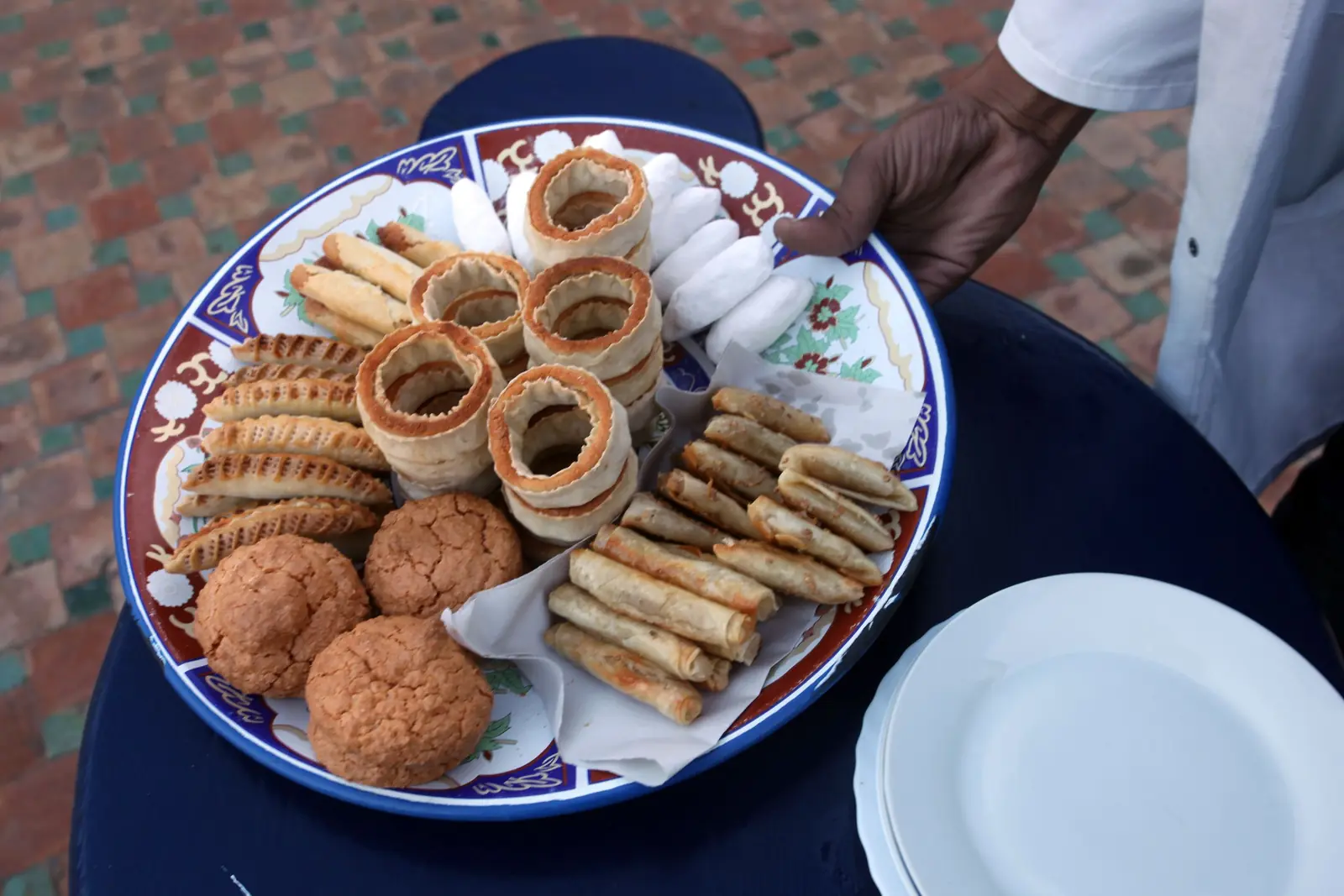
Morocco celebrates two Eids, and in 2027 they are expected on Wednesday 10 March (Eid al-Fitr, the end of Ramadan) and Monday 17 May (Eid al-Adha, the Feast of Sacrifice). Both are two-day public holidays, confirmed by moon sighting only shortly before. On the first day, most of the medina closes, families stay at home and transport slows down; hotels and staffed villas carry on, so Eid in a villa is a quiet, easy day rather than a problem.
Eid 2027 at a glance
| Eid al-Fitr | Eid al-Adha | |
|---|---|---|
| Expected in 2027 | Wednesday 10 March | Monday 17 May |
| Possible range | 9 to 11 March | 16 to 18 May |
| Public holiday | Two days, expected 10 and 11 March | Two days, expected 17 and 18 May |
| When the date is confirmed | The evening before, by moon sighting | About ten days before, when Dhu al-Hijja begins |
| In 2026 | Friday 20 March | Wednesday 27 May |
| How quiet | Very quiet morning, livelier by the second day | The quietest days of the year; many places close for longer |
Both dates are provisional. The full 2027 calendar, with the civil holidays and the other religious feasts, is in our guide to Morocco’s public holidays.
How Morocco fixes the date of Eid
Morocco does not take its feast days from a printed calendar. The Ministry of Habous and Islamic Affairs watches for the new crescent after sunset on the 29th day of the month, through its regional delegates and with help from the armed forces, then announces the result the same evening. If the crescent is not seen, the month runs to 30 days.
In 2026 this played out exactly as it usually does. Ramadan began on Thursday 19 February, the crescent of Shawwal was seen on the evening of Thursday 19 March, and Eid al-Fitr was declared for the next morning, Friday 20 March. The government then added an exceptional day off for public administrations on Monday 23 March, and the banks followed, so offices stayed shut from Friday to Monday. For Eid al-Adha, the crescent of Dhu al-Hijja was seen on Sunday 17 May, making the feast Wednesday 27 May, as Hespress reported from the ministry’s statement.
If your arrival, departure or a booked excursion falls within a day of the expected Eid, assume it could be the holiday itself. Keep flexible plans for the day before and the day after.
Eid al-Fitr: the end of Ramadan
Eid al-Fitr, also called the small Eid, closes the month of fasting. Expected on Wednesday 10 March 2027, it begins with the Eid prayer shortly after sunrise, at mosques and open-air prayer grounds (musallas), followed by a sermon. Before the prayer, families give zakat al-fitr, a charitable gift of food or money for the poor.
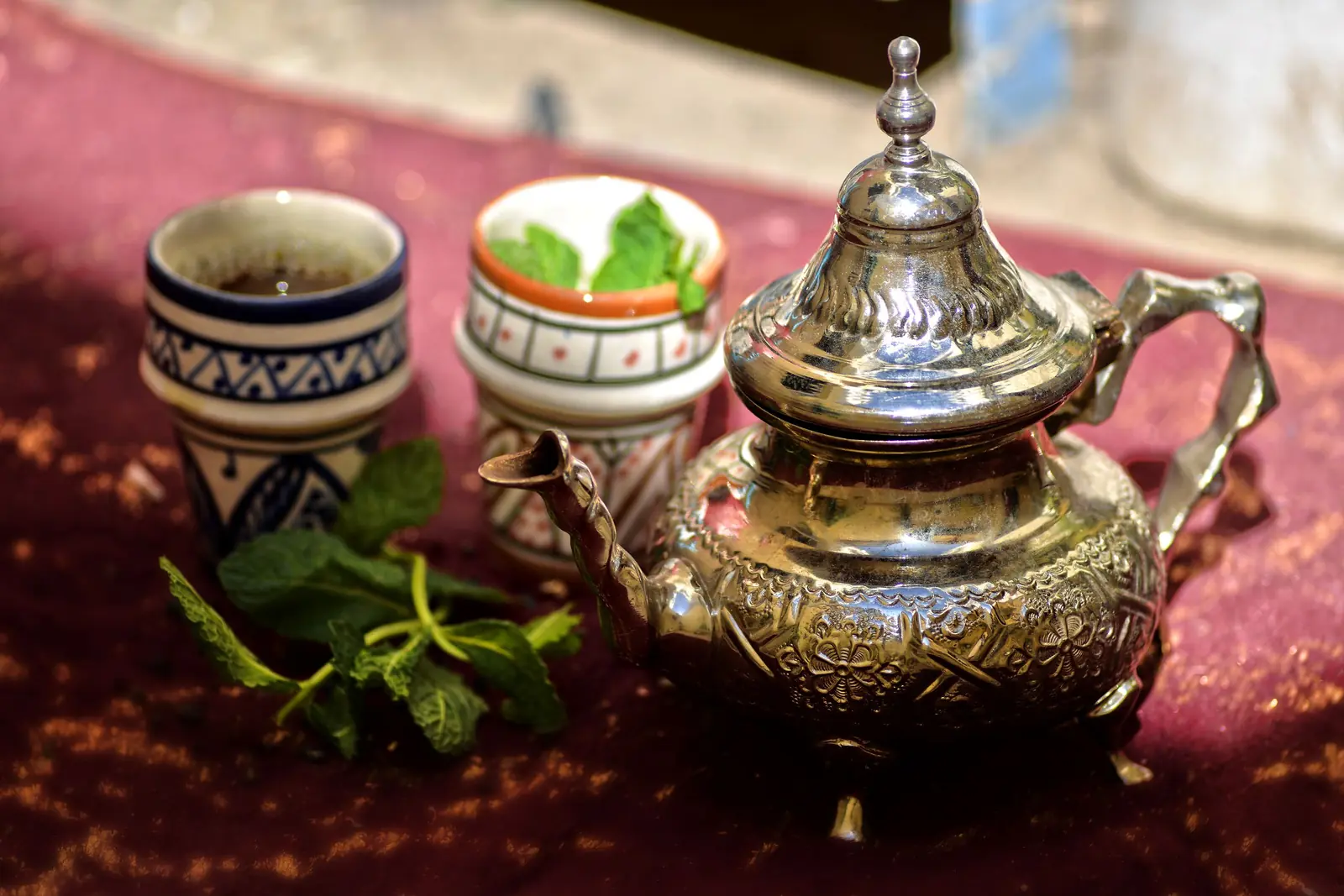
Then comes the first daytime breakfast in a month: msemen, baghrir, pastries such as chebakia and kaab el ghazal, mint tea. People wear new clothes, children receive money and sweets, and the rest of the day is spent visiting relatives. The greeting is “Eid Mubarak” or “Eid Saïd”.
For what the month before looks like, and how villa staff work while fasting, read our guide to Ramadan in Marrakech. March weather is kind for it: warm afternoons and cool evenings, covered in Marrakech in March.
Eid al-Adha: the Feast of Sacrifice
Eid al-Adha, the “big Eid” (l’Aïd el-Kebir), commemorates Ibrahim’s willingness to sacrifice his son. Its central ritual is the sacrifice of a sheep by each family, with the meat shared among relatives, neighbours and the poor. For a visitor, it is the feast that changes the city most.
- The week before: sheep markets appear on the edge of town, and you will see sheep travelling on mopeds, roofs and car boots. Roads and coaches are busy as families travel home.
- The day itself: after the morning prayer, the sacrifice takes place at home, in courtyards and on rooftops. Medina shops and most restaurants close. Expect smoke from grills in the afternoon.
- The days after: many businesses stay closed beyond the two official days, often for most of the week, and some staff take extra time off to be with family.
Recent history matters here. In 2025, King Mohammed VI asked Moroccans to forgo the sacrifice, for the first time in twenty-nine years, after six years of drought had reduced the national flock. In March 2026 the government confirmed it would take place as usual that year, and it did, on Wednesday 27 May. For 2027, Eid al-Adha is expected on Monday 17 May, which is also Whit Monday in France and a busy travel weekend from Paris.
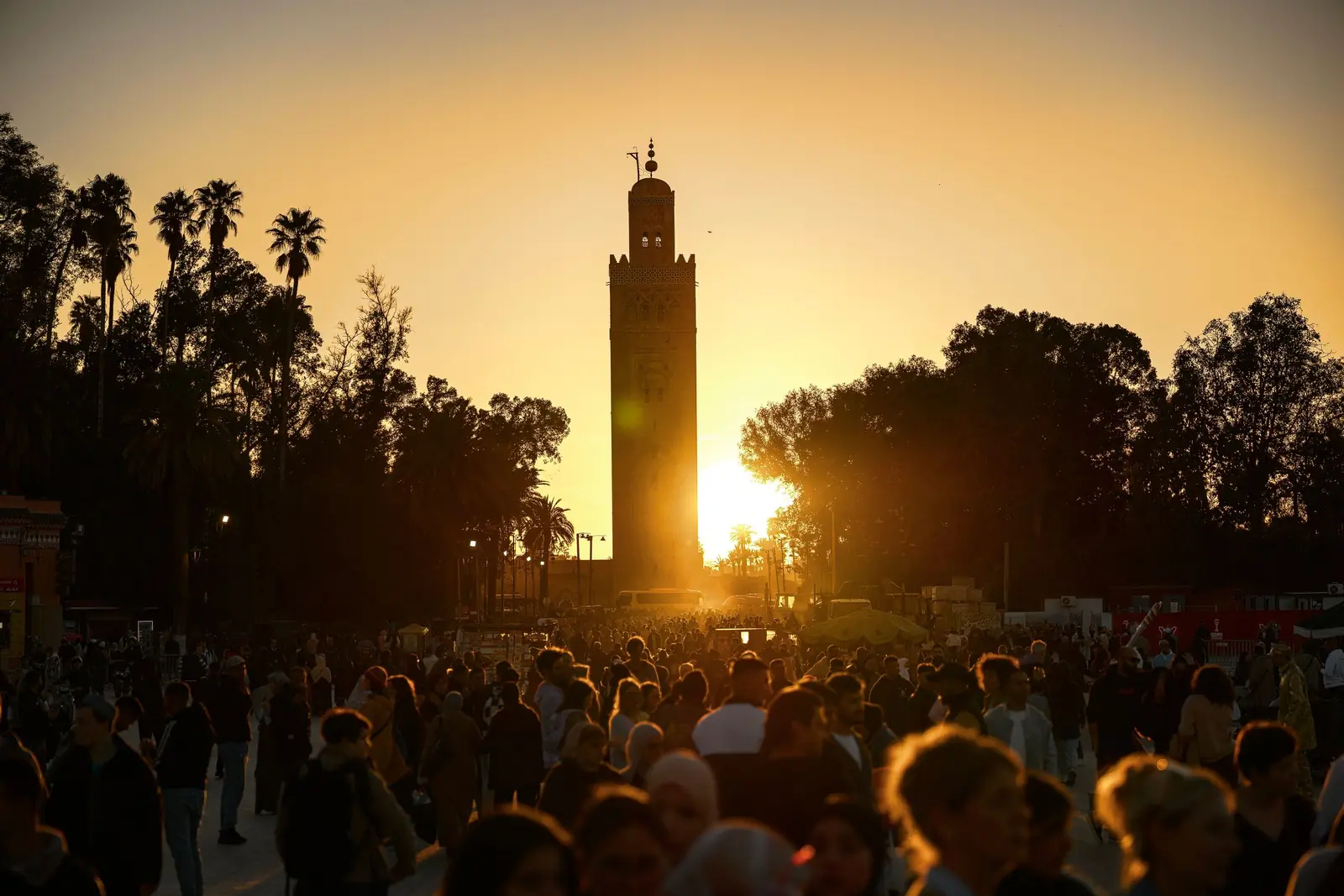
What is open and closed during Eid
The pattern is the same for both feasts, more marked for Eid al-Adha.
| What | First day | Second day and after |
|---|---|---|
| Banks, post offices, administrations | Closed | Closed on the second day; sometimes an extra day, as on 23 March 2026 |
| Medina shops and souks | Mostly closed | Gradual reopening; for Eid al-Adha, slower |
| Restaurants and cafés | Hotels open; most family-run places closed | Reopening, with shorter hours |
| Jardin Majorelle | Opens every day, 8 a.m. to 5.30 p.m. (last entry 5 p.m.); tickets online only | Normal hours |
| State monuments (Bahia, Saadian Tombs) | No Eid schedule published; check on the day | Usually normal |
| ATMs | Work, but can run low | Refilled gradually |
| Taxis, coaches, trains | Reduced, especially in the morning | Very busy as families return |
Jemaa el-Fnaa is quiet on the first morning and fills again in the evening. For the square at its best, see Jemaa el-Fnaa at night.
Getting around at Eid
Petits taxis are hard to find on Eid morning, when drivers are at prayer or with their families, and intercity travel is at its busiest in the days before and after. Note that the old Bab Doukkala coach station closed on 24 July 2026: intercity coaches and grand taxis now leave from the new Al Azzouzia station, north-west of the city. Book train and coach seats ahead, and arrange airport transfers before you travel rather than on the day: our guide to getting around Marrakech has the options.
Eid day at the villa
A staffed villa is the easiest place to spend Eid. Your meals do not depend on which restaurants open, and the house is calm while the city is at home. Some staff may be off or replaced for a day or two: ask us before you book how your villa is covered, and see our guide to villa staff and tipping.
- The day before
Stock up
Groceries, water and cash; buy any wine well ahead, as shops stop selling it during Ramadan. Send a list ahead for delivery: grocery delivery for villa stays.
- Morning
Listen, do not intrude
The Eid prayer is held shortly after sunrise. Hear it from the terrace; prayer grounds are for worshippers only.
- Midday
A long lunch at home
Ask the cook for a festive menu: a lamb tagine with prunes and almonds, a pastilla, Eid pastries with mint tea.
- Afternoon
Pool, hammam or garden
A good day for the villa’s own hammam or a quiet visit to the Jardin Majorelle, booked online.
- Evening
Out, if you like
Hotel restaurants are open, and the medina comes back to life after dark, especially for Eid al-Fitr.
Etiquette for visitors
- Greet people with “Eid Mubarak”; it is always appreciated.
- Dress modestly in the medina on Eid morning, when streets fill with families in their best clothes.
- Morocco’s mosques are closed to non-Muslims, so watch the prayer from a distance and do not photograph people praying.
- If you are invited into a Moroccan home, bring pastries or sweets rather than alcohol.
- During Eid al-Adha, be prepared for the sight of sacrifice in courtyards and on rooftops, and keep children away from it if you prefer.
- Eid al-Fitr is not a fasting day: you can eat and drink in public as normal.
Or spend Eid by the sea
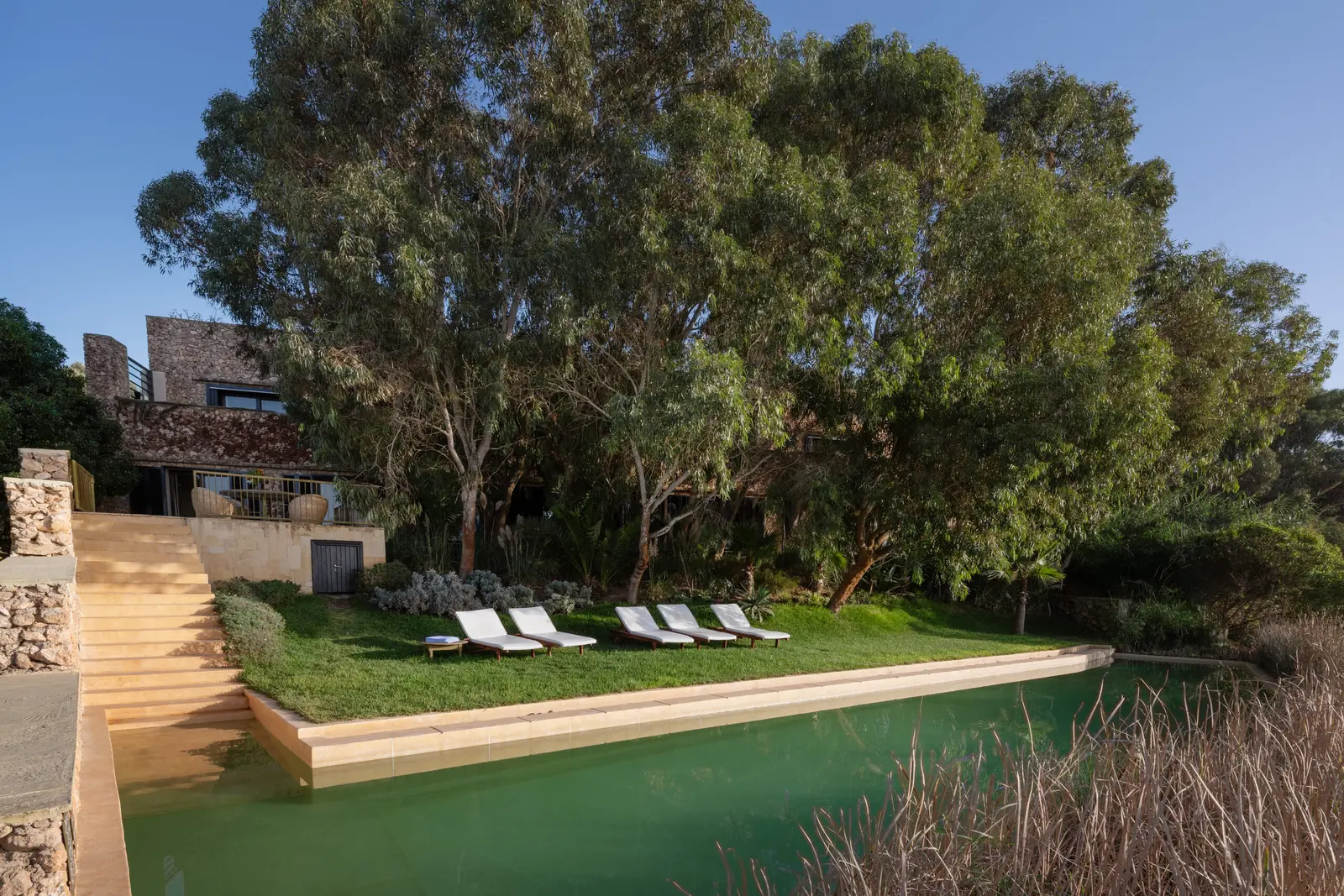
If you would rather be away from the city for Eid al-Adha, Oualidia is about 3 hours 20 minutes from Marrakech, so plan a night or two rather than a day trip. Villa Laguna has six bedrooms on 2.5 hectares of gardens and olive groves overlooking the lagoon, a natural swimming pool and staff included. More houses on the coast: villas in Oualidia.
Villas with a team for the holiday
In Marrakech, choose a house where the listing names who looks after you. Villa Marhaba, in the Palmeraie, has staff available 24/7 and a butler, Youssef. Villa Idir, on the Amelkis golf, has a cook, a gardener and a technical manager from 8 a.m. to 11 p.m. Villa Savannah, with 22 bedrooms in the Palmeraie, has a chef who cooks Moroccan or international dishes, served by the pool, in the Berber tent or in your suite.
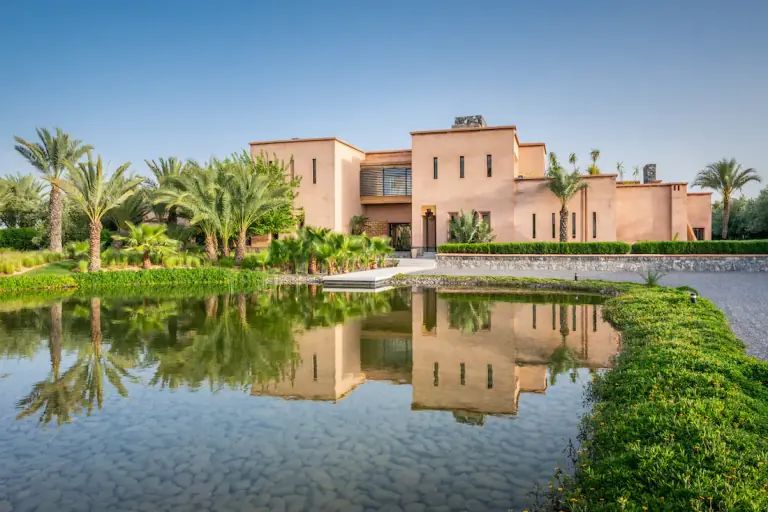 Villa MarhabaFrom €1,450 a night
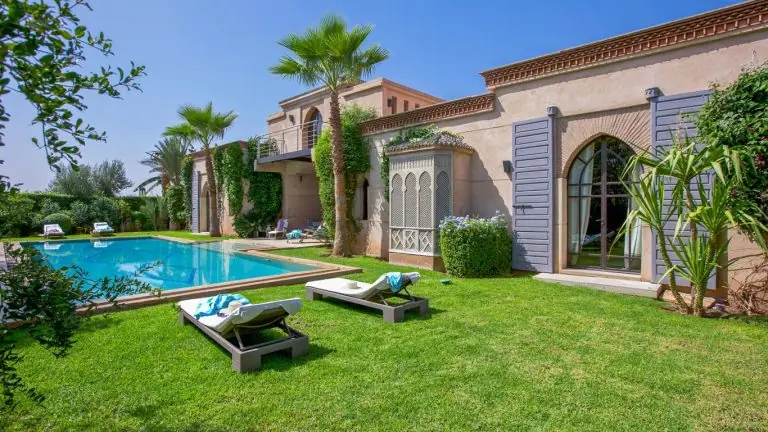 Villa IdirFrom €650 a night
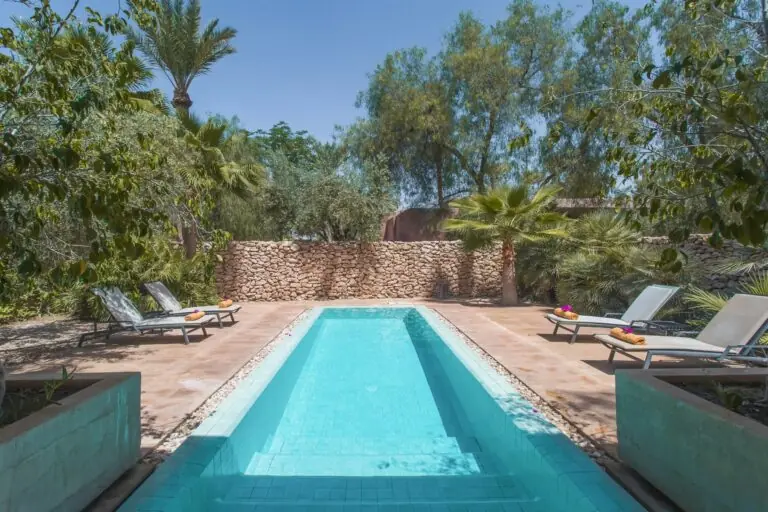 Villa SavannahFrom €4,800 a night
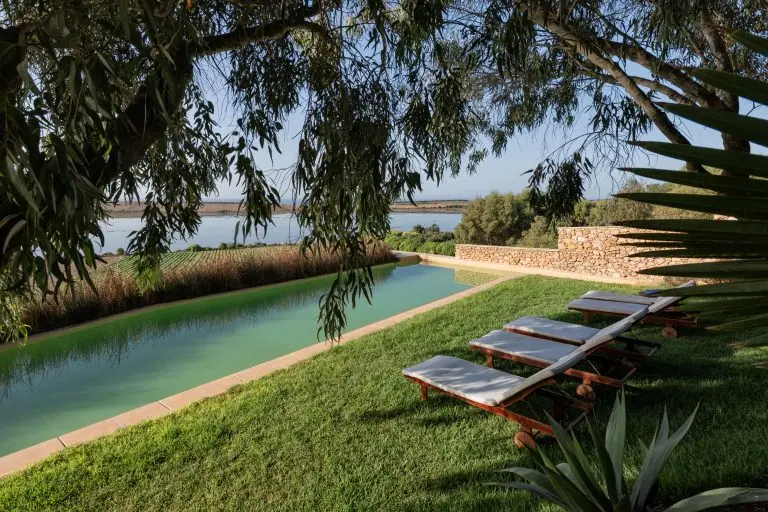 Villa LagunaFrom €785 a night
The full list of houses with a cook or a chef: staffed villas in Marrakech.
 Eid 2027
A feast day at your own table
Tell us your dates and how many you are. We check whether Eid falls in your stay, which villas are free, and how staff are covered over the holiday.
Frequently asked questions
When is Eid in Morocco in 2027?
Eid al-Fitr, the end of Ramadan, is expected on Wednesday 10 March 2027, and Eid al-Adha on Monday 17 May 2027. Both are two-day public holidays. The dates are provisional: the Ministry of Habous and Islamic Affairs confirms each one by moon sighting, and the actual day can move by one day either way.
What closes in Marrakech during Eid?
On the first day, banks, offices, most medina shops and many family-run restaurants close, and taxis and coaches run a reduced service. Hotels stay open, and the Jardin Majorelle opens every day. For Eid al-Adha, many businesses stay closed for several days. Withdraw cash and buy groceries beforehand.
Is Eid a good time to visit Marrakech?
It can be, if you plan for it. The first day is quiet, so it suits a day at the villa rather than shopping in the souks. The mood is festive, evenings are lively, especially after Eid al-Fitr, and a staffed villa removes the problem of closed restaurants. Book transfers and train seats early.
Do villa staff work on Eid?
Usually the house stays covered, but some staff may take a day or two off to be with their families, and others replace them. Ask before you book how your villa is staffed over Eid. A tip at the end of the stay is especially appreciated at feast time.
Will Eid al-Adha take place normally in 2027?
The sacrifice is the norm. In 2025 King Mohammed VI asked Moroccans not to perform the sacrifice because of drought, but it resumed as usual in 2026, on Wednesday 27 May. For 2027 the feast is expected on Monday 17 May; any decision about the sacrifice is announced by the authorities ahead of the feast, so check closer to the date.
Eid shows Marrakech at home: families in their best clothes, pastries on every table, and a city that slows down for a day. If your 2027 dates fall around either feast, ask us which staffed villas are free and how the house runs over the holiday.