Fes for Luxury Travellers: Riads, Artisans, Marrakech
Fes is the Moroccan city to add when you want craft, scholarship and a medina that still works much as it did centuries ago. For most luxury travellers, two or three nights is right: one full day in the old city with a licensed guide, a morning with the artisans, dinners in a restored palace riad. The usual way to do it is to pair Fes with a longer stay in a staffed private villa in Marrakech, linked by a direct flight of about an hour on the days one is scheduled, or by a train of roughly six and a half to seven hours.
In short
- How long: 2 nights covers the essentials; 3 nights adds Volubilis and Meknes, or a slower pace.
- Getting there: about 1 hour by direct flight (Ryanair flies Marrakech–Fes on several days a week in 2026; check current schedules), roughly 6 h 30 to 7 h 30 by ONCF train, or 6 to 7 hours by car on mostly motorway roads.
- The medina: Fes el-Bali has been a UNESCO World Heritage Site since 1981. Go with a guide licensed by the Ministry of Tourism, booked through your hotel.
- Where to stay: palace riads such as Riad Fès (Relais & Châteaux) and Palais Faraj (31 suites), or Hotel Sahrai, the contemporary option above the city.
- The pairing: Fes for culture, a Marrakech villa for space and rest. Our villas take a minimum of 3 nights and run from €360 to €6,250 a night.
Why Fes is worth the journey
Marrakech is a city you enjoy; Fes is a city you study. Its old medina, Fes el-Bali, has lanes too narrow for cars, workshops where leather, brass, wood and tile are still worked by hand, and some of the finest Marinid architecture in the country. UNESCO describes it as a walled city whose madrasas, fondouks, mosques and palaces date mainly from the 12th to the 15th centuries, and lists it as one of the most extensive and best conserved historic towns of the Arab-Muslim world (UNESCO, Medina of Fez).
What Fes does not offer is the Marrakech formula of garden villas, pool days and the Atlas on the horizon, which is why the two cities pair so well. If you are still deciding which one to visit, our comparison of Marrakech and Fes sets out the differences; this guide assumes you want both.
Fes is where Moroccan craft is made. Marrakech is where you come back to rest, with a pool, a garden and a cook of your own.
How many nights in Fes
Arriving in the afternoon and leaving the next morning gives you one evening and almost nothing of the medina. Our advice is two nights at least.
| Stay | What it allows | Who it suits |
|---|---|---|
| 1 night | An evening in a riad and a half-day in the medina | Only if you are passing through, for example on the way to the desert |
| 2 nights | A full guided day in Fes el-Bali, artisan visits, two good dinners | Most first-time visitors pairing Fes with Marrakech |
| 3 nights | All of the above, plus a day out to Volubilis and Meknes, or a workshop class | Travellers interested in history, architecture or craft |
Volubilis, the Roman site about 68 km and 1 h 15 to 1 h 30 by road from Fes, is usually combined with Meknes and Moulay Idriss in a full day.
Getting from Marrakech to Fes
| Option | Time | Good to know |
|---|---|---|
| Direct flight RAK–FEZ | About 1 h 05 in the air | Ryanair flies the route on several days a week in 2026; schedules change by season, so check current schedules for your dates. Fes-Saïss airport is about 15 km south of the city, 20 to 35 minutes by car to the medina. |
| ONCF train | Roughly 6 h 30 to 7 h 30 | Several departures a day; some trains run through without a change, others need one at Casablanca. Engineering works can lengthen journeys. Book first class for the extra space. |
| Private car with driver | About 6 to 7 hours, 520–580 km | Mostly motorway. Comfortable, door to door, and you can stop on the way. Arranged through a licensed transport company or driver-guide. |
The flight wins on time, but only on the days it operates; when it does not, Royal Air Maroc connects the two cities through Casablanca. The train is comfortable but long. Timetables and fares are on the official ONCF website. For the road, our guide to touring Morocco with a private driver explains how licensed drivers work, what to agree in writing and what to expect to pay.
Al Boraq, Morocco’s high-speed train, runs between Tangier, Kenitra, Rabat and Casablanca. It does not yet reach Marrakech: work on the Kenitra–Marrakech high-speed line began in April 2025, with opening targeted before the 2030 World Cup. Works on the new line have occasionally interrupted services, closing Marrakech station for two days in April 2026, so check ONCF notices before you travel.
A popular alternative is to reach Fes overland through the desert, crossing the Middle Atlas on the way. It takes several days and is covered in our guide to desert routes from Marrakech to Fes.
The medina with a licensed guide
Fes el-Bali is a maze of narrow lanes, with few signs and a habit of sending even confident walkers in circles. In Morocco, tourist guiding is a regulated profession: official guides hold a licence issued by the Ministry of Tourism and carry a badge. Book yours through your hotel or riad, and politely decline the unofficial “helpers” who approach visitors near the gates.
A good guided day usually takes in:
- Bab Bou Jeloud, the blue-and-green tiled gate that is the classic entrance to the old city
- The Bou Inania and Al-Attarine madrasas, two Marinid theological colleges with carved cedar, stucco and zellige, open to visitors
- Al Quaraouiyine, the mosque and university at the heart of the medina; non-Muslims see the courtyard from the doorways
- The Nejjarine fountain and square, and the fondouk beside it that houses a museum of wooden arts and crafts
- The souks by trade: dyers, coppersmiths on the Seffarine square, weavers, slipper makers
Wear shoes with good grip, as the lanes are steep. Dress as you would in the Marrakech medina (our packing guide applies), and keep in mind that many shops close for a few hours around Friday midday prayer.
The artisans: tanneries, zellige and bookbinding
This is the reason many of our guests go to Fes: these are working trades, not displays, and a good guide opens doors you would not find alone.
The Chouara tannery
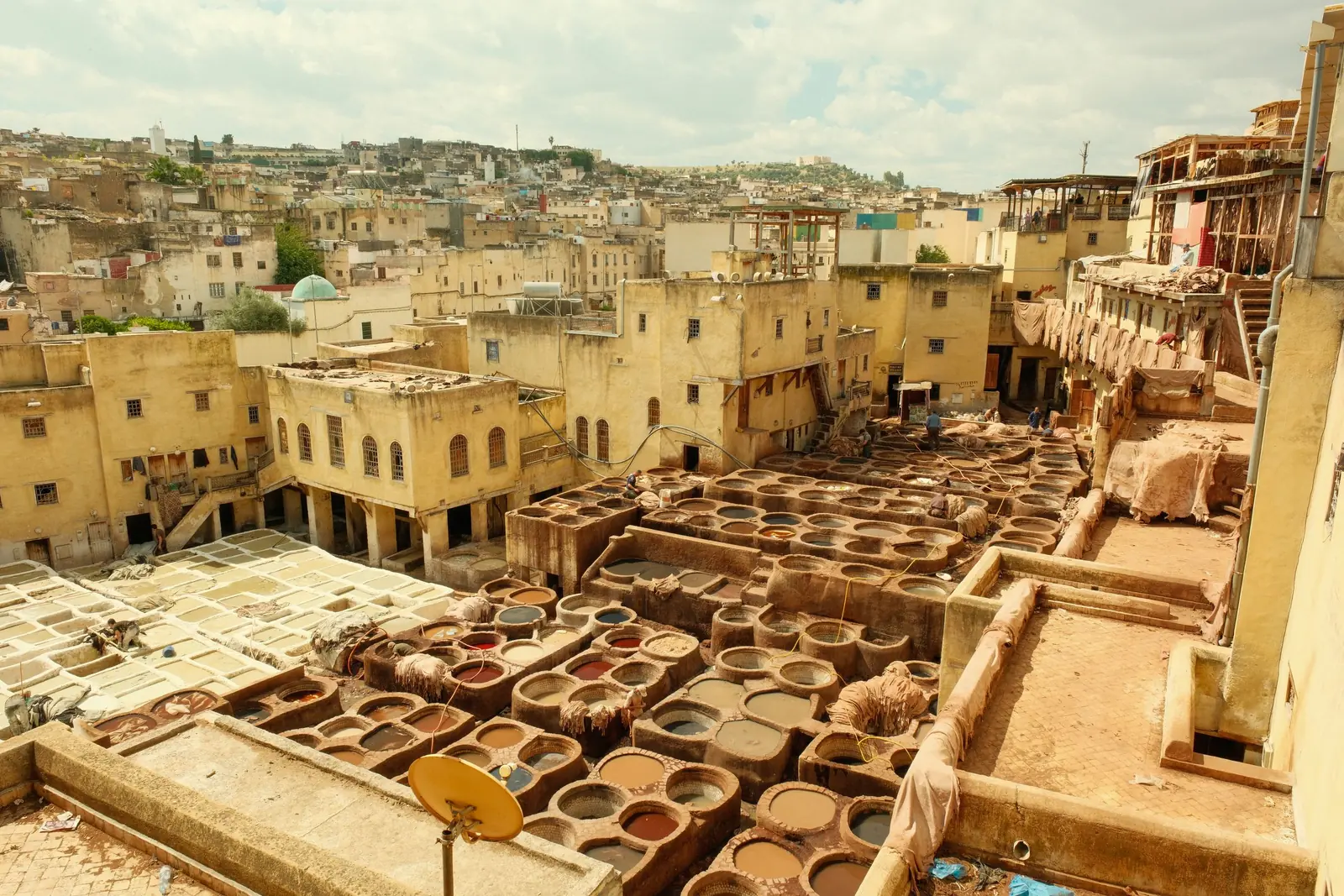
Chouara is the largest and best known of the traditional tanneries still working in Fes, a honeycomb of stone vats where hides are soaked, dyed and dried in the sun. You see it from the terraces of the leather shops that surround it; each shop lends you a sprig of mint for the smell and expects you to look at its jackets, bags and babouches afterwards. Go in the morning, when the vats are busiest.
Zellige and pottery at Ain Nokbi
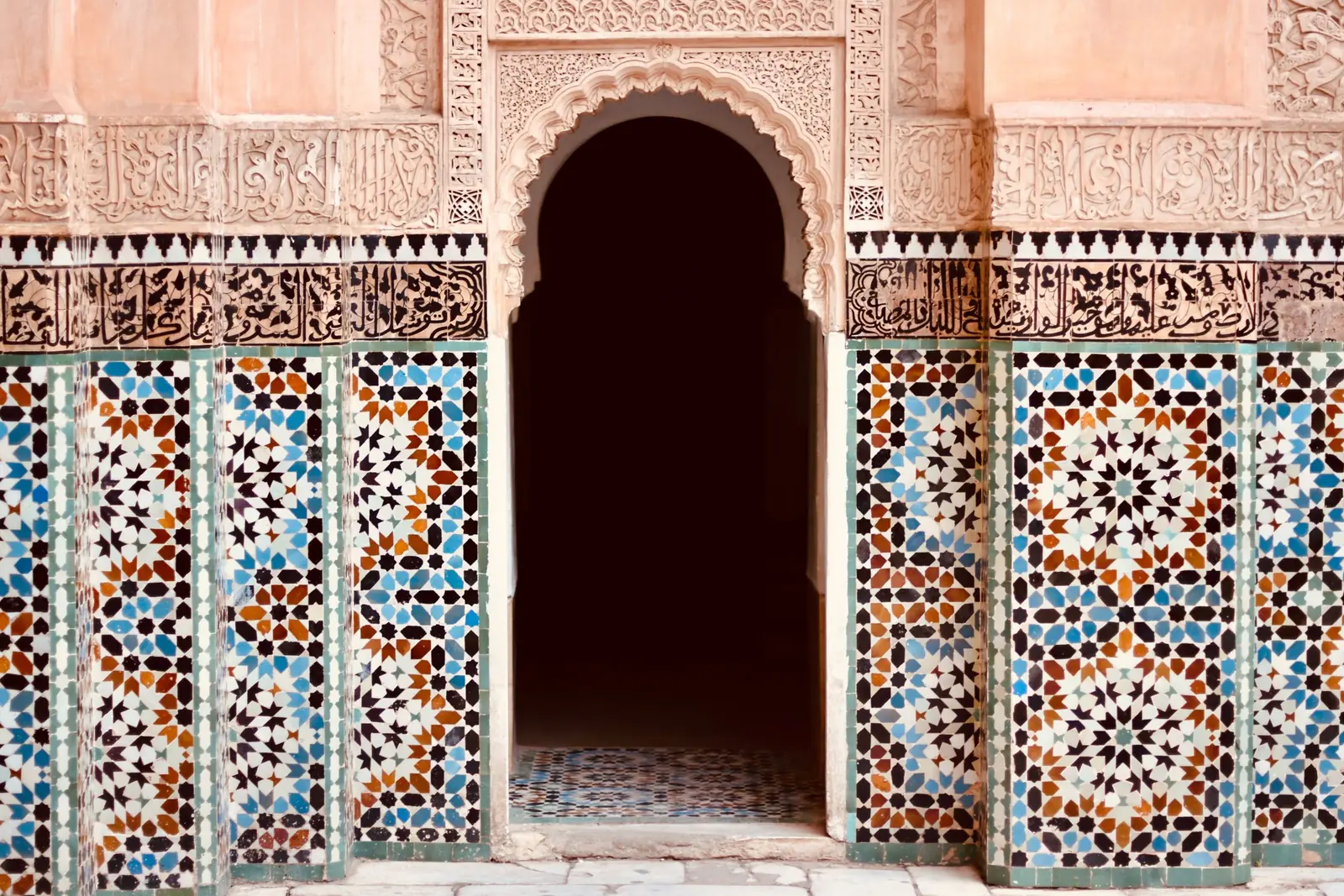
Fes is the historic home of zellige, the mosaic of hand-cut glazed tiles you see in palaces and riads across Morocco. Since 2013 the potters have worked in Ain Nokbi, a district just outside the medina walls, where family workshops such as Art Naji show every stage: clay thrown on foot-turned wheels, tiles glazed and fired, then chipped into stars and polygons and assembled face down into panels. Some workshops run short hands-on sessions, and most can make a panel or a table to order and ship it home.
Leather, brass and bookbinding
Fes also keeps the crafts of the scholar’s city: tooled leather, engraved brass and copper, and bookbinding. A few family workshops in the medina offer half-day classes in which you bind a leather notebook with traditional tools. Ask your hotel to book one in advance, as places are limited.
What and where to eat
Fassi cooking has a reputation across Morocco for refinement. The city is associated with pastilla, the layered pie of pigeon or chicken with almonds, cinnamon and sugar, and with khlii, beef preserved in spices and fat and cooked with eggs at breakfast.
For a luxury traveller, the easiest good dinners are often in the best riads and palace hotels: Gayza and the rooftop at Riad Fès, L’Amandier with its rooftop garden at Palais Faraj, and Amaraz, the Moroccan restaurant at Hotel Sahrai. If you are staying elsewhere, ask whether they take non-resident reservations that evening. Palais Amani runs a cooking school if you would rather learn than order. For lunch in the medina, let your guide choose.
Where luxury travellers stay in Fes
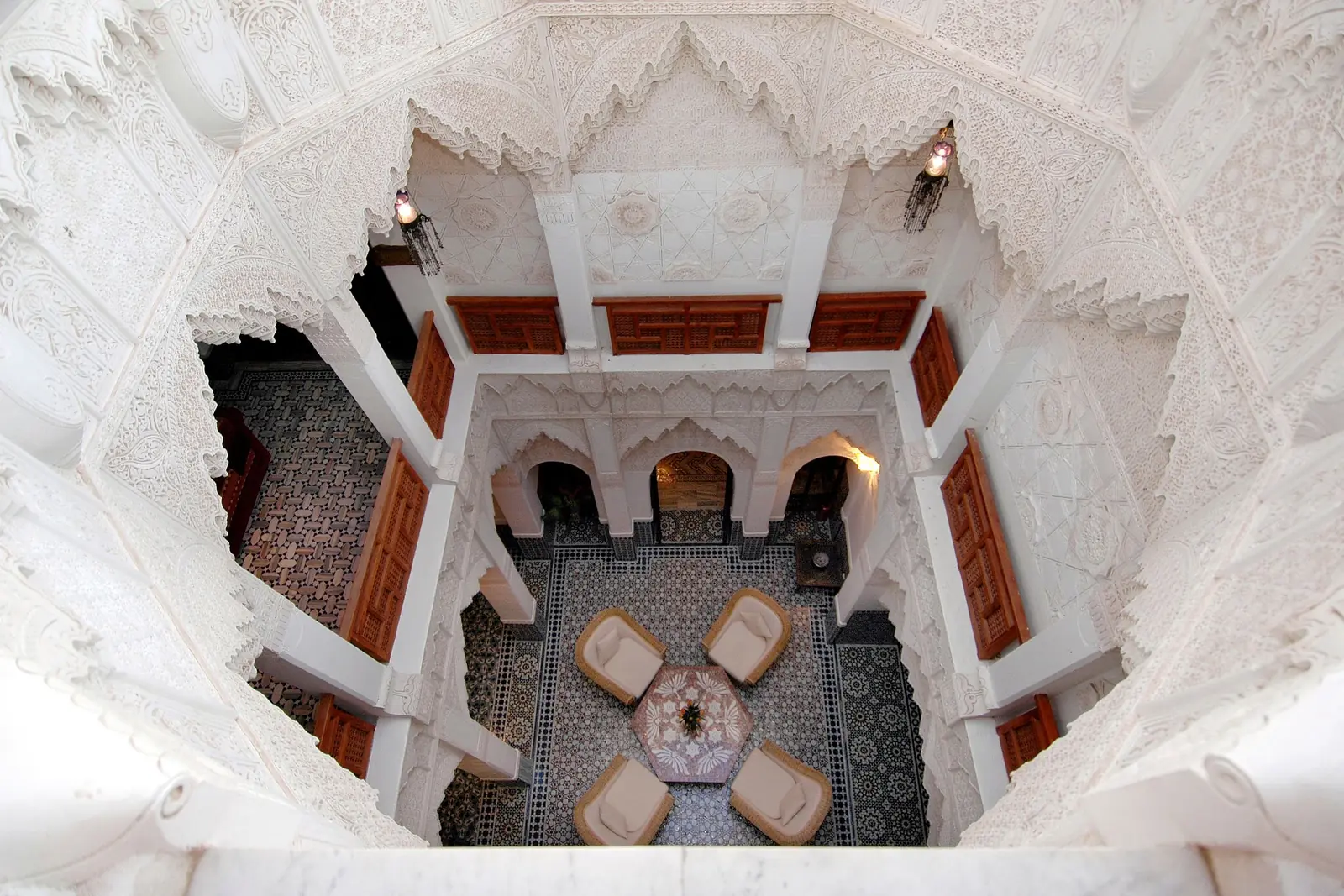
Fes has no equivalent of Marrakech’s private villas with large gardens. The best addresses are restored palaces and riads, inside the medina or on its edge, and one contemporary hotel above the city.
The real choice is between stepping out into the lanes and looking down on them from a quieter hill. Inside the medina, cars cannot reach the door and porters carry your luggage the last stretch.
| Address | Setting | What stands out (from the hotels’ own sites, 2026) |
|---|---|---|
| Riad Fès, Relais & Châteaux | Inside the medina, Derb Ben Slimane Zerbtana | A restored 14th-century palace, a 14-metre pool by Christophe Pillet open all year, a spa by Cinq Mondes, Gayza restaurant and bar, a panoramic rooftop |
| Palais Faraj Suites & Spa | On a hill at the edge of the medina, Bab Ziat | 31 suites, some with sweeping views of the medina, the Essencia spa and hammam, a pool, L’Amandier rooftop restaurant |
| Hotel Sahrai | Dhar El Mehraz, above the city, outside the medina | Contemporary interiors by the designer Christophe Pillet, Amaraz restaurant, a rooftop bar, its own spa |
| Palais Amani | In the old city, Oued Zhoune | A family-run house of 21 rooms and suites, a cooking school and wine tastings |
We do not book hotels in Fes; contact them directly or through your travel adviser, and ask for a room on the upper floors or with a terrace if light matters to you. Riads have few rooms, so groups should reserve early. Our guide to luxury riads and private villas explains the difference.
Pairing Fes with a Marrakech villa
The combination we see work best is simple: two or three nights in Fes, and the rest of the trip in a staffed villa in Marrakech, where the family or group has room to spread out, a pool to themselves and a cook for the evenings. Here is a typical 9-night plan.
- Night 1–2
Fes first
Fly into Fes, or arrive from Marrakech by air. The next day, a full guided day in Fes el-Bali and the tanneries.
- Night 3
Artisans or Volubilis
A morning at Ain Nokbi or a bookbinding class, or a full day to Volubilis, Moulay Idriss and Meknes.
- Day 4
To Marrakech
The midday flight if it runs that day, or the morning train. We can arrange your pick-up at Marrakech airport, and the villa staff will be ready when you arrive; ask us about a pick-up from the station.
- Night 4–9
The villa
Slow mornings by the pool, the Marrakech medina with a guide, a day in the Atlas, dinners cooked at home. Our villas have a minimum stay of 3 nights; five or six is when the house really pays off.
Ending in Marrakech rather than starting there is our preferred order: Fes is the more demanding city, and finishing with several days of rest is what guests remember. If you are building a longer trip, our guide to luxury travel in Morocco and the 10-day luxury Morocco itinerary show how Fes fits with the Atlas, the desert and the coast.
Which villas suit a Fes and Marrakech trip
After a few nights in a riad, guests usually want either the centre close by or a large garden and pool. Four houses that work well:
- Villa Arwa, near the Jardin Majorelle: 4 suites, a housekeeper-cook from 8 am to 5 pm, 5 minutes from the centre.
- Villa Four Seasons, inside the Four Seasons Marrakech: 5 bedrooms, a private garden and pool, dedicated staff and the hotel’s services.
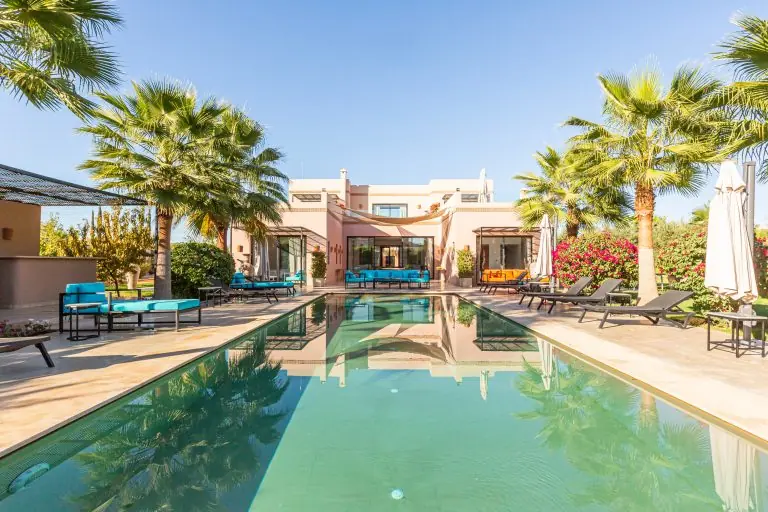
- Villa Zagora, in the Palmeraie: 4 en-suite bedrooms for up to 8, a 25-metre pool and a butler available 24/7.
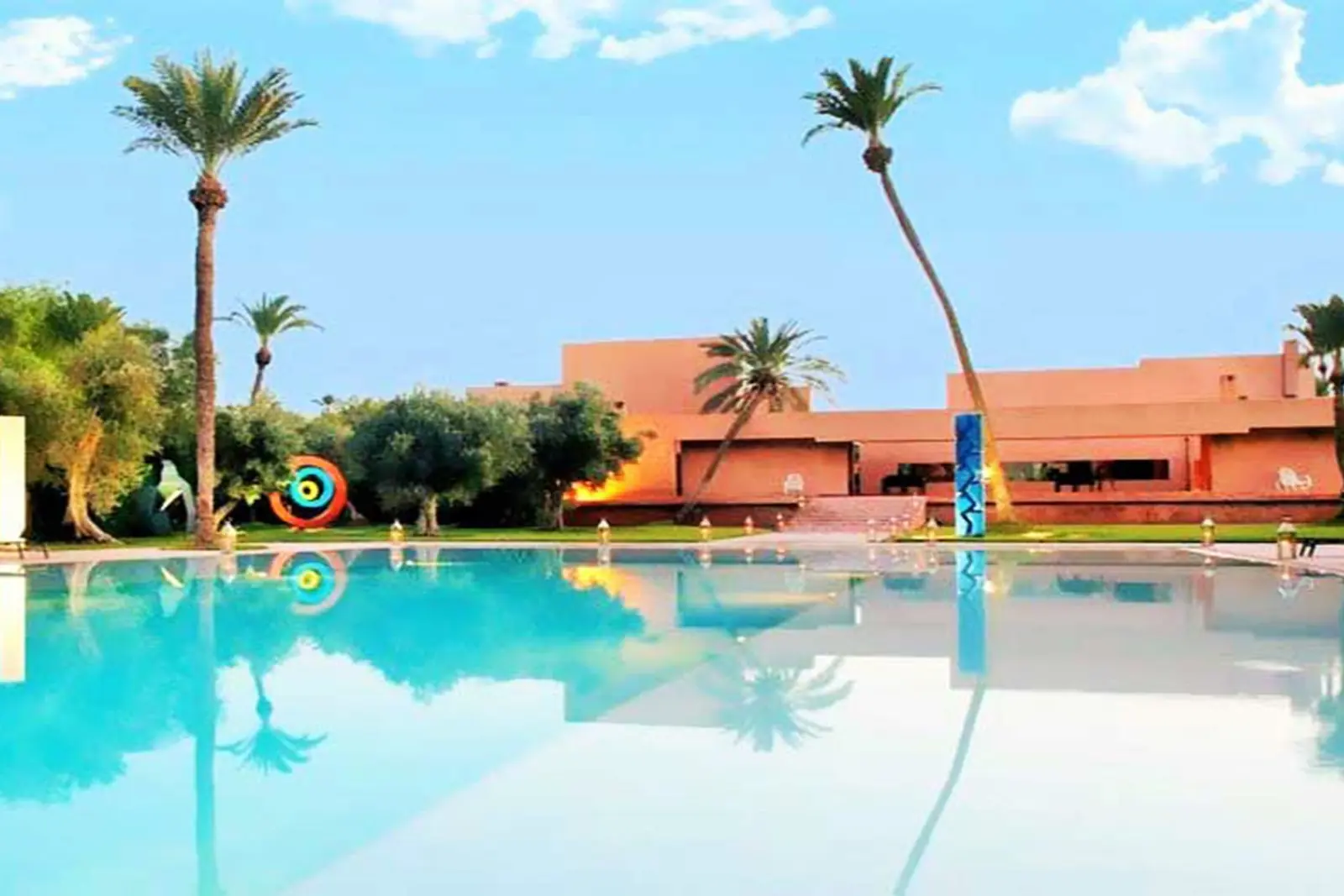
- Villa Lucia, on the Route de Fès: 5 suites, a chef, a private hammam and an infinity pool heated on request; 30 minutes from the train station.
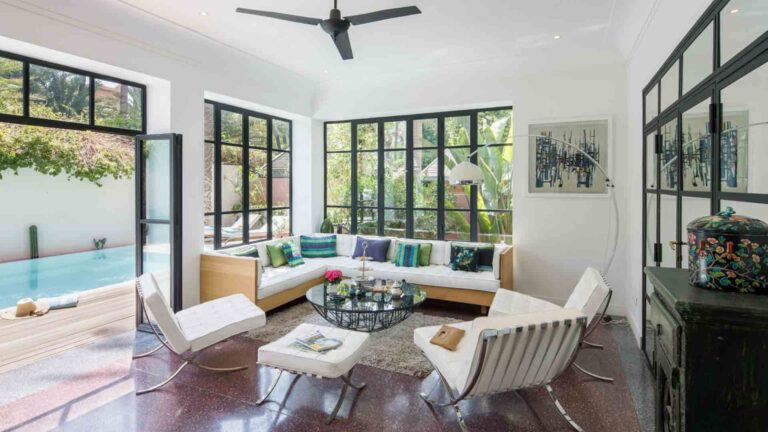 Villa ArwaFrom €1,280 a night
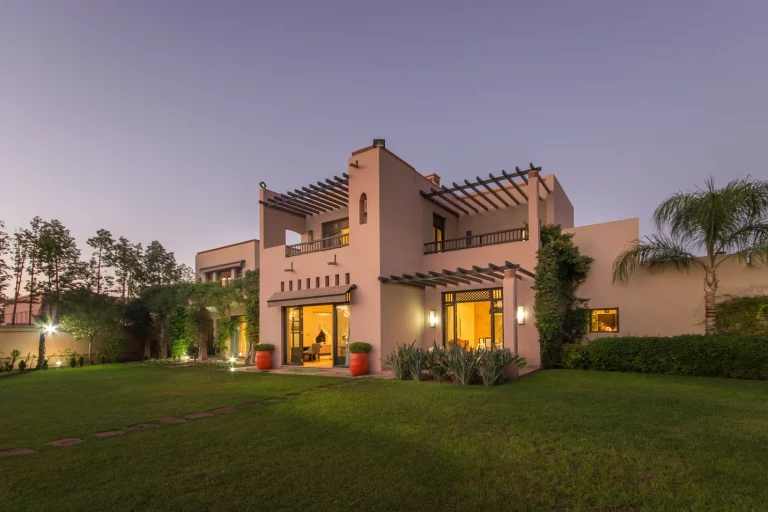 Villa Four SeasonsFrom €2,000 a night
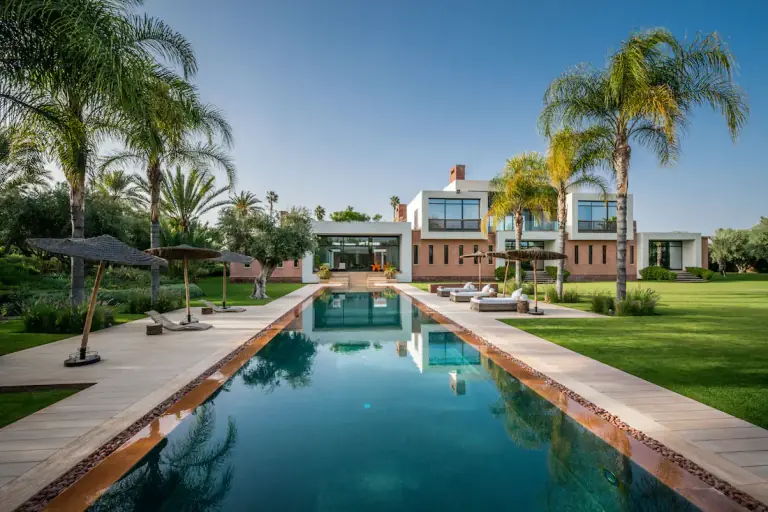 Villa ZagoraFrom €1,450 a night
 Villa LuciaFrom €750 a night
 Unlimited Marrakech
After Fes, a house of your own
Tell us your dates, how many you are and when you arrive from Fes. We reply with the villas that are free, what their staff do and a clear price for the whole stay.
Frequently asked questions
How long is the train from Marrakech to Fes?
Roughly 6 hours 30 minutes to 7 hours on ONCF trains, depending on the service and any engineering works. Some trains run through without a change and others need one at Casablanca. The high-speed Al Boraq does not yet serve Marrakech: the Kenitra–Marrakech line is under construction, with opening targeted before the 2030 World Cup. Check times and book on the ONCF website.
Is there a direct flight from Marrakech to Fes?
Yes, on some days. Ryanair flies direct between Marrakech and Fes on several days a week in 2026, taking about an hour and five minutes. Schedules change by season, so check current schedules before planning around it. On other days, Royal Air Maroc connects the two cities through Casablanca. Fes-Saïss airport is about 15 km from the city.
How many days do you need in Fes?
Two nights is the minimum we recommend: one full day in the medina of Fes el-Bali with a licensed guide, plus time for the tanneries and artisans. A third night lets you add a day trip to the Roman ruins of Volubilis, Moulay Idriss and Meknes, or a hands-on workshop in zellige or bookbinding.
Do you need a guide in the Fes medina?
For a first visit, yes. Fes el-Bali is a car-free maze with few signs, and a guide shows you the madrasas, the tanneries and the workshops in one day. Choose a guide licensed by the Ministry of Tourism, who carries an official badge, and book through your hotel rather than accepting offers in the street.
Where do luxury travellers stay in Fes?
Mostly in restored palaces and riads. Riad Fès, a Relais & Châteaux member, sits inside the medina with a pool and spa; Palais Faraj has 31 suites on a hill at the medina’s edge; Hotel Sahrai is the contemporary choice above the city; Palais Amani is a family-run house of 21 rooms with a cooking school.
Should I visit Fes before or after Marrakech?
We usually suggest Fes first and Marrakech last. Fes is the more intense city to visit, and ending with several days in a staffed villa, with a private pool and a cook, gives the trip a restful finish.
Fes is the part of Morocco that stays with you; a villa in Marrakech is where you have time to think about it. Send us your dates and the day you arrive from Fes, and we will suggest the two or three houses that fit your party best.