
Marriage in Morocco: Legal Steps for Foreign Couples
Getting married in Morocco as a foreign couple is an exciting prospect, but it requires navigating specific legal procedures. This comprehensive guide outlines the essential steps, documents, and requirements you need to know for a legal marriage in Morocco in 2026. Whether you’re planning a destination wedding in Marrakech or a civil ceremony, understanding the legal framework is crucial.
Understanding Moroccan Marriage Law
Marriage in Morocco is governed by the Family Code (Moudawana, law no. 70-03 of 3 February 2004), which applies to Moroccans, to refugees and to any couple in which one partner is Moroccan. For foreign couples, the process involves both Moroccan law and your home country’s regulations. The key is to ensure your marriage is recognized in both jurisdictions.
Who Can Marry in Morocco?
A foreign couple can marry before the Moroccan authorities only if the husband is Muslim: Moroccan law allows a Muslim man to marry a Muslim, Christian or Jewish woman, but forbids a Muslim woman to marry a non-Muslim man. Two non-Muslims cannot marry under Moroccan law. Both parties must be at least 18 years old, and neither party can be currently married. If you are divorced or widowed, you must provide proof of that status.
Essential Documents for Foreign Couples
Before you can tie the knot, you need to prepare a set of documents. These must be translated into Arabic (or French) and legalized or apostilled, depending on your home country.
- Valid passports – for both parties
- Birth certificates – recent copies, usually issued within the last 6 months
- Certificate of capacity to marry – or its equivalent from your country (for example the French certificat de capacité à mariage or the US affidavit of eligibility to marry), plus a divorce decree or death certificate if either of you was married before
- Proof of residency and police record – if you live in Morocco, your residence card and a Moroccan police record; some embassies, such as the US Embassy, also require a police record from home
- Medical certificates – required for both partners and issued by a doctor in Morocco
- Proof of religion – the husband needs a statement of his religion or a certificate of conversion to Islam, drawn up by adouls
All documents must be translated by a certified translator and legalized or, if your country is party to the Apostille Convention (Morocco has been since 14 August 2016), apostilled. This process can take several weeks, so start early.
The Legal Procedure: Step by Step
Once your documents are ready, you’ll need to follow these steps:
- Submit documents to the family section of the court (section de la justice de la famille) where you plan to marry (e.g., Marrakech).
- Obtain a marriage authorization – the family judge reviews your file and authorises the marriage; how long this takes varies.
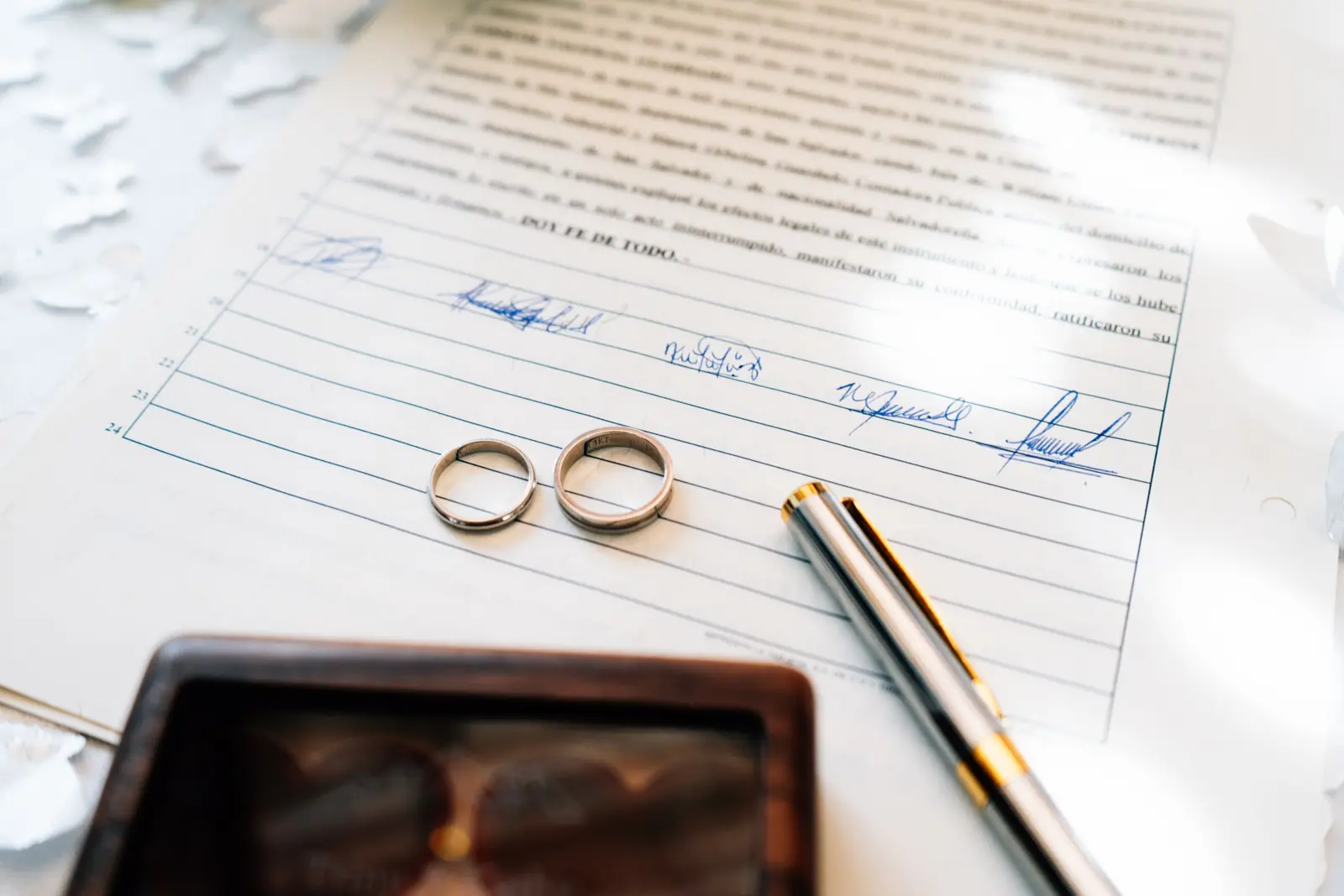
- Sign the marriage act before two adouls – once the family judge has authorised the marriage, two adouls (religious notaries) record both partners’ consent and draw up the marriage act, which the judge then homologates.
- Receive the marriage certificate – once the judge has homologated the act, the original is handed to the wife and a copy to the husband. Whether you must then register it at home depends on your nationality (see below).
Religious vs. Civil Marriages
Morocco has no civil marriage. A legal marriage in Morocco is a contract drawn up by two adouls (religious notaries) with the family judge’s authorisation, which is why the husband must be Muslim. Two non-Muslim foreigners can instead marry in their home country or, where their government allows it, at their consulate: France celebrates marriages between two French nationals who are not also Moroccan when one of them lives in the consular district, while British and US consulates do not perform marriages in Morocco. Some couples choose to have a symbolic ceremony at a venue like a luxury villa rental in Marrakech, but the legal aspect is separate.
Costs and Timeline
The cost of getting married in Morocco varies depending on legalization fees, translations, and court fees. As an example, the US Consulate charges $100 for the affidavit of eligibility and the certified passport copy, and filing the application with the adouls costs 150 dirhams. Count in months, not weeks: the French consulate, for example, needs at least three months just to issue the certificate of capacity to marry, before the Moroccan court file can be completed.
Marrying in Marrakech: Special Considerations
Marrakech is a popular destination for weddings. However, it’s essential to work with a local legal representative or event planner who can guide you through the process. If you’re planning a destination wedding, consider combining the legal steps with a celebration at one of the private villas for rent in Marrakech.
After the Marriage: Registration and Recognition
What happens next depends on your nationality. French citizens must have the marriage transcribed into the French civil register, by post to the Central Civil Status Service in Nantes. The United States recognises a Moroccan marriage without any registration, and the UK does not register marriages that take place abroad. You’ll need to provide copies of your marriage certificate and passports. Some countries require an apostille on the Moroccan marriage certificate, so check with your embassy.
Common Challenges and How to Avoid Them
Many couples face delays due to incomplete documentation or translation issues. To avoid this:
- Double-check that all documents are valid and recent.
- Use certified translators and legalization services.
- Start the process as early as possible: for French citizens, the certificate of capacity to marry alone takes at least three months.
- Consider hiring a local lawyer who specializes in family law.
FAQ: Getting Married in Morocco
Can same-sex couples marry in Morocco?
No, Morocco does not recognize same-sex marriage. The law requires a marriage to be between a man and a woman, and same-sex marriages are not legally permitted.
Do I need to convert to Islam to marry in Morocco?
It depends on who is Muslim. Moroccan law forbids a Muslim woman to marry a non-Muslim man, so a non-Muslim man who wants to marry a Muslim woman in Morocco must first convert (the conversion certificate is drawn up by adouls). A Christian or Jewish woman can marry a Muslim man without converting. Two non-Muslims cannot marry before the Moroccan authorities at all.
Can we marry in Morocco if we are already married in another country?
If you are already legally married, you cannot marry again in Morocco unless you are divorced or widowed. You would need to provide proof of your single status.
How long does the legal process take?
Plan for several months. The French consulate needs at least three months to issue a certificate of capacity to marry, and the US Embassy warns that the Moroccan certification of documents alone can take from a few days to a few months, before the court authorisation.
Conclusion
Getting married in Morocco as a foreign couple is a beautiful and achievable goal if you follow the legal steps carefully. With proper preparation, you can have a seamless experience and enjoy a memorable celebration in this enchanting country. For assistance with your wedding planning and accommodation, consider our event organisation in Marrakech services and explore what to do in Marrakech to make your stay unforgettable. Contact us today to start planning your dream wedding in Morocco.