
Flavors of Marrakech: 10 Traditional Dishes You Must Try in 2026
Marrakech cuisine blends Berber, Arab, and Andalusian influences into every slow-cooked tagine and layered pastilla. This guide explores the traditional dishes that define the city’s soul, helping you connect directly with Morocco’s rich culinary traditions.
The Foundation of Marrakech Cuisine
Traditional Marrakech cuisine is built on fresh, local ingredients and time-honored techniques. The city’s location at the foothills of the Atlas Mountains and near the Sahara provides access to exceptional produce, spices, and meats. Key elements include:
- Spices: Ras el hanout (a complex blend of up to 30 spices), saffron, cumin, ginger, and cinnamon form the aromatic backbone.
- Preserved Ingredients: Preserved lemons and olives add distinctive tangy notes.
- Cooking Vessels: The conical clay tagine pot allows for slow, moist cooking that tenderizes meats and concentrates flavors.
- Bread: Khobz, the round, crusty Moroccan bread, accompanies every meal.
Understanding these fundamentals enhances appreciation for the dishes that follow. For deeper insights into Moroccan culinary traditions, resources like Morocco.com’s food culture section provide excellent context.
Essential Traditional Dishes of Marrakech
These dishes represent the pillars of Marrakech’s culinary identity. Each tells a story of the region’s history and daily life.
Tagine: The Iconic Slow-Cooked Stew
No dish is more synonymous with Morocco than tagine, named after the earthenware pot in which it’s cooked. In Marrakech, you’ll find numerous regional variations, but several stand out as must-tries.
- Tagine Djej bil Hamd Markd (Chicken with Preserved Lemon & Olives): Chicken is braised with saffron, ginger, garlic, and onions until falling-off-the-bone tender, then finished with preserved lemons and green olives. The balance of savory, tangy, and aromatic flavors is quintessential Marrakech.
- Tagine Laḥm (Lamb Tagine with Prunes & Almonds): A celebratory dish often served during festivals. Sweet prunes or apricots contrast with tender lamb, while cinnamon and sesame seeds add warmth and texture. Almonds provide a crunchy garnish.
- Tagine Kefta (Spiced Meatball Tagine): Seasoned ground meat (usually beef or lamb) formed into small meatballs and simmered in a rich tomato sauce, often with eggs poached on top just before serving.
The magic of tagine lies in the slow cooking process, which fills the kitchen with warm, aromatic spices and melds flavors beautifully. For authentic recipes and techniques, refer to authoritative sources like Cooking with Alia, a trusted resource for Moroccan cuisine.
Couscous: The Friday Feast
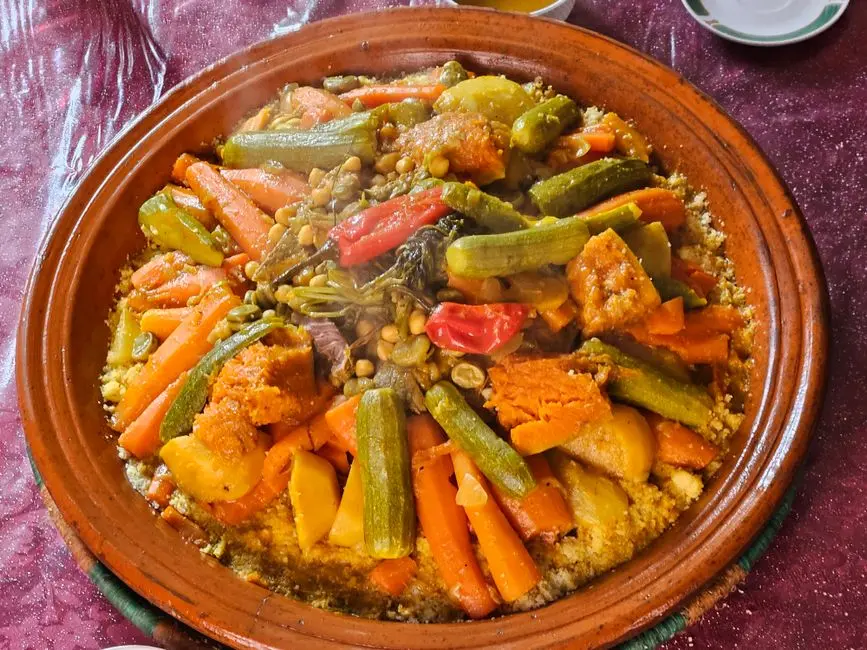
Traditionally served on Fridays after midday prayers, couscous holds a special role in Moroccan culture. In Marrakech, it’s not merely a side dish but a centerpiece. Fine semolina grains are steamed multiple times until light and fluffy, then served with a savory stew poured over the top.
- Couscous aux Sept Légumes (Couscous with Seven Vegetables): The classic version features a vegetable broth with carrots, turnips, zucchini, pumpkin, cabbage, tomatoes, and chickpeas. Meat (usually lamb or chicken) is often included.
- Couscous Tfaya: A sweeter, caramelized onion and raisin topping accompanies the couscous and meat, creating a delightful sweet-savory combination.
The communal aspect of sharing a large platter of couscous is integral to the experience.
Pastilla (B’stilla): The Savory-Sweet Pie
This elaborate pie showcases the Moorish influence on Moroccan cuisine. Originally made with pigeon, modern versions often use chicken or seafood. The filling—spiced, shredded meat mixed with almonds and eggs—is wrapped in layers of thin, flaky warqa pastry (similar to phyllo).
After baking, it’s dusted with powdered sugar and cinnamon, creating its signature contrast of savory and sweet. Pastilla is typically served as a starter during special occasions.
Harira: The Hearty Ramadan Soup
Though particularly associated with breaking the fast during Ramadan, harira is enjoyed year-round in Marrakech, especially as a comforting evening meal. This thick, nourishing soup combines tomatoes, lentils, chickpeas, lamb or beef, and a blend of herbs like cilantro and parsley.
It’s often thickened with a flour-and-water mixture called tedouira and served with dates and chebakia (sesame honey cookies). Its rich, satisfying flavor makes it a beloved staple.
Mechoui: Whole Roasted Lamb
Mechoui is a feast for celebrations and large gatherings. A whole lamb is seasoned simply with salt, cumin, and sometimes saffron, then slow-roasted in an underground clay oven or pit until the meat is incredibly tender and the skin crisply golden. Eaten with the hands and dipped in cumin salt, the smoky, succulent flavor is unforgettable.
Tanjia: Marrakech’s Unique Specialty
Distinct to Marrakech, tanjia is both a dish and a cooking method. Meat (usually beef or lamb shank) is marinated with preserved lemon, garlic, and spices like cumin and saffron, placed in a tall, amphora-like clay jar called a tanjia, sealed with parchment paper, and slow-cooked for hours in the ashes of a public bathhouse (hammam) furnace.
The result is meltingly tender meat infused with deep, smoky flavors. It’s a true taste of local tradition.
Zaalouk & Other Salads (Khodra)
Meals in Marrakech often begin with an array of cooked salads. These are not leafy greens but flavorful vegetable preparations.
- Zaalouk: A smoky, spiced eggplant and tomato salad, seasoned with garlic, paprika, and cumin.
- Taktouka: A vibrant mix of roasted green peppers and tomatoes with garlic and spices.
- Carrot Salad: Grated carrots dressed with orange flower water, lemon, and cinnamon.
- Beetroot Salad: Cooked beets with orange juice and cumin.
Served with fresh bread, these salads awaken the palate.
Brochettes: Street Food Grills
Found at street stalls and casual eateries, brochettes are skewers of marinated meat (often lamb, beef, or chicken) grilled over charcoal. They’re typically seasoned with salt, cumin, and paprika, and served with bread and harissa (a spicy chili paste). Simple, flavorful, and deeply satisfying.
Mint Tea (Atay): The Symbol of Hospitality
No culinary experience in Marrakech is complete without mint tea. Green tea is steeped with fresh spearmint leaves and a generous amount of sugar, then poured from a height to create a frothy top.
It’s served throughout the day and is a gesture of welcome. The ritual of pouring and sharing is as important as the drink itself.
Sweets & Pastries
Moroccan sweets often feature almonds, honey, and floral waters.
- Chebakia: Sesame cookies shaped into flowers, fried, and dipped in honey—common during Ramadan.
- Briouats: Triangular pastries filled with almond paste or savory ingredients.
- Kaab el Ghazal (Gazelle Horns): Delicate crescent-shaped cookies filled with almond paste scented with orange flower water.
- Baghrir: Spongy, hole-riddled pancakes served with honey and butter, often for breakfast.
Where to Experience Traditional Flavors in Marrakech
While trends come and go, these establishments consistently offer authentic experiences:
- Jemaa el-Fnaa Square Food Stalls: As night falls, the square transforms into a huge open-air food market. It’s ideal for sampling brochettes, harira, and snails in broth.
- Traditional Restaurants (Riads & Dar): Many riads (traditional houses with interior gardens) host restaurants serving multi-course meals in atmospheric settings. Pair your meal with our 5-day Marrakech itinerary for complete planning.
- Local Eateries in the Medina: Small, family-run spots where you’ll find workers and residents enjoying daily specials like tagine and couscous.
- Cooking Classes: Participating in a class offers hands-on understanding of techniques like making couscous or seasoning tagines.
For updated travel and dining recommendations, consulting official tourism resources like the Official Morocco Tourism Website is advisable. To explore a different side of the city’s food culture, read about street food vs fine dining in Marrakech to decide your culinary path.
For a curated tasting experience, explore the best Marrakech food tours that let you sample multiple traditional dishes in one outing. For planning your trip around the best times to enjoy these dishes, check our seasonal guide for visiting Marrakech.
To refine your itinerary further, discover the best day trips from Marrakech that complement a food-focused visit. For travelers pairing culinary exploration with other interests, our guide on family travel to Morocco offers helpful planning tips.
Consider our guide to booking a villa with a private chef for a personalized dining experience. For a curated selection of top dining venues, read our guide to the top 5 restaurants in Marrakech.
To discover more traditional dishes and plan your tastings, explore our guide to traditional Moroccan dishes you must try.
Conclusion: Savor the Soul of Marrakech
The traditional dishes of Marrakech offer more than nourishment; they provide a direct connection to the city’s history, culture, and warm spirit of hospitality. From the communal joy of sharing a couscous platter to the intricate layers of a pastilla, each bite tells a story.
These timeless flavors remain the authentic heart of Marrakech’s culinary scene, promising unforgettable experiences for every visitor. To expand your exploration, check out the best things to do in Marrakech for a complete guide to the city.
Ready to embark on your own culinary adventure? Start planning your trip to Marrakech, book a traditional cooking class, or explore Moroccan restaurants in your area to bring a taste of these incredible flavors into your own kitchen. The journey through the flavors of Marrakech is one of discovery, connection, and pure delight. For insights on the broader dining scene, consult resources like Visit Marrakech for updated recommendations.