
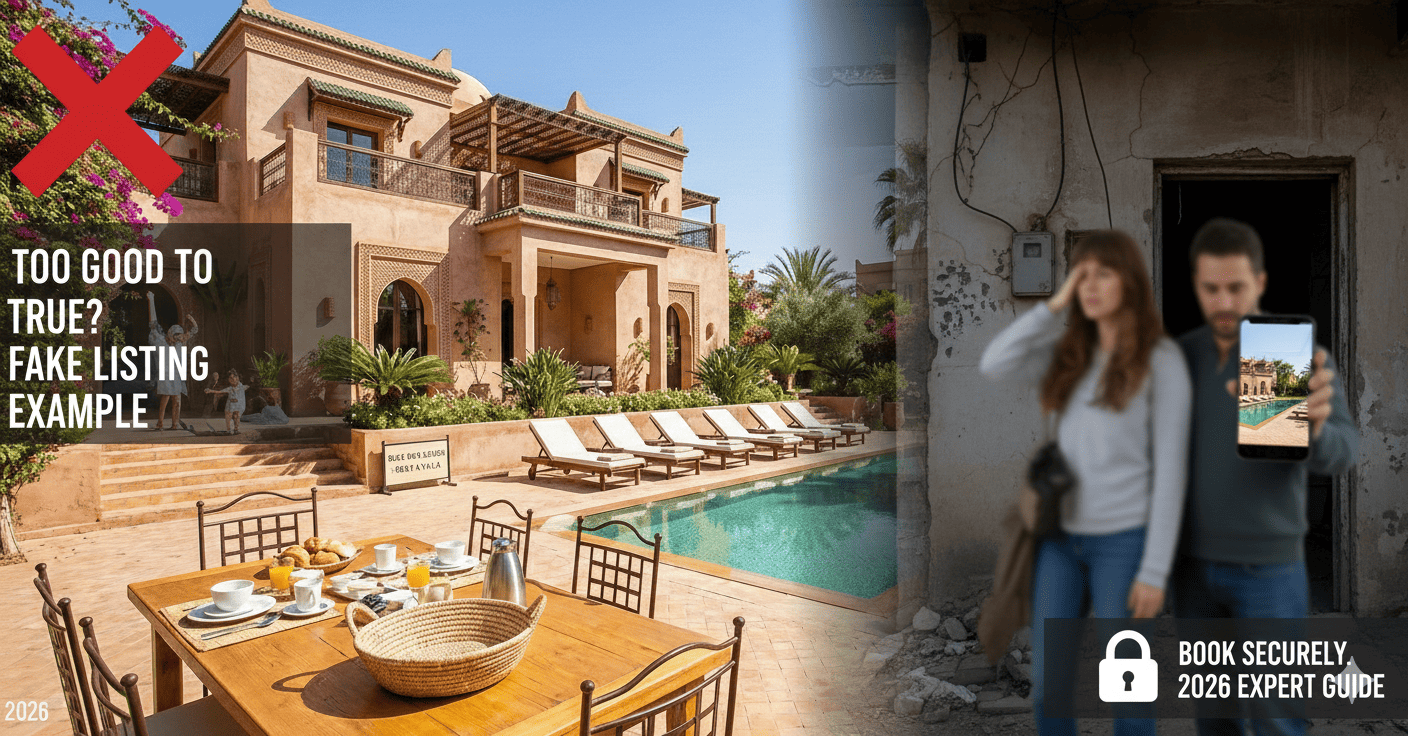
How to Avoid Villa Rental Scams: 2026 Expert Guide
Villa rental scams: learn to spot the red flags and secure your booking. AI-generated photos, fake reviews and opaque payment schemes trap travelers; this guide walks through every verification technique and protocol to avoid financial loss.
Modern villa rental scams
Rental fraud has become more sophisticated. According to the Better Business Bureau, reports of rental scams have increased, with villa rentals particularly targeted because of their high prices. Scammers create convincing fake listings on major platforms and independent websites, often using photos stolen from legitimate properties. The Federal Trade Commission notes that these scams typically involve requests for unconventional payment methods, pressure tactics and fabricated urgency to bypass your usual caution.
Common types of villa rental scams
- Phantom listings: Properties that don’t exist, using stolen photos or AI-generated images.
- Bait and switch: Advertising a luxury villa but giving access to a much inferior property on arrival.
- Duplicate listings: The same property listed by several “owners” at different prices on various platforms.
- Deposit theft: Collecting security deposits with no intention of returning them.
- Fake reviews: Artificially generated positive reviews to build false credibility.
Red flags: how to spot potential scams
Vigilance is your first line of defense against villa rental scams. The Federal Trade Commission advises travelers to be wary of deals that seem too good to be true.
A villa offered 30 to 50% below the market price for its location should raise suspicion; a comparison of villa rental prices can help you gauge the going rates. Other warning signs include vague descriptions, inconsistent photos showing different furniture, and owners who refuse to provide the exact address before payment.
Digital verification techniques
Several technological tools help verify villa listings:
- Reverse image search: Use Google Lens or TinEye to check whether the photos appear elsewhere with different addresses.
- Geolocated verification: Ask for a photo of the property showing today’s date and a visible landmark.
- Verification badges: On platforms, look for “Identity verified” or “Superhost” status.
- Review analysis tools: Extensions such as Fakespot help identify artificially generated reviews.
Secure booking practices
Following secure booking practices considerably reduces the risk of villa rental scams. Always book through reputable platforms that offer payment protection. Airbnb, Vrbo and Booking.com have put in place strengthened verification systems, including multi-factor authentication for hosts and AI-powered fraud detection. These systems keep communications on the platform, where they can be monitored. Our guide to the best websites to book villas in Marrakech compares the main platforms.
Payment security protocols
- Never wire transfers or gift cards: Legitimate hosts accept credit cards or secure payment processors.
- Check payment links: Make sure pages use “https://” with valid certificates.
- Use the platform’s system: Keep all transactions within the platform’s secure system.
- Document everything: Keep all communications, receipts and terms and conditions.
Verifying the property and the host
Before committing, carry out a thorough check of the property and the host. Start by looking up the address on Google Maps Street View to confirm it exists. Check the available public records to confirm ownership. For the host, look for consistency across their listings and a review history. A legitimate host should have a verifiable online presence beyond the platform.
To better understand the different accommodation options, compare Airbnb vs private villas for an informed decision. Also see the guide to choosing a private villa in Marrakech to prepare your stay. Consider exploring our guide to the services included in a staffed villa as well.
Essential verification questions
When communicating with a potential host, ask these questions:
- Can you provide the exact address for verification?
- Which local management company looks after the property?
- Are there recent guest reviews from people I can contact?
- What is your detailed cancellation and refund policy?
- Can we arrange a video call to see the property in real time?
Legal protections and recourse
Understanding your legal rights is crucial when dealing with villa rental scams. In most jurisdictions, rental fraud is both a civil and a criminal offense. Document all interactions and keep the evidence for possible legal action. If you suspect a scam, report it immediately to the platform, your bank and the local authorities. For updates on security best practices, follow the alerts from consumer protection agencies.
When to walk away
Some situations should prompt you to disengage immediately:
- The host pressures you to finalize the transaction quickly
- They refuse to communicate through the platform’s official channels
- They request payment through unconventional methods
- They cannot provide verifiable references
- The listing contains grammatical errors typical of scammers
Frequently Asked Questions
How cheap is too cheap for a villa rental listing?
A villa offered 30 to 50% below the market price for its location should raise suspicion.
What are the warning signs of a fake villa listing?
Watch for vague descriptions, inconsistent photos showing different furniture, and owners who refuse to provide the exact address before payment.
How can I check whether villa photos are stolen?
Run a reverse image search with Google Lens or TinEye to see whether the photos appear elsewhere with different addresses.
How should I pay for a villa rental to avoid scams?
Never pay by wire transfer or gift card: legitimate hosts accept credit cards or secure payment processors.
What should I do if I suspect a villa rental scam?
Report it immediately to the platform, your bank and the local authorities, and keep evidence of all your interactions.
Booking with confidence
Villa rental scams keep evolving, but informed travelers can book their dream vacation with confidence. By combining technological verification tools, due diligence and secure payment practices, you significantly reduce the risks. Legitimate hosts welcome reasonable verification requests. Stay informed about new scam tactics and keep a healthy dose of skepticism.
Call to action
Before booking your next villa, keep this guide as a reference checklist and consult our expert guide for additional safety tips.
Share it with other travelers to help create a safer rental ecosystem. If you come across suspicious listings, report them to protect others from deceptive rental practices.
For more advice, explore the resources of the official Marrakech tourism website. Also consider exploring our guide to the benefits of renting a villa in Marrakech for a successful stay. And take a look at our selection of the best villas and riads with private pool in Marrakech.