Marrakech Weather Month by Month: 2026–27 Guide
Updated
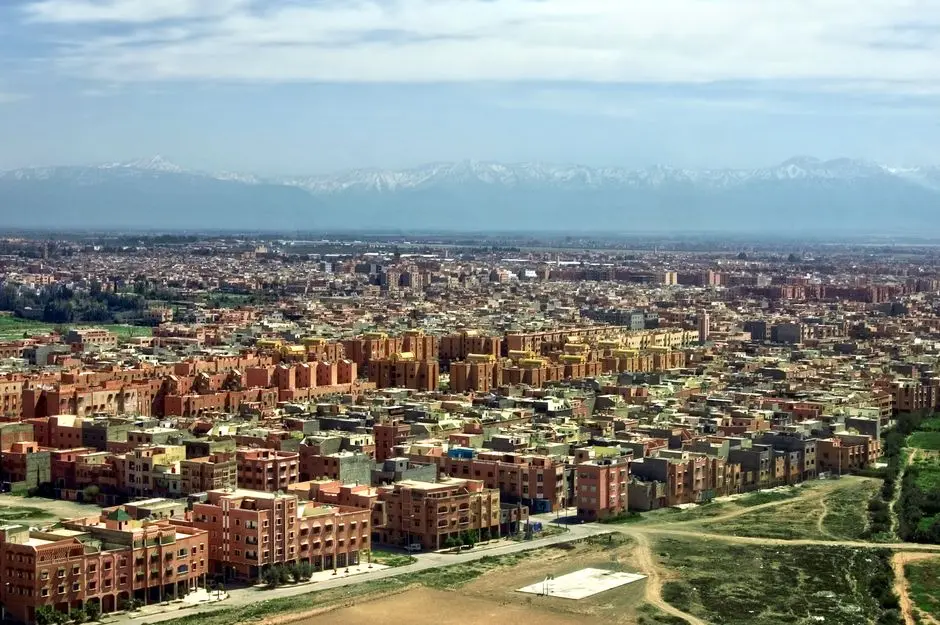
Marrakech has a semi-arid climate: hot, dry summers, mild sunny winters and a wide gap between day and night. On the official 1991–2020 averages, January is the coolest month (about 19 °C by day, 6 °C at night) and July the hottest (about 38 °C by day); most of the year’s 221 mm of rain falls between October and April. The pleasant months for sightseeing are March to May and October to November. Since 20 September 2026 Morocco stays on GMT all year, so the sun now sets about an hour earlier than many older guides say: about 17:30 in December and 19:40 in late June.
The official averages, month by month
The figures below are the World Meteorological Organization climate normals for 1991–2020 at Marrakech-Menara (station 60230, 464 m), the airport weather station a few kilometres south-west of the medina. They are 30-year averages, not a forecast: any given week can be several degrees warmer or cooler.
Average daytime high, °C (WMO 1991–2020)
| Month | High °C | Low °C | Rain mm | Rain days | Days ≥ 30 °C | Sunshine h/day |
|---|---|---|---|---|---|---|
| January | 19.1 | 5.9 | 25.0 | 3.0 | 0 | 7.4 |
| February | 20.7 | 7.6 | 25.7 | 3.7 | 0.1 | 7.7 |
| March | 23.6 | 10.3 | 35.2 | 4.7 | 2.8 | 8.2 |
| April | 25.7 | 12.4 | 26.3 | 2.9 | 5.9 | 9.0 |
| May | 29.4 | 15.2 | 10.5 | 1.5 | 13.2 | 9.8 |
| June | 33.6 | 17.9 | 3.1 | 0.6 | 23.8 | 12.0 |
| July | 37.7 | 20.6 | 2.2 | 0.3 | 30.5 | 10.7 |
| August | 37.4 | 21.1 | 4.7 | 0.8 | 30.3 | 10.2 |
| September | 32.5 | 18.6 | 15.2 | 1.3 | 21.3 | 8.9 |
| October | 28.5 | 15.7 | 19.1 | 2.4 | 12.0 | 8.1 |
| November | 23.1 | 10.7 | 29.8 | 3.8 | 1.8 | 7.6 |
| December | 20.1 | 7.3 | 24.2 | 4.1 | 0 | 7.3 |
Sources: WMO climate normals 1991–2020, Marrakech (NOAA archive) for temperature, rain, rain days (1 mm or more) and hot days; sunshine is the 1981–2010 WMO normal (the 1991–2020 set has no sunshine figure for this station), divided by the days in the month.
Two figures in that file are worth knowing. In 30 years the coldest night was −3.6 °C (January 2005) and the hottest day 49.6 °C (July 2004). Frost is rare: 0.2 nights a year on average, all in January.
Sunrise, sunset and daylight on the new clock
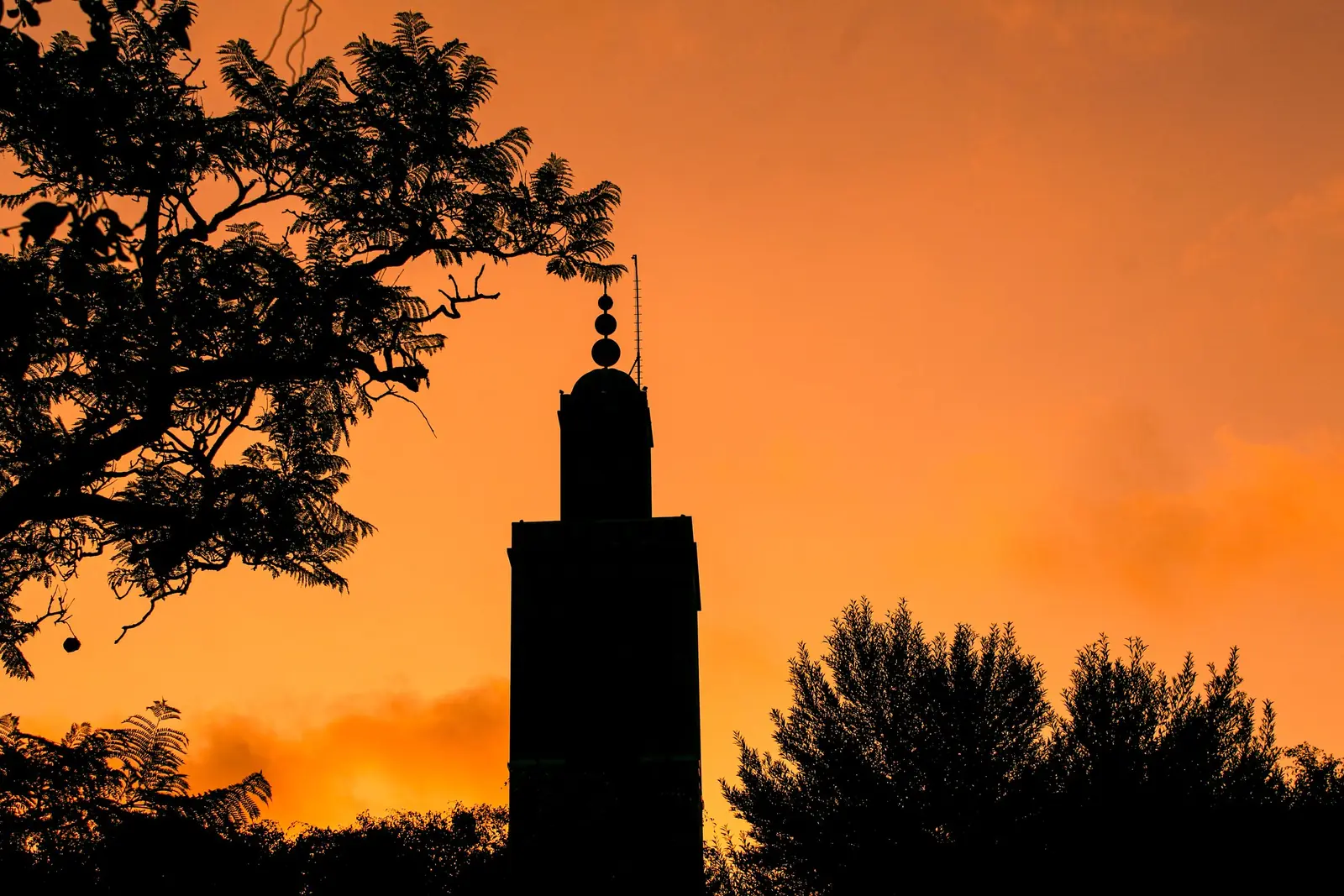
Morocco moved to GMT all year at 02:00 on 20 September 2026 (decree 2.26.530; the change was reported by time.is), and there is no Ramadan clock change any more. Marrakech is now on the same time as London in winter and one hour behind it from 28 March 2027, when the UK goes onto summer time. It is one hour behind Paris in winter and two hours behind from 28 March 2027.
We computed the times below with the NOAA solar-position algorithm for Marrakech (31.63° N, 8.01° W) and checked five dates against sunrise-sunset.org: they agree within two minutes. Times are local (GMT) and rounded to the minute.
| Date | Sunrise | Sunset | Daylight |
|---|---|---|---|
| 1 Oct 2026 | 06:26 | 18:17 | 11 h 51 |
| 15 Oct 2026 | 06:35 | 18:00 | 11 h 25 |
| 1 Nov 2026 | 06:48 | 17:43 | 10 h 55 |
| 15 Nov 2026 | 07:00 | 17:33 | 10 h 33 |
| 1 Dec 2026 | 07:14 | 17:28 | 10 h 14 |
| 15 Dec 2026 | 07:24 | 17:30 | 10 h 06 |
| 1 Jan 2027 | 07:32 | 17:39 | 10 h 08 |
| 15 Jan 2027 | 07:32 | 17:51 | 10 h 19 |
| 1 Feb 2027 | 07:25 | 18:06 | 10 h 41 |
| 15 Feb 2027 | 07:14 | 18:19 | 11 h 05 |
| 1 Mar 2027 | 06:59 | 18:30 | 11 h 30 |
| 15 Mar 2027 | 06:43 | 18:40 | 11 h 57 |
| 1 Apr 2027 | 06:21 | 18:51 | 12 h 30 |
| 15 Apr 2027 | 06:04 | 19:01 | 12 h 57 |
| 1 May 2027 | 05:47 | 19:12 | 13 h 25 |
| 15 May 2027 | 05:36 | 19:21 | 13 h 46 |
| 1 Jun 2027 | 05:28 | 19:32 | 14 h 04 |
| 15 Jun 2027 | 05:27 | 19:39 | 14 h 12 |
| 1 Jul 2027 | 05:30 | 19:41 | 14 h 11 |
| 15 Jul 2027 | 05:37 | 19:38 | 14 h 01 |
| 1 Aug 2027 | 05:48 | 19:29 | 13 h 41 |
| 15 Aug 2027 | 05:57 | 19:16 | 13 h 19 |
| 1 Sep 2027 | 06:08 | 18:56 | 12 h 49 |
| 15 Sep 2027 | 06:16 | 18:38 | 12 h 22 |
Pages built before the change still add an hour. On 14 October 2026, the Yandex weather forecast for Marrakech gave sunset on 15 October as 7:00 pm; on GMT it is 18:00. If a sunset time looks generous, take an hour off it.
What the table means in practice: the shortest days, in December and early January, have about ten hours of light and the pool is in shade or cooling off by 16:00. By mid-March there are 12 hours, and in June more than 14, with dinner outside in daylight until about 19:30.
Month by month
January
- High19 °C
- Low6 °C
- Rain25 mm, 3 days
- Sunset17:39–18:05
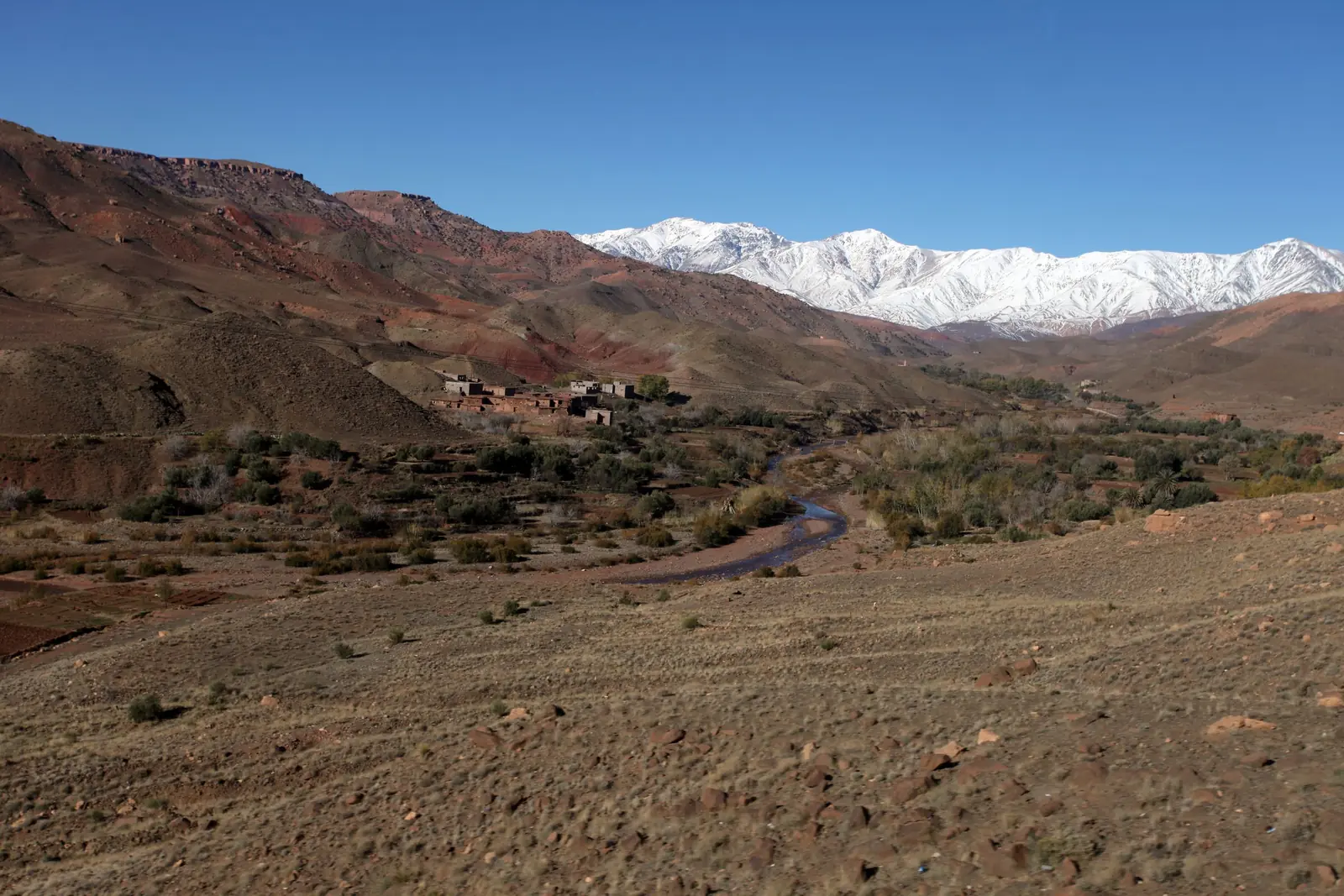
The coolest month, with about 7 hours of sun a day and cold nights. It is a quiet month for the medina, and the Atlas usually carries snow for a day trip to Oukaïmeden. Pack layers and a warm coat. More: Marrakech in January.
February
- High21 °C
- Low8 °C
- Rain26 mm, 4 days
- Sunset18:06–18:29
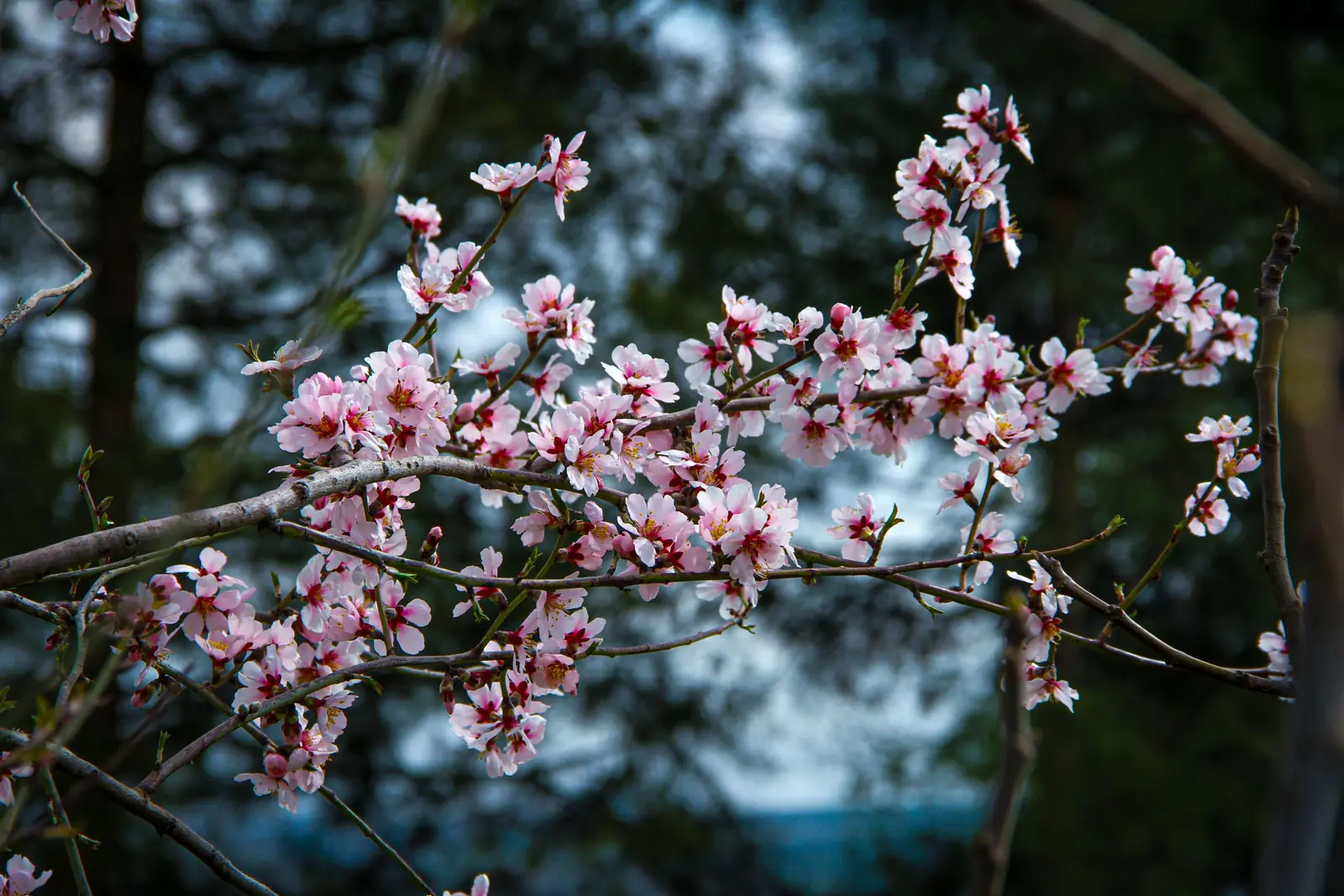
Still cool, but warming, with almond blossom in the valleys south of the city. Ramadan 2027 is expected to begin around 8 February (dates depend on the moon sighting and are provisional), so restaurant hours change in the medina. See Marrakech in February and our Ramadan guide.
March
- High24 °C
- Low10 °C
- Rain35 mm, 5 days
- Sunset18:30–18:51
The wettest month on average, yet with about 8 hours of sun a day. A good balance for the gardens, the Atlas and long lunches outside; take a light jacket for the evening. Easter Sunday falls on 28 March 2027. More: Marrakech in March.
April
- High26 °C
- Low12 °C
- Rain26 mm, 3 days
- Sunset18:51–19:11
One of the best months: green after the spring rain, about 9 hours of sun, and more days above 30 °C (about six in an average April, against three in March). A jumper is still useful at night. More: Marrakech in April.
May
- High29 °C
- Low15 °C
- Rain11 mm, 2 days
- Sunset19:12–19:32
Warm and dry, with pleasant mornings and evenings: the month when an unheated pool starts to feel inviting. Explore the medina early and spend the afternoon at the villa. More: Marrakech in May.
June
- High34 °C
- Low18 °C
- Rain3 mm
- Sunset19:32–19:41
Summer starts in earnest: about 12 hours of sun a day, the longest days of the year, and midday heat best spent in the shade or the pool. Pack sun protection, a hat and light cotton. More: Marrakech in June.
July
- High38 °C
- Low21 °C
- Rain2 mm
- Days ≥ 40 °C9
The hottest month: on average almost nine days reach 40 °C, and heatwaves can pass 45 °C. Sightsee early or after sunset, and choose a villa with air conditioning and a large pool; the Atlas is cooler. The National Festival of Popular Arts usually brings folk troupes to the city in summer. More: Marrakech in July.
August
- High37 °C
- Low21 °C
- Rain5 mm
- Sunset19:29–18:57
Almost as hot as July. Many Moroccans head for the coast, and the Atlantic town of Essaouira makes a cooler day out. Stay hydrated and keep the middle of the day for the pool. More: Marrakech in August and choosing a villa for summer.
September
- High33 °C
- Low19 °C
- Rain15 mm, 1 day
- Sunset18:56–18:19
Relief arrives slowly: early September can still be very hot, but by the end of the month the evenings are pleasant and the city fills up again.
October
- High29 °C
- Low16 °C
- Rain19 mm, 2 days
- Sunset18:17–17:44
Warm days, cool evenings and about 8 hours of sun: one of the most popular months, so book ahead. More: Marrakech in October.
November
- High23 °C
- Low11 °C
- Rain30 mm, 4 days
- Sunset17:43–17:28
Cooler, with a jacket needed after dark. The 23rd Marrakech International Film Festival runs from 20 to 28 November 2026, according to the festival’s regulations. More: Marrakech in November.
December
- High20 °C
- Low7 °C
- Rain24 mm, 4 days
- Sunset17:28–17:39
Mild, mostly sunny days, chilly nights and the earliest sunsets of the year. Pack warm layers; the snow-capped Atlas makes the backdrop. For the holidays, read Marrakech in December and Christmas in a Marrakech villa.
Swimming from October to April: our heated-pool villas
With afternoon highs of 19 to 24 °C from December to March and nights of 6 to 10 °C, an unheated pool is cold in winter. Fourteen of our 39 villas list a heated pool (checked on each villa’s page, October 2026). Eight list the pool as heated; at six it is heated on request.
| Villa | Area | Bedrooms | Pool, as listed | From, a night |
|---|---|---|---|---|
| Villa Mangue | Route de Tahanout | 6 | Heated all year | €750 |
| Villa Eva | Samanah golf | 5 | Heated, usable all year | €995 |
| Villa Harmony | Amelkis golf | 5 | Heated | €650 |
| Villa Inocencia | Amelkis golf | 4 | Heated | €800 |
| Villa Andalucía | Route d’Ourika | 6 suites + optional 4-bedroom pavilion | Heated semi-Olympic pool | €2,051 |
| Villa Nolan | Palmeraie | 10 | Two pools, one heated | €2,000 |
| Villa Mansouria | Palmeraie | 9 | Heated | €2,750 |
| Villa Azarenka | Route d’Ourika | 11 | Heated, 18 × 18 m | €3,940 |
| Villa Perla | Amelkis golf | 5 | Heated on request | €650 |
| Villa Petra | Sidi Abdellah Ghiat | 5 | Heated on request | €650 |
| Villa Lucia | Route de Fès | 5 | Infinity pool, heated on request | €750 |
| Villa Hazel | Palmeraie | 6 | 15 m, heated on request | €1,200 |
| Villa Aria | Palmeraie | 5 | Infinity pool, heated on request | €2,200 |
| Olive Palace | Ouled Hassoune | 20 | 28 m infinity, heated on request | €6,250 |
Starting prices as shown on the villa pages in October 2026; rates vary with dates.
We do not publish what pool heating costs, how warm the water is kept or how much notice “on request” needs: it differs by villa and by season. Before you pay, ask us for a quote that states whether heating is included for your dates.
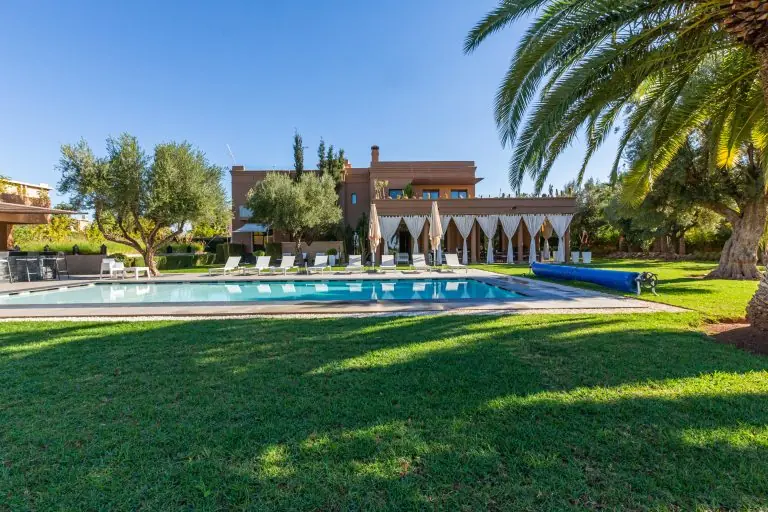
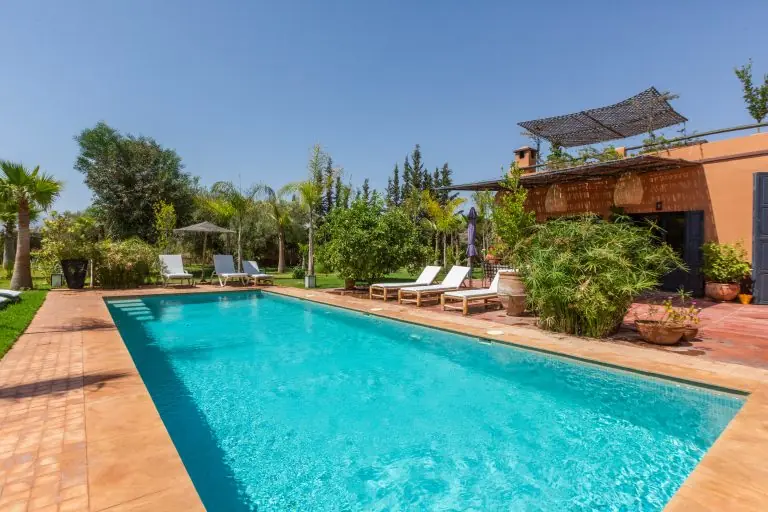 Villa MangueFrom €750 a night
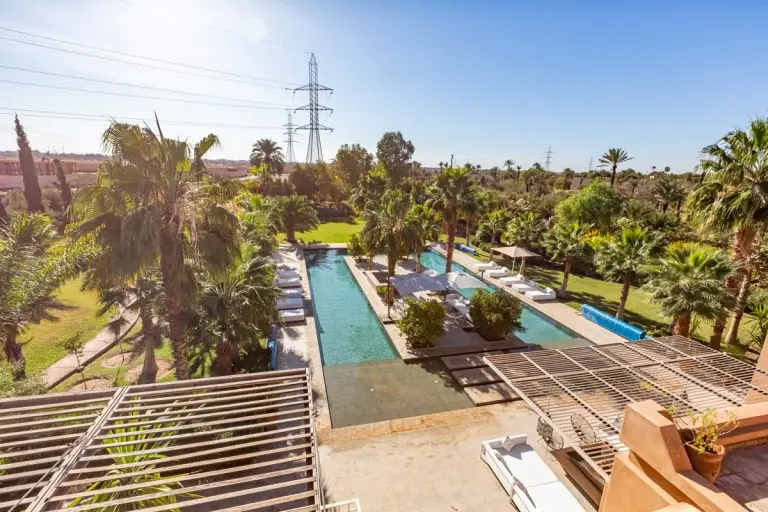
 Villa EvaFrom €995 a night
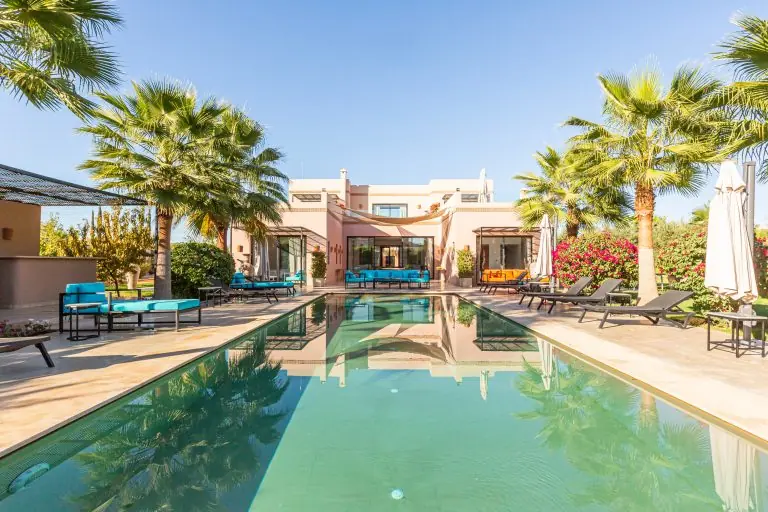
 Villa HazelFrom €1,200 a night
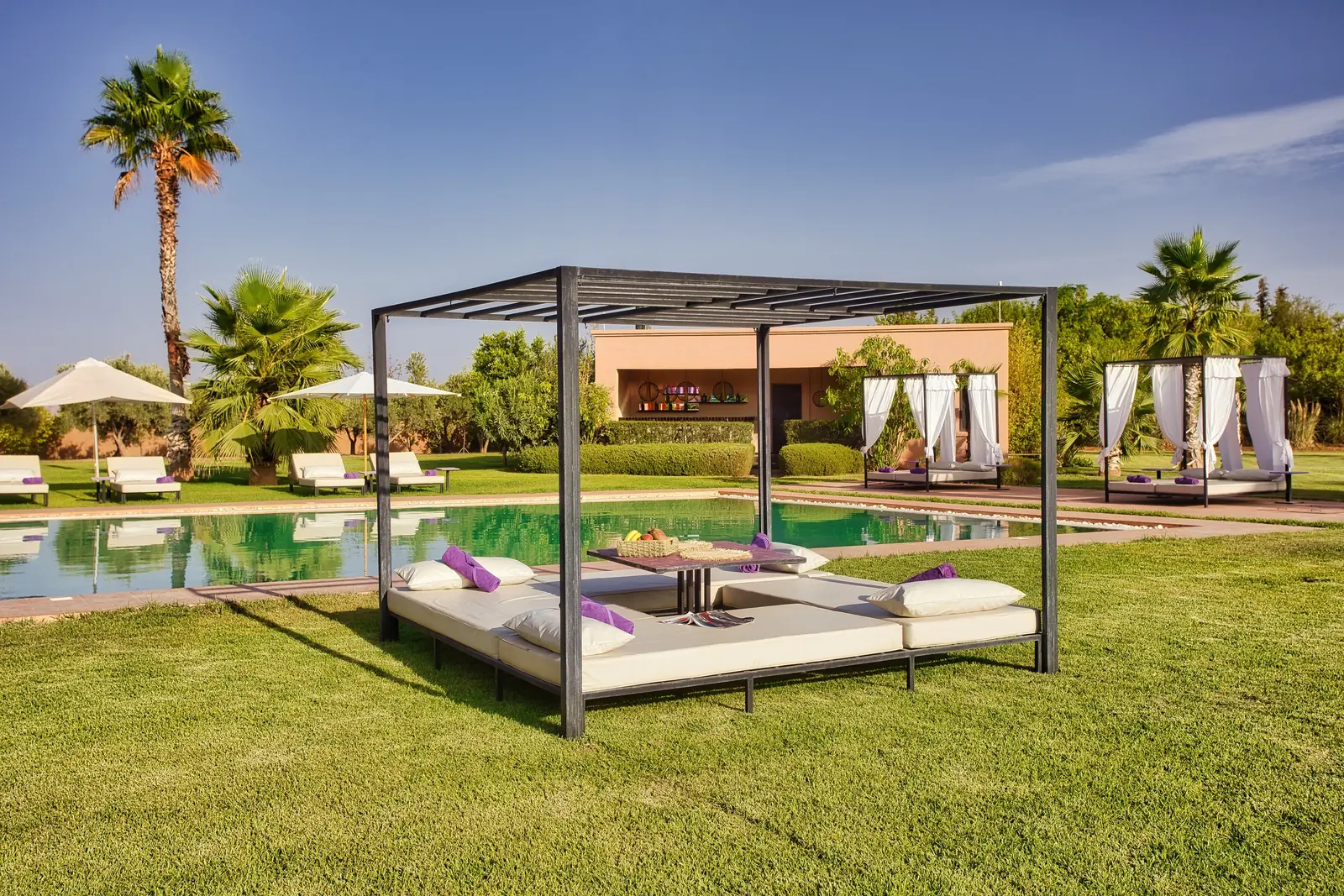
 Villa LuciaFrom €750 a night
Pool time follows the sun as much as the thermometer. In December the sun sets at about 17:30, so a swim is a late-morning or early-afternoon affair; by mid-April, with sunset after 19:00, the afternoon is long. The full list, with photos, is on our page of villas with a heated pool, and our guide to a heated-pool villa in winter covers fireplaces and warm houses.
The 2026–27 calendar on top of the weather
- 20–28 Nov 2026
Marrakech International Film Festival
Mild days around 23 °C; sunset about 17:30.
- Late Dec 2026
Christmas and New Year
The shortest days and the busiest villa weeks: heated pools and fireplaces go first.
- c. 8 Feb–9 Mar 2027
Ramadan (expected)
Provisional dates; Eid al-Fitr is expected around 9 or 10 March. No clock change this time.
- 28 Mar 2027
Easter Sunday and UK summer time
From this day Marrakech is one hour behind London. Highs around 24 °C, sunset near 18:50.
- Jul–Aug 2027
Peak heat
About 30 days a month above 30 °C; plan around the pool and early mornings.
School holidays: half term and Easter villa holidays. Public holidays: Morocco’s public holidays in 2027.
Best time to visit Marrakech
For most travellers, spring (March to May) and autumn (October and November) are the best: highs of 23 to 29 °C, cool nights and plenty of sun. For a winter break, December to February is mild by day and quiet, as long as the villa is warm and the pool heated. June and September suit people who like heat; July and August are for those who will live by the pool. The rest is in our seasonal guide to Marrakech, and if price matters most, see the cheapest time to rent a villa.
Pick your month, then the right villa
Coming between November and March? Ask for a heated pool and a fireplace. Coming in summer? Air conditioning and a big pool. Tell us your dates and we suggest villas that suit the season.
Frequently asked questions
What is the hottest month in Marrakech?
July, with an average high of 37.7 °C on the WMO 1991–2020 normals, just ahead of August at 37.4 °C. An average July has about nine days at 40 °C or more, and heatwaves can pass 45 °C; the record at the airport station is 49.6 °C, in July 2004. It is also the driest month, with about 2 mm of rain.
What time does the sun set in Marrakech?
On GMT, which Morocco has kept all year since 20 September 2026, the sun sets at about 17:30 in early December, 18:00 in mid-October, 18:50 in late March and 19:40 in late June. Many websites still show sunsets an hour later because they still use Morocco’s old clock, one hour ahead.
Does it snow in Marrakech?
Snow in the city is extremely rare, and frost occurs on average on fewer than one night a year. The High Atlas, visible from the city, usually has snow on its peaks in winter, and the ski area at Oukaïmeden, about 90 minutes away, opens when the snow allows, typically between December and March.
Is Marrakech humid?
No. Marrakech has a dry, semi-arid climate. Relative humidity is lowest in July and August, under 50%, and around 65% in winter. The dry air makes summer heat easier to bear but dries the skin, so drink more water than you think you need.
When is the rainy season in Marrakech?
Most rain falls from October to April, but even the wettest month, March, averages only 35 mm over about five days with 1 mm or more. The year totals about 221 mm. Showers are usually short, and sunny spells return quickly, so rain rarely spoils more than part of a day.
Can you swim in Marrakech in winter?
In a heated pool, yes. From December to February afternoon highs are 19 to 21 °C and nights 6 to 8 °C, so an unheated pool is cold. Fourteen of our villas list a heated pool: eight heated, six heated on request. Ask us whether heating is included for your dates before you book.
Weather in Marrakech is easy to plan around once you know the numbers: warm sun most of the year, cold winter nights, and a sunset an hour earlier than old guides say. Tell us your month and who is coming, and we will suggest villas that suit the season.