Discovering Marrakech’s Hidden Gardens: A Guide to Secret Oases
The secret gardens of Marrakech offer serene courtyards, historic botanical spaces, and private paradises tucked away from the city’s lively souks and medina bustle. These hidden oases reveal the city’s history, architecture, and profound connection with nature through centuries of Islamic garden design. Intimate escapes from the vibrant, spice-scented streets, they invite quiet discovery.
The Historical Significance of Marrakech’s Gardens
The garden tradition dates back to the city’s founding in 1062 by the Almoravid dynasty. The original settlers recognized the importance of creating green spaces in the arid landscape, developing sophisticated irrigation systems that would influence garden design for centuries. These early gardens served as places of contemplation, symbols of power and wealth, practical sources of food and medicine, and demonstrations of engineering prowess in water management.
The golden age of Marrakech’s gardens occurred during the Saadian dynasty (1549-1659), when rulers created elaborate palace gardens that combined Islamic geometric design with Andalusian influences. The basic principles of these traditional gardens included:
- The Chahar Bagh (Four Gardens) design: A quadrilateral layout divided by water channels representing the four rivers of paradise
- Axial symmetry: Perfect balance and geometric precision reflecting Islamic concepts of order
- Water features: Central fountains, reflecting pools, and irrigation channels as both practical and symbolic elements
- Fruitful abundance: Integration of productive trees (citrus, olive, pomegranate) alongside ornamental plants
During the French Protectorate (1912-1956), European influences introduced new plant species and design elements, creating fascinating hybrids of Moroccan and French garden aesthetics. Organizations like the Moroccan Ministry of Culture work to preserve these historic gardens while contemporary designers reinterpret traditional elements for modern spaces.
Secret Gardens Beyond Jardin Majorelle
While Jardin Majorelle rightfully attracts millions of visitors annually, several equally remarkable gardens remain relatively undiscovered by mainstream tourism. For tips on light layers that suit garden visits, see the what to wear in Marrakech guide. These hidden gems offer intimate experiences and unique perspectives on Marrakech’s horticultural heritage.
Le Jardin Secret
Located in the heart of the Medina, Le Jardin Secret (The Secret Garden) is a restored palace garden that opened to the public in 2016. This historic site dates back over 400 years and represents one of the finest examples of Islamic garden design in Marrakech. The garden is divided into two distinct sections:
- The Exotic Garden: Features plants from around the world, including towering cacti, bougainvillea, and fragrant jasmine
- The Islamic Garden: A classic Chahar Bagh layout with geometric flower beds, fruit trees, and central water channels
The site also includes a 19th-century pavilion with panoramic views and an exhibition space detailing the garden’s restoration. What makes Le Jardin Secret particularly special is its educational focus—visitors can learn about traditional irrigation systems, Islamic garden symbolism, and the painstaking restoration process that returned this space to its former glory.
Anima Garden
Created by Austrian artist André Heller, Anima Garden represents a completely different approach to Marrakech’s garden tradition. Located about 45 minutes from the city center, this contemporary botanical garden combines surreal art installations with diverse plant collections in a sprawling 2-hectare space. Key features include:
- Over 250 plant species from five continents
- Whimsical sculptures and art pieces integrated throughout the landscape
- Themed areas including a bamboo forest, cactus garden, and rose labyrinth
- A café with stunning views of the Atlas Mountains
Unlike the formal symmetry of traditional Islamic gardens, Anima embraces organic shapes and unexpected juxtapositions, creating a magical, dreamlike atmosphere. The garden also serves as a cultural center, hosting concerts, exhibitions, and workshops throughout the year.
The Olive Grove of La Mamounia
While La Mamounia hotel is world-famous, few visitors explore its historic 20-acre olive grove, which predates the hotel by centuries. This working grove contains over 1,000 olive trees, some believed to be 800 years old. The space offers:
- Guided tours explaining traditional olive cultivation and oil production
- Yoga and meditation sessions among the ancient trees
- Seasonal olive harvesting experiences (typically October-November)
- Birdwatching opportunities with over 30 species recorded
The grove represents an important piece of Marrakech’s agricultural history and provides a rare opportunity to experience a functional, productive landscape within the city. The hotel produces its own olive oil, which guests can sample and purchase. For those interested in further exploration, the Atlas Mountains day trip from Marrakech pairs well with a garden-focused itinerary.
Riad Courtyards: Private Paradises
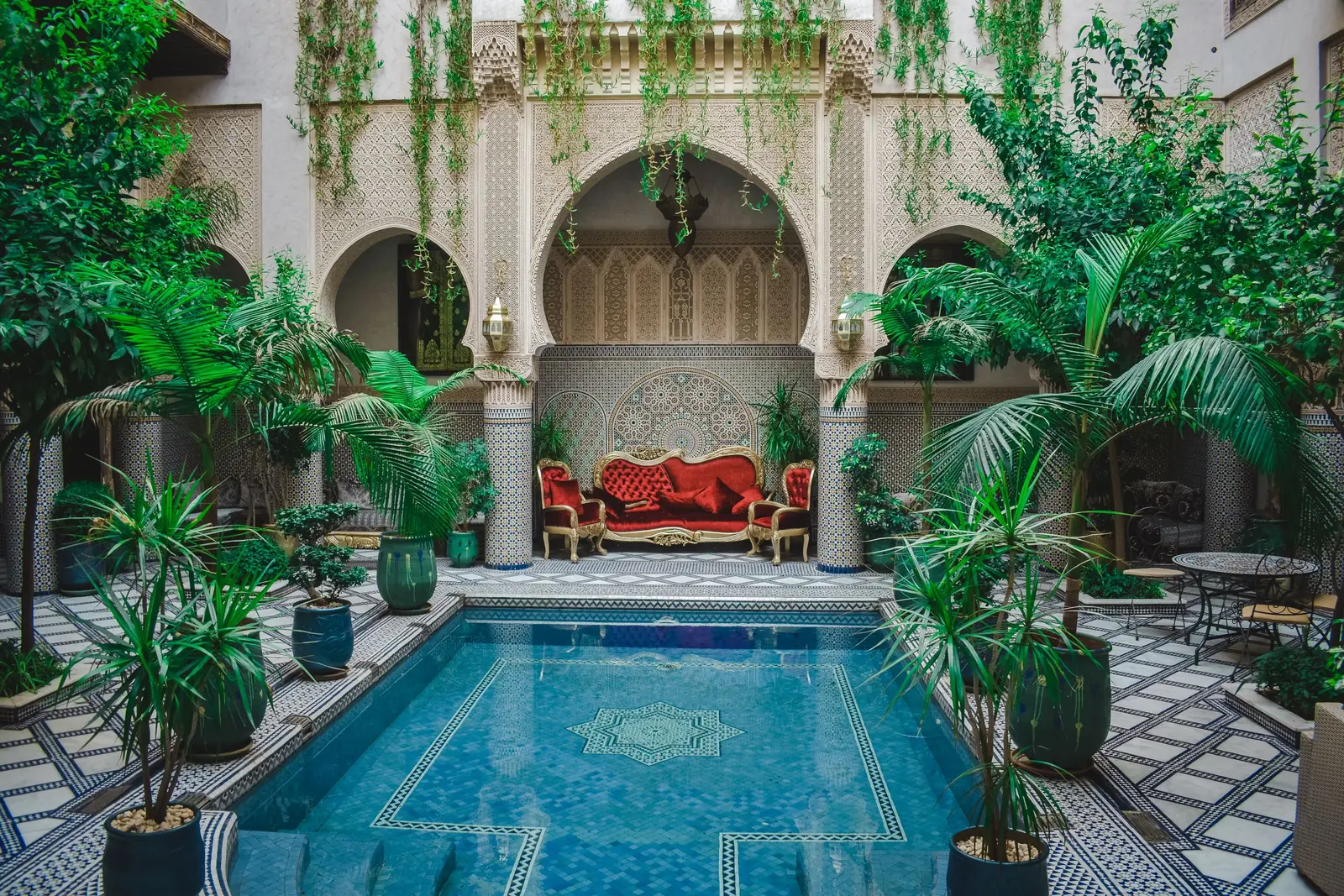
Some of Marrakech’s most exquisite hidden gardens are found within the private courtyards of traditional riads. These inward-focused spaces follow ancient design principles that create microclimates of coolness and tranquility. While many riad gardens remain private, several establishments welcome visitors for meals, spa treatments, or cultural events, offering glimpses into this intimate garden tradition.
Riad El Fenn
Owned by Vanessa Branson (sister of Richard Branson), Riad El Fenn features multiple courtyard gardens that showcase contemporary interpretations of traditional design. The property’s seven interconnected riads create a labyrinth of green spaces including:
- A central courtyard with mature orange trees and a 14-meter swimming pool
- A rooftop garden with panoramic Medina views and drought-resistant planting
- Several intimate courtyard gardens featuring fountains, mosaic tiles, and fragrant plants
The gardens at Riad El Fenn demonstrate how traditional elements can be adapted for modern hospitality while maintaining authentic character. The property also hosts art exhibitions and cultural events that often incorporate the garden spaces.
Jardin de la Médina
While technically a hotel garden, Jardin de la Médina feels like a secret discovery due to its location in a quiet corner of the Kasbah district. This 1.5-acre garden surrounds a 19th-century palace and features:
- Over 100 plant species including rare palms and succulents
- A restored traditional irrigation system (khettara)
- Herb and vegetable gardens supplying the hotel’s restaurant
- Guided botanical tours focusing on medicinal and culinary plants
The garden serves as an educational resource about sustainable gardening practices in arid climates, with staff happy to share knowledge about water conservation and organic cultivation methods. For those considering a longer stay, the best Marrakech villas and riads with private pool guide offers insights on nearby accommodation.
Conservation and Sustainability Efforts
Marrakech faces significant environmental challenges including water scarcity, urbanization pressures, and climate change impacts. Several organizations and initiatives work to preserve the city’s garden heritage while promoting sustainable practices:
Water Conservation Innovations
Traditional gardens relied on sophisticated systems like khettaras (underground channels) and seguias (surface canals) to distribute water from the Atlas Mountains. Modern gardens increasingly combine these ancient techniques with contemporary technology:
- Drip irrigation systems using recycled water
- Drought-tolerant native plant selections
- Rainwater harvesting and greywater recycling
- Soil moisture sensors and smart irrigation controllers
The UNESCO-recognized Palmeraie of Marrakech has implemented comprehensive water management plans that serve as models for other green spaces in arid regions.
Botanical Preservation
Several gardens function as living museums preserving rare and heritage plant varieties:
- Heritage fruit trees: Preserving ancient varieties of citrus, fig, pomegranate, and olive
- Medicinal plants: Maintaining traditional knowledge of Moroccan herbal medicine
- Endangered species: Protecting native plants threatened by habitat loss
Organizations like the Moroccan Association for the Protection of Plants and Gardens work with garden owners to document and preserve botanical heritage.
Practical Guide for Visitors
To fully appreciate Marrakech’s hidden gardens, consider these practical tips for your visit:
Best Times to Visit
- Spring (March-May): Ideal for flowering plants and comfortable temperatures. Plan your visit with our monthly weather guide to choose the best time.
- Autumn (September-November): Pleasant weather and harvest seasons
- Early morning or late afternoon: Avoid midday heat and crowds
- Weekdays: Generally less crowded than weekends
Planning Your Garden Tour
- Research opening hours: Some gardens have seasonal schedules or require advance booking. Use the Medina map to navigate between sites efficiently.
- Consider a guided tour: Specialized garden tours provide historical and botanical context
- Dress appropriately: Comfortable walking shoes, sun protection, and modest clothing for conservative areas
- Respect the spaces: These are often fragile environments—stay on paths and follow garden rules
- Support conservation: Entrance fees often fund maintenance and preservation efforts
Combining Gardens with Other Experiences
Many gardens are located near other attractions, allowing for efficient itinerary planning. For those planning a longer stay, explore ideas from our 5-day Marrakech itinerary to maximize your time.
- Combine Le Jardin Secret with exploration of the nearby souks and Bahia Palace
- Visit Anima Garden after exploring the Ourika Valley in the Atlas Mountains
- Pair olive grove visits with tastings at local argan oil cooperatives
For insights on Marrakech in October, consult our seasonal guide. Your exploration of these peaceful sites can also be perfectly paired with luxury things to do in Marrakech for a truly refined experience.
Frequently Asked Questions
When did Le Jardin Secret open to the public?
Le Jardin Secret, a restored palace garden, opened to the public in 2016.
What are the two gardens at Le Jardin Secret?
The Exotic Garden has plants from around the world, including cacti, bougainvillea and jasmine. The Islamic Garden is a classic Chahar Bagh layout with geometric flower beds, fruit trees and central water channels.
Who created Anima Garden and how far is it from Marrakech?
Anima Garden was created by Austrian artist André Heller and is located about 45 minutes from the city center.
What is a Chahar Bagh garden?
A Chahar Bagh (Four Gardens) design is a quadrilateral layout divided by water channels representing the four rivers of paradise.
When is the best time to visit Marrakech’s gardens?
Spring (March-May) is ideal for flowering plants and comfortable temperatures, and autumn (September-November) brings pleasant weather. Go early morning or late afternoon to avoid midday heat and crowds.
Conclusion: The Living Heritage of Marrakech
Marrakech’s hidden gardens represent far more than beautiful green spaces—they are living repositories of history, culture, and environmental wisdom. From the geometric perfection of Islamic courtyard gardens to the whimsical creativity of contemporary installations, these spaces tell the story of a city that has cultivated beauty in the desert for nearly a millennium.
As climate challenges intensify, these gardens also offer valuable lessons in sustainable design, water management, and ecological adaptation. They demonstrate how human creativity can work with nature to create oases of tranquility and beauty even in challenging environments. To discover more unique experiences, check our guide to unique and unusual things to do in Marrakech.
Whether you’re a first-time visitor or a seasoned Morocco traveler, venturing beyond the famous gardens to discover these hidden gems will deepen your understanding of Marrakech’s cultural landscape. Each garden offers a unique perspective on the intersection of nature, art, and tradition that defines this remarkable city.
Call to Action
Ready to explore Marrakech’s secret gardens for yourself? Start planning your visit by:
- Checking the latest visitor information and opening hours on official garden websites
- Considering a specialized garden tour with knowledgeable local guides
- Learning about traditional Islamic garden design to better appreciate what you’ll see
- Supporting garden conservation efforts through responsible tourism practices
- Sharing your discoveries with fellow travelers to help preserve these precious spaces
For more information about Moroccan cultural heritage and sustainable tourism, visit the official Moroccan Tourism Board website for updated resources and travel recommendations. You can also check Visit Marrakech for local event listings. For additional inspiration on unique activities, explore our guide to 2 days in Marrakech.